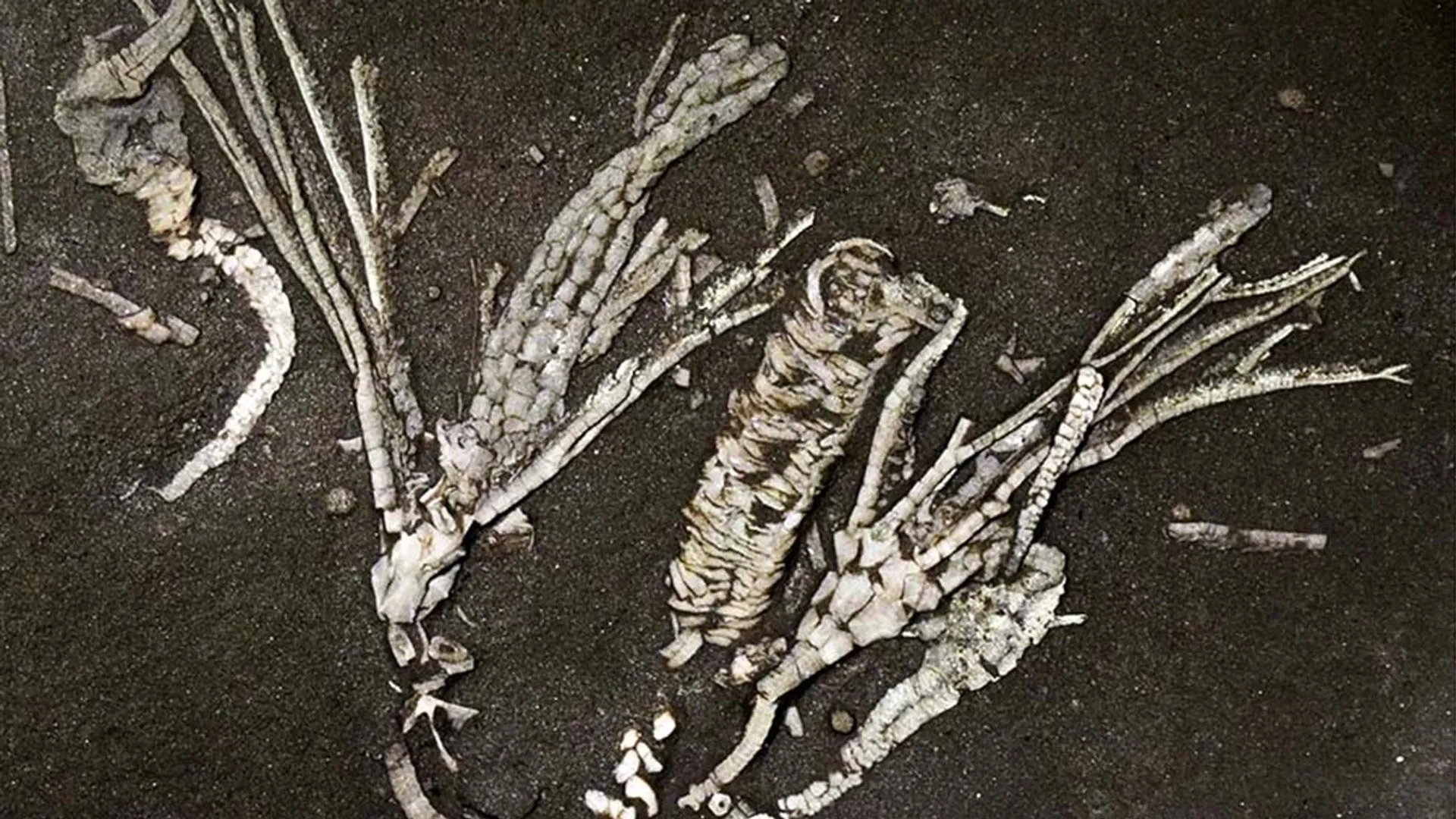
Paleontologists at the University of Oklahoma have described a fossil of the crinoid species Dendrocrinus simcoensis that preserves delicate tube feet, soft structures that almost never survive fossilization. The specimen is more than 450 million years old, predating the earliest dinosaurs by over 200 million years.
Only two crinoid fossils with preserved soft tissue have ever been documented, making this find exceptionally rare. Dr. Lena Cole, assistant curator of invertebrate paleontology at the Sam Noble Oklahoma Museum of Natural History, said such preservation requires environmental conditions that act like a natural refrigerator or vacuum seal.
Tube feet in crinoids function in feeding, responding to water currents, and occupying ecological niches. Their size, spacing, and form vary with the animal's surroundings and feeding method, providing clues about lifestyle comparable to what mammal teeth reveal about diet.
Comparison with living crinoids shows the ancient species had a markedly different anatomy, indicating that feeding strategies and body plans have changed substantially over hundreds of millions of years. Dr. David Wright, co-author of the study, noted that extinct species can display features well outside the range seen in modern relatives.
The fossil helps reconstruct the ecology of early Paleozoic oceans, when crinoids were prominent in reef ecosystems. Because soft tissue is so seldom preserved in early echinoderms, each new specimen can significantly expand knowledge of ancient ecosystems, feeding behavior, and evolutionary change.
The specimen had been housed for years at Montréal's Musée de paléontologie et de l'évolution, a small museum supported by community donations. Its significance was recognized only when Cole and Wright examined it closely during a research visit, underscoring the value of museum collections and the expertise needed to interpret them.
The invertebrate paleontology collections overseen by Cole and Wright at the Oklahoma Museum of Natural History contain more than a million specimens. Researchers emphasize that making such collections accessible worldwide is essential, as they hold discoveries that may not be recognized for decades after initial collection.
“One-in-a-million” sea creature fossil preserves soft tissue for 450 million years
This is an independent summary. The complete reporting, supporting context and any primary documents remain with ScienceDaily.