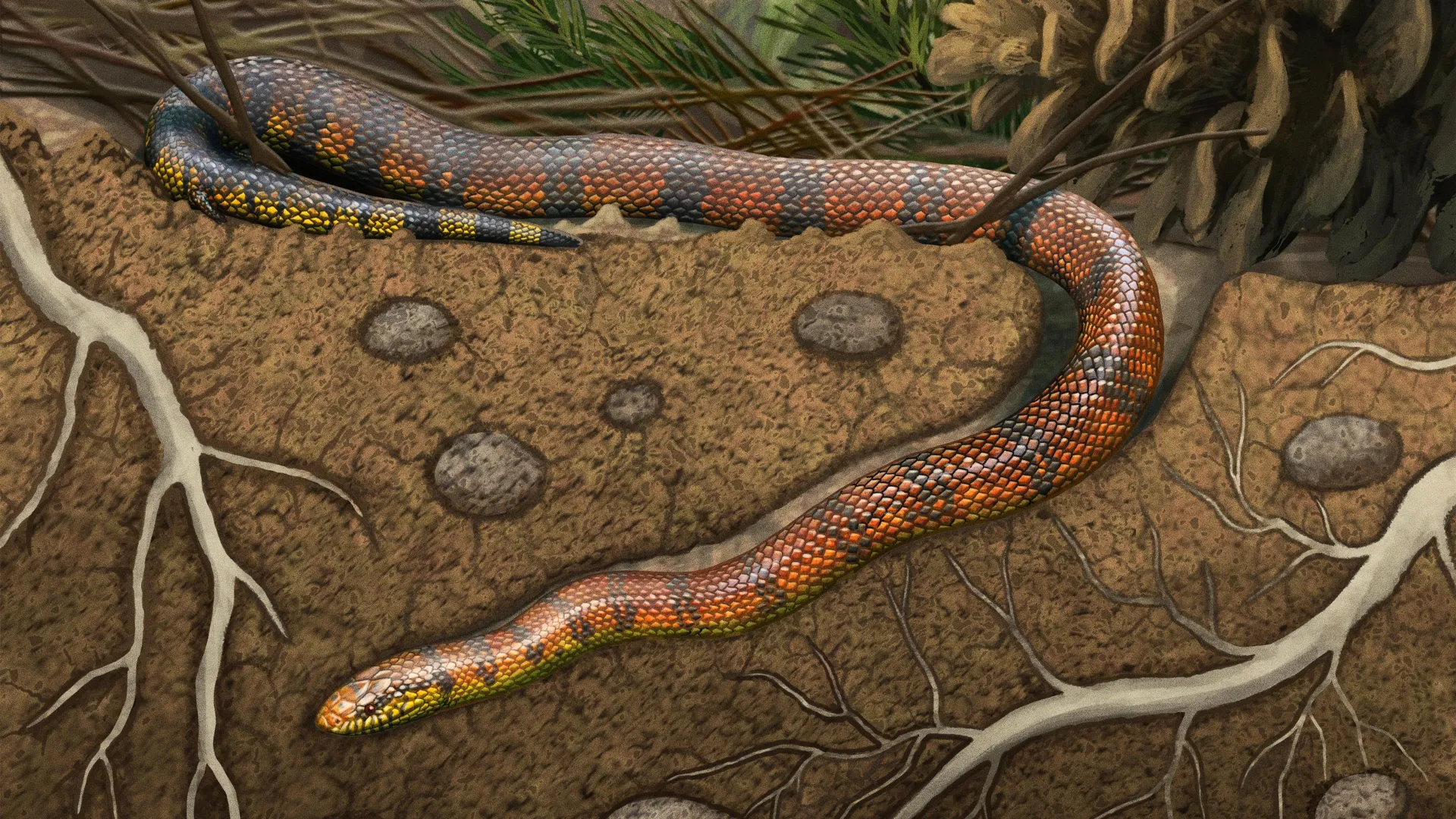
Researchers have described a new snake species, Tametara mirim, from an exceptionally complete fossil found in Late Cretaceous deposits in southeastern Brazil dating to about 80 million years ago. Using computed tomography and 3D rendering, the team created a detailed digital reconstruction of the skull, vertebrae, and brain endocast.
The brain anatomy of Tametara was compared with that of Dinilysia patagonica, a fossil snake from Argentina. The two species showed strikingly different brain shapes, both from each other and from most other snakes studied. Bone microstructure and brain morphology indicated Tametara was adapted for burrowing, while Dinilysia was suited to life on the ground.
Additional fossil evidence from marine sediments points to early snakes also inhabiting marine environments. The findings suggest that by the Late Cretaceous, separate snake lineages had already developed adaptations for underground, terrestrial, and marine lifestyles.
Lead author Tiago Simões of Princeton University said the results show early snakes achieved remarkable ecological and morphological diversity by 80 million years ago. Rather than following a single evolutionary pathway toward one body form, different lineages experimented with distinct sensory and ecological strategies.
The study was conducted by an international team including researchers from the University of Helsinki and the University of São Paulo. The work combined CT-based brain reconstructions with comparative data from living snakes to link neuroanatomy with sensory abilities and habitat preferences.
The research was published in Nature and provides new insight into the long-standing debate over whether snake elongation and limb loss originated in burrowing or aquatic environments. The evidence now points to multiple concurrent pathways.
80-million-year-old snake brain reveals a surprising evolutionary secret
This is an independent summary. The complete reporting, supporting context and any primary documents remain with ScienceDaily.