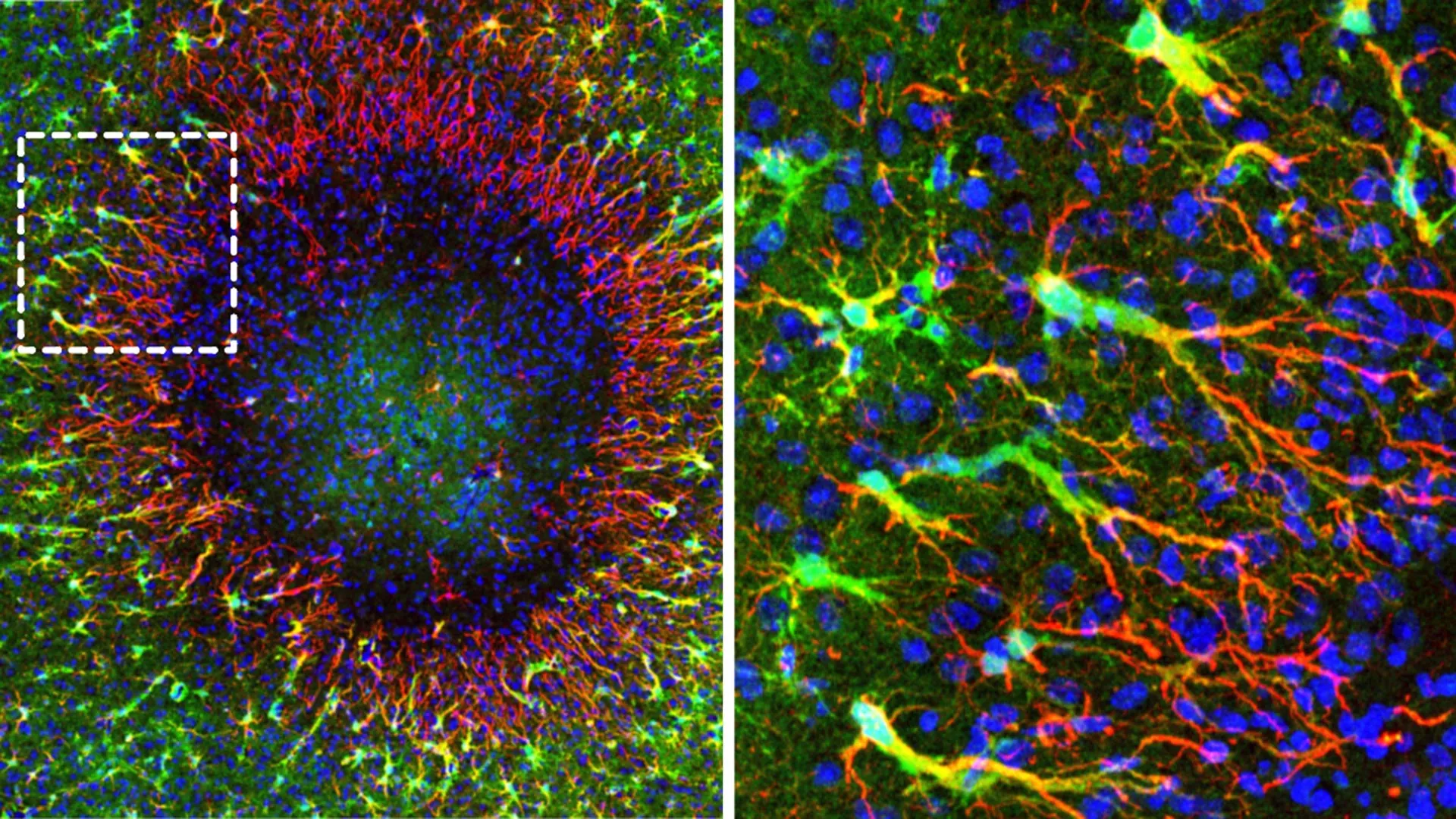
Scientists at the University of Zurich have identified a previously unknown repair mechanism in the adult mouse brain that challenges the long-held view that lost astrocytes cannot be replaced. Astrocytes are star-shaped glial cells that support neurons by supplying nutrients, regulating blood flow, and maintaining overall brain tissue health. Their destruction occurs after brain injuries and in autoimmune conditions such as neuromyelitis optica spectrum disorder, where the body's own antibodies attack these cells.
The study, led by co-lead authors Marina Herwerth and Matthias Wyss under senior author Bruno Weber at the Institute of Pharmacology and Toxicology, found a specialized group of "regenerative" astrocytes that gather around the edges of lesions. Rather than migrating as whole cells into the damaged area, these astrocytes generate new nuclei in daughter cells and send them gliding across long cellular extensions to repopulate the injury site and reknit the astrocyte network.
Using two-photon microscopy, the researchers observed the brains of living mice in real time for several weeks, tracking both cellular dynamics and gene activation patterns. The imaging revealed that newly formed nuclei travel considerable distances through the astrocytes' processes toward the damaged region, a process distinct from simple cell division or migration.
The team also identified numerous genes and signaling pathways that become temporarily active during this repair process. According to Weber, these molecular signals could serve as starting points for future efforts to influence regeneration after disease or injury by selectively activating the newly discovered mechanism.
The findings were published in Nature Neuroscience on August 12, 2026, under the title "Focal astrocyte loss reveals nuclear translocation during lesion repopulation." The research suggests that the adult brain possesses a greater intrinsic capacity for structural repair than previously recognized, at least in the context of astrocyte network restoration in mice.
The adult brain can repair itself better than scientists thought
This is an independent summary. The complete reporting, supporting context and any primary documents remain with ScienceDaily.