Hundreds of scientists in Brazil are collaborating on the largest insect-biodiversity study ever conducted in the Amazon rainforest, sampling from the ground to the canopy.
The megaproject is led by José Rafael, an entomologist at the National Institute for Amazonian Research (INPA) in Manaus, and involves hundreds of sampling sites across a single expanse of forest.
Preliminary data indicate the study area likely holds more than 40,000 insect species, many of which are new to science.
That figure represents almost 0.7% of the widely accepted global estimate of 6 million living insect species worldwide.
Rafael says that if sampling expands to other parts of the forest, the number of new species discovered will likely increase almost exponentially.
The project aims to catalog every insect species in the study area, creating an unprecedented baseline for Amazonian insect diversity.
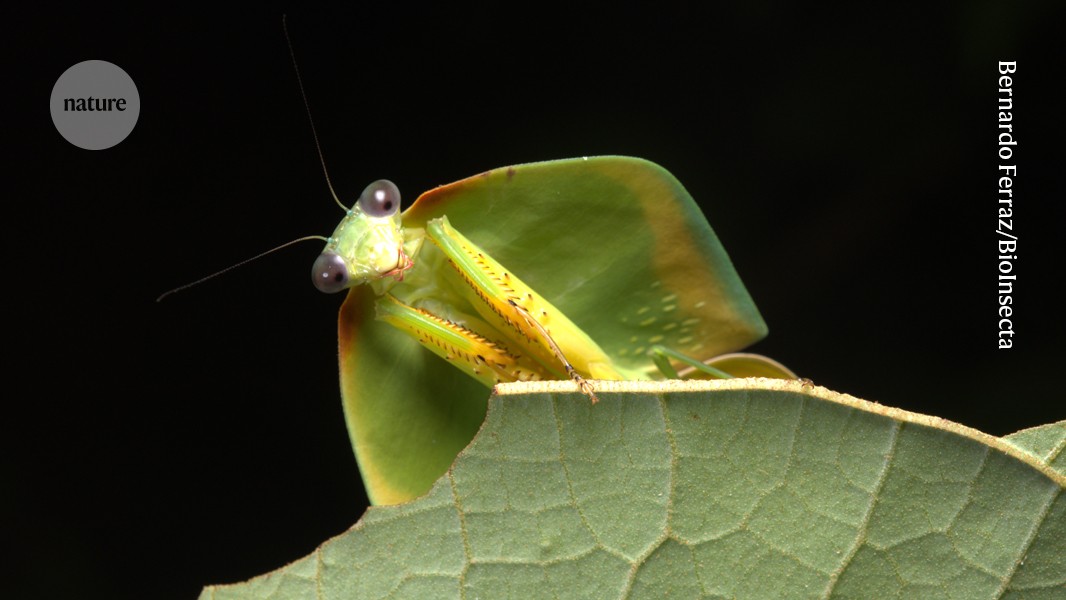
A juvenile female of the mantid species Choeradodis rhomboidea was among the specimens collected during the survey.
The research highlights how much of the Amazon's insect life remains undocumented despite the forest's global ecological importance.
Tiny patch of Amazon probably holds 40,000 insect species — many new to science
This is an independent summary. The complete reporting, supporting context and any primary documents remain with Nature.