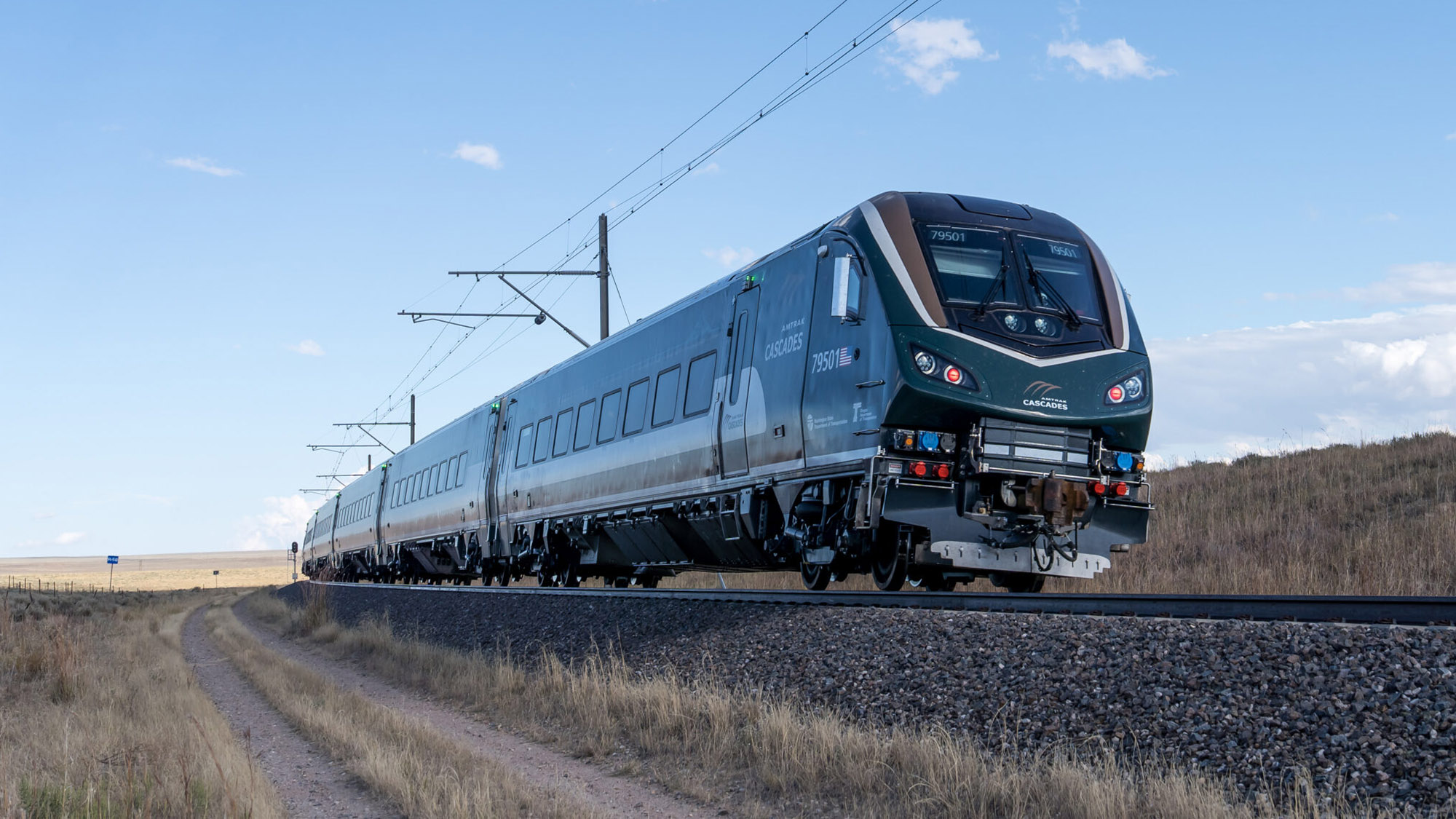
Amtrak plans to begin deploying 83 new Airo trainsets this fall, starting with eight on the Pacific Northwest's Cascades route between Seattle, Portland, and Vancouver, British Columbia. The $8 billion investment will eventually serve more than a dozen routes across New England, Pennsylvania, and the mid-Atlantic region. The trains can reach speeds up to 125 mph and each Cascades set will carry 317 passengers, significantly more than the current rolling stock.
The new equipment replaces trains that in some cases date to the 1970s and follows last summer's introduction of NextGen Acela trains on the Northeast Corridor. Amtrak says the hardware will provide significant environmental benefits while improving reliability and comfort. The rollout comes after the Infrastructure Investment and Jobs Act allocated $66 billion for passenger and freight rail, though the Trump administration has proposed severe cuts to passenger rail funding; the federal government announced $3 billion in Amtrak funding, including $2 billion for train purchases, in August.
Built in the U.S. by Siemens, the Airo trains feature dual-mode electric and diesel propulsion, allowing them to operate on both electrified and conventional tracks without changing locomotives. This capability will particularly benefit riders on the Northeast Regional route between Virginia and Boston, who currently face waits of up to an hour at Washington, D.C.'s Union Station during engine swaps. Those trains enter service in 2027.
The locomotives meet the Environmental Protection Agency's Tier 4 emissions standards, the strictest rules for locomotive engines, significantly reducing particulate matter and nitrogen oxide emissions. Rail currently carries 8 percent of the world's passengers while accounting for just 2 percent of global transportation energy demand. Professor Alex Scott of the University of Tennessee-Knoxville noted that even diesel-powered rail remains more efficient per passenger than individual car travel, including electric vehicles.
Advocates say the new trainsets could enable more frequent service. Charlie Hamilton of All Aboard Washington said hourly trains would be very helpful and the Airo equipment makes that possible. Virginia has invested $6 billion in its Transforming Rail in Virginia program, and the Virginia Passenger Rail Authority said the combination of new trains and improved infrastructure will give riders a more reliable experience.
Amtrak set ridership records for two consecutive years before this rollout. The carrier has not specified by how much trip times will be reduced on multiple routes, though the trains' higher top speed and quicker mode transitions are expected to contribute. The dual-mode design addresses a longstanding operational bottleneck on routes that cross between electrified and non-electrified territory.
The Airo procurement represents the most substantial fleet renewal for Amtrak in decades. While much of the U.S. passenger rail network remains unelectrified, the new diesel engines are substantially cleaner than the units they replace. The investment aims to make an already efficient mode of transport even cleaner while expanding capacity on corridors where train travel already competes with highway travel times.
All aboard Amtrak’s sleeker, cleaner new trains
This is an independent summary. The complete reporting, supporting context and any primary documents remain with Grist.