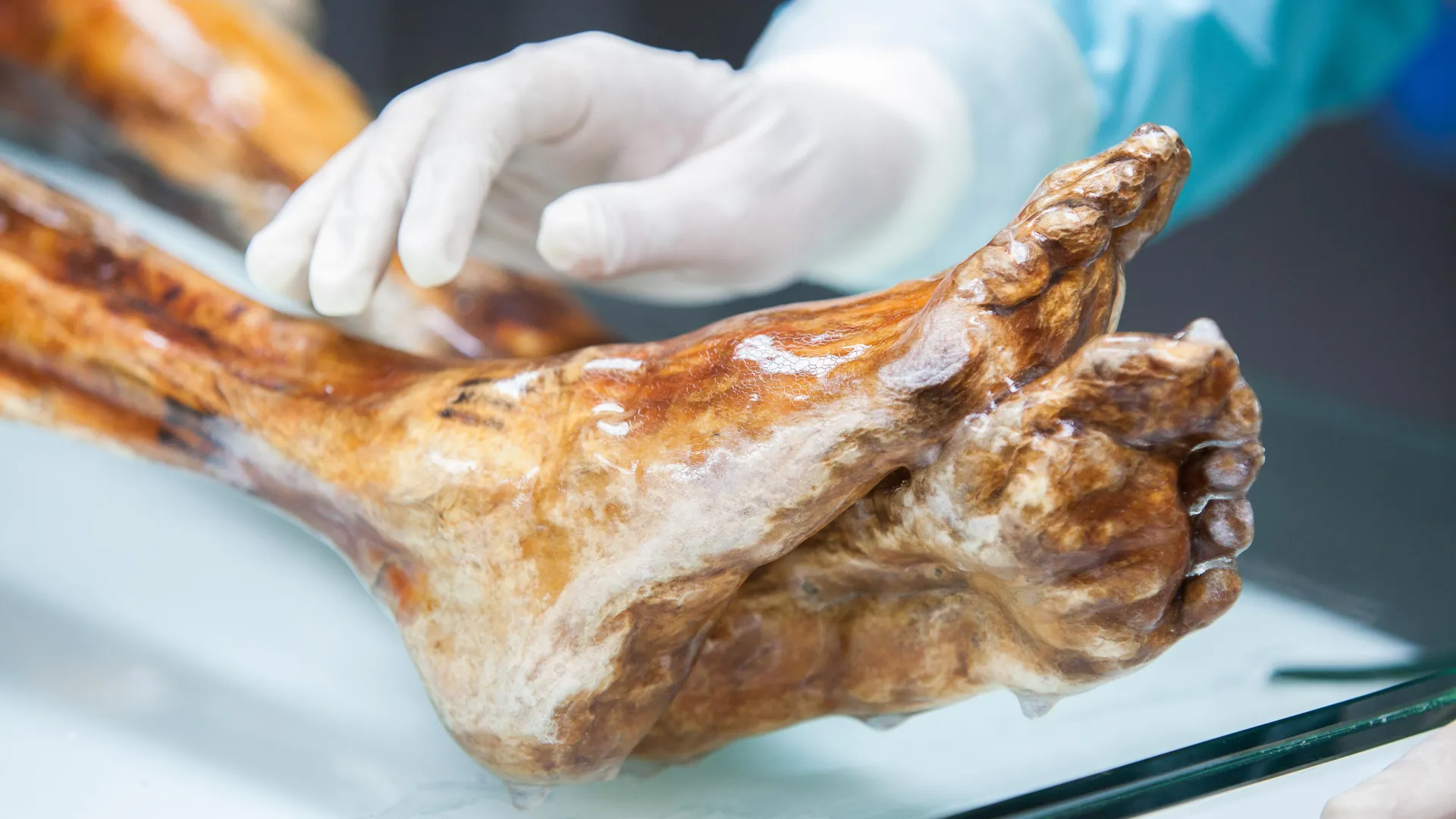
Researchers from Eurac Research have identified a mix of ancient and modern microorganisms on Ötzi the Iceman, the 5,300-year-old natural mummy preserved in a refrigerated chamber at the South Tyrol Museum of Archaeology. The study, published in the journal Microbiome, used multiple sampling techniques to distinguish microbes that lived in Ötzi during his lifetime from those that colonized his body after death, either in the glacier or during modern conservation.
Genetic material recovered from internal tissues, including intestinal tract and stomach contents, revealed bacteria that were part of Ötzi's original gut flora. This microbial community closely resembles the limited number of known microbiomes from early human populations and includes bacteria rarely found in people living in modern industrialized societies. The findings confirm and expand on a 2019 study that first documented Ötzi's gut microbiome.
In an unexpected discovery, the team identified cold-adapted yeast species on skin samples, internal meltwater, and stomach contents. Genetic testing shows these yeasts are related to strains found in extremely cold environments such as Antarctica, supporting the hypothesis that they originated in the glacier and may have remained associated with Ötzi for thousands of years. The researchers detected both heavily degraded ancient DNA and well-preserved modern DNA from these organisms.
The presence of both ancient and modern genetic material suggests the microorganisms are not merely biological remnants but continue to exist under the mummy's current storage conditions of minus six degrees Celsius and high humidity. Some may be surviving in a dormant state. "We see continuity here," said Frank Maixner, director of the Institute for Mummy Studies at Eurac Research. "These yeasts have accompanied Ötzi on his long journey through the millennia."
The study also found that past conservation treatments may have influenced the microbial community. Three of the four identified yeast species possess the genetic ability to break down phenol, which was used after Ötzi's recovery in 1991 to remove fungal growth from the mummy's surface. The yeasts may have used the substance as a food source, according to lead author Mohamed S. Sarhan.
Conservation experts emphasize that the mummy's current conditions are stable and under close microbiological monitoring. However, Marco Samadelli, a conservation expert and co-author, noted that the conditions under which glacial mummies are preserved over such long periods are not yet fully understood. The research aims to expand this knowledge to improve preservation methods for Ötzi and other ancient remains.
Beyond archaeology, the cold-adapted microorganisms identified in the study could have practical industrial applications. Because these organisms function at temperatures that would slow or stop many other species, they could support low-temperature fermentation and other industrial processes that require less energy.
The research team included scientists from Eurac Research's Institute for Mummy Studies and the South Tyrol Museum of Archaeology. The study was published in Microbiome in 2026.
Scientists find unexpected life on Ötzi the Iceman’s 5,300-year-old body
This is an independent summary. The complete reporting, supporting context and any primary documents remain with ScienceDaily.