For more than 150 years, archaeologists largely assumed that women in prehistoric societies rarely held military, social, or political power. This view, solidified by late 19th-century British researchers, treated grave goods buried with women as displays of their husbands' wealth rather than indicators of the women's own status.
Ancient DNA analysis has begun to dismantle that consensus. In July 2026, researchers announced that a 4,000-year-old, well-furnished grave near Stonehenge — long thought to hold a male goldsmith — actually contained a woman. Similar revelations have emerged from a Viking warrior burial in Birka, Sweden, where genetic testing confirmed the interred individual was female, prompting initial skepticism from some scholars.
A 2025 study involving nearly 50 scientists found evidence for female lineages at Neolithic Çatalhöyük (7000–6000 B.C.) in Anatolia. Burial traditions at the site prioritized female offspring and descendants, suggesting inheritance operated through the female line. This aligns with earlier arguments by scholar Marija Gimbutas, whose work was long dismissed by mainstream archaeology.
The picture varies by region and period. At the Hazleton North long barrow in Gloucestershire, England (3700–3600 B.C.), DNA revealed a Neolithic polygynous arrangement: four women buried with their shared male partner. In contrast, Bronze Age sites on Orkney showed descent traced through the male line, with women moving outside their natal communities.
Iron Age evidence for matrilineal systems continues to accumulate. A 2024 Max Planck Institute study documented the first scientific evidence for Early Iron Age matrilineal dynastic succession in Germany. In 2025, researchers identified matrilocality and matrilineal descent in Late Iron Age Dorset, and 13 generations of matrilineal descent have been traced in third-century B.C. Yorkshire, alongside five other British sites with similar patterns.
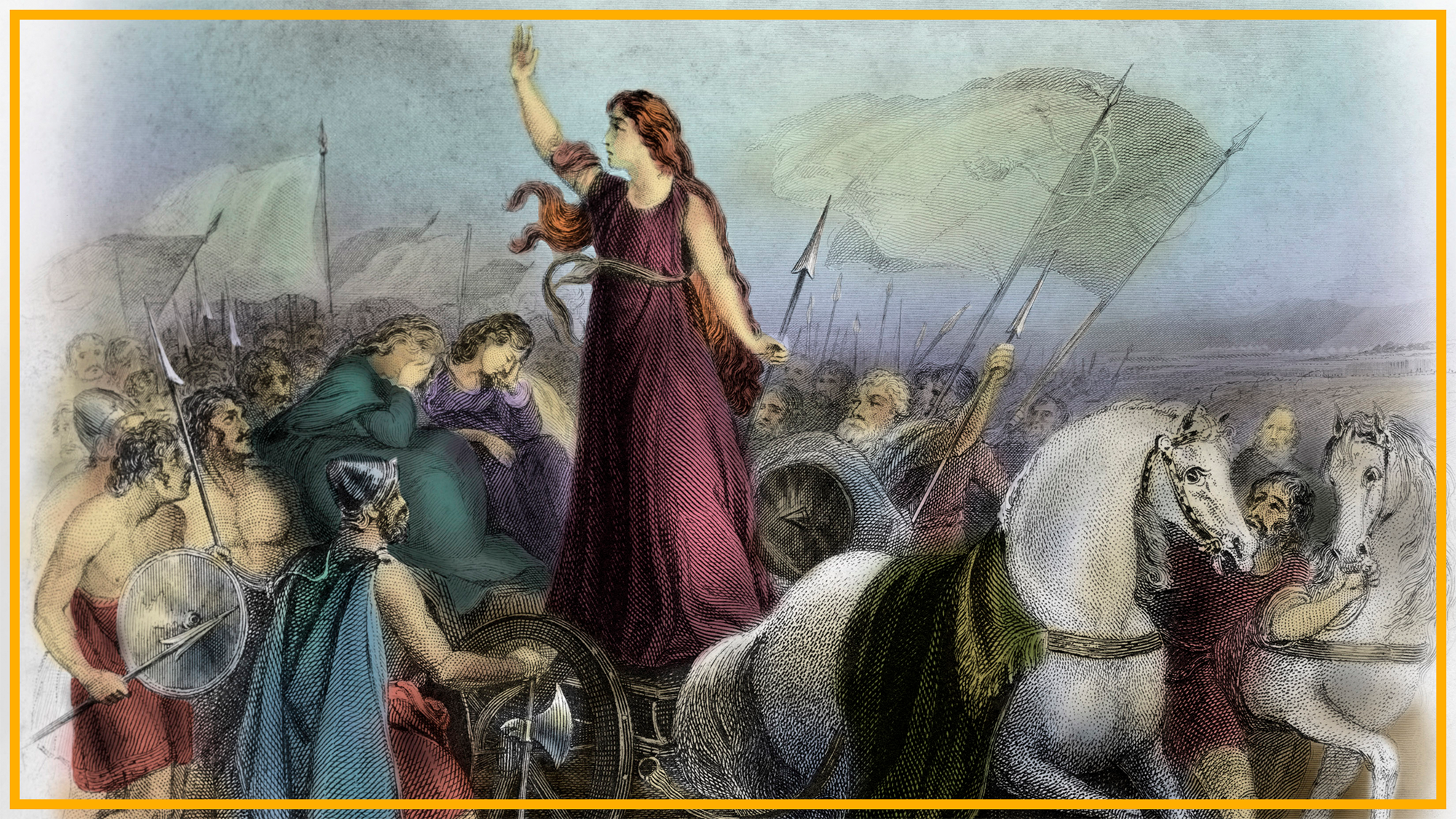
Skeletal analyses have also confirmed that some women fought in combat, corroborating Roman accounts of leaders like Boudica. German archaeologists recognized high-status women in Early Iron Age Europe as early as the 1970s, particularly at the Heuneburg hillfort, and later Iron Age cemeteries in the Paris Basin and East Yorkshire show relative gender parity in burial treatment.
Rachel Pope, professor of European prehistory at the University of Liverpool, argues that prehistoric societies were smaller and more regionally diverse than traditionally assumed. The emerging genetic data reveals a patchwork of social forms — some male-focused, some female-focused — rather than a universal patriarchal model.
Researchers emphasize the need to remain objective and expect further surprises as ancient genomics continues to reshape understanding of past gender roles.
Archeologists used to think women in prehistory wielded no power. Genetic data is upending that idea.
This is an independent summary. The complete reporting, supporting context and any primary documents remain with Live Science.