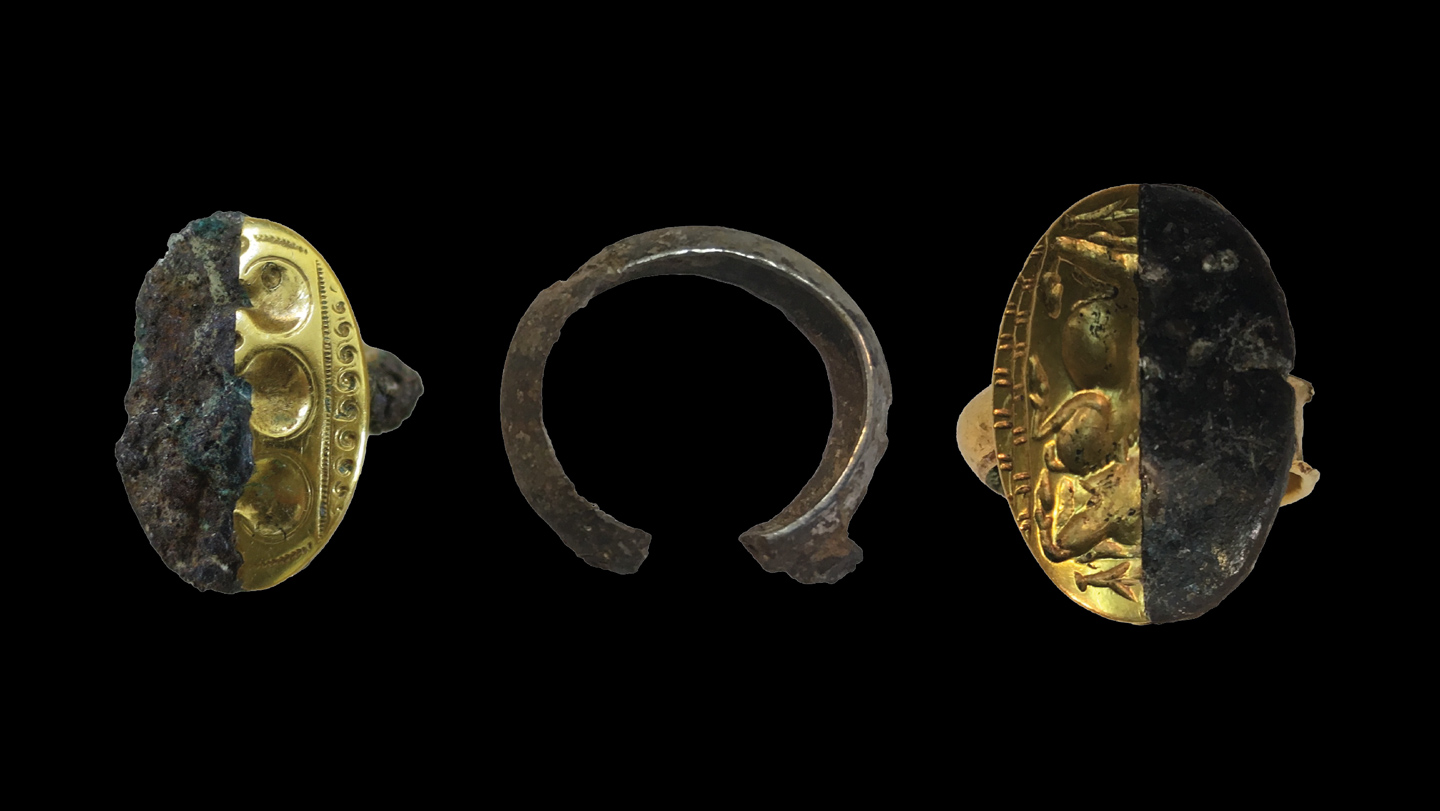
Researchers analyzing 91 iron objects from Bronze Age Greece and Crete found nickel traces in 13 signet rings, indicating the iron likely originated from meteorites. The study, published in the August 2026 Journal of Archaeological Science, used X-ray fluorescence to examine artifacts from 33 archaeological sites dating between 3,000 and 4,000 years ago.
Most iron objects from the period showed no nickel, consistent with early smelting of terrestrial ores. In contrast, meteoritic iron typically contains high nickel concentrations, sometimes up to 50 percent. Of the 13 nickel-bearing rings, researchers concluded 10 were probably made from meteoric iron, while three require further study.
The rings were recovered from elite tombs, houses, and a temple in southern Greece and Crete, often layered with gold and silver. Prehistoric archaeologist Eleni Mantzourani of the University of Athens said the findings show meteoritic iron was considered a precious metal reserved for high-status individuals, likely elite Mycenaeans and Minoans.
Given the scarcity of meteorites in the coastal Aegean region, the researchers suggest the raw metal was imported from Egypt, where arid deserts preserve meteorites and meteoric iron was already prized. A dagger of meteoric iron was previously identified in King Tutankhamun's tomb.
The practice appears to have ended around the 12th century B.C., coinciding with the Late Bronze Age collapse that ended the Mycenaean civilization. The Minoan civilization on Crete had already fallen by this time, possibly due to a volcanic eruption.
The study was conducted by Mantzourani and Matthieu Gounelle, an astrophysicist and chemist at the French Natural History Museum in Paris. Their work adds to evidence of long-distance trade and the symbolic value of extraterrestrial materials in the ancient Mediterranean.
Ancient Greek rings may have been forged with iron from meteorites
This is an independent summary. The complete reporting, supporting context and any primary documents remain with Science News.