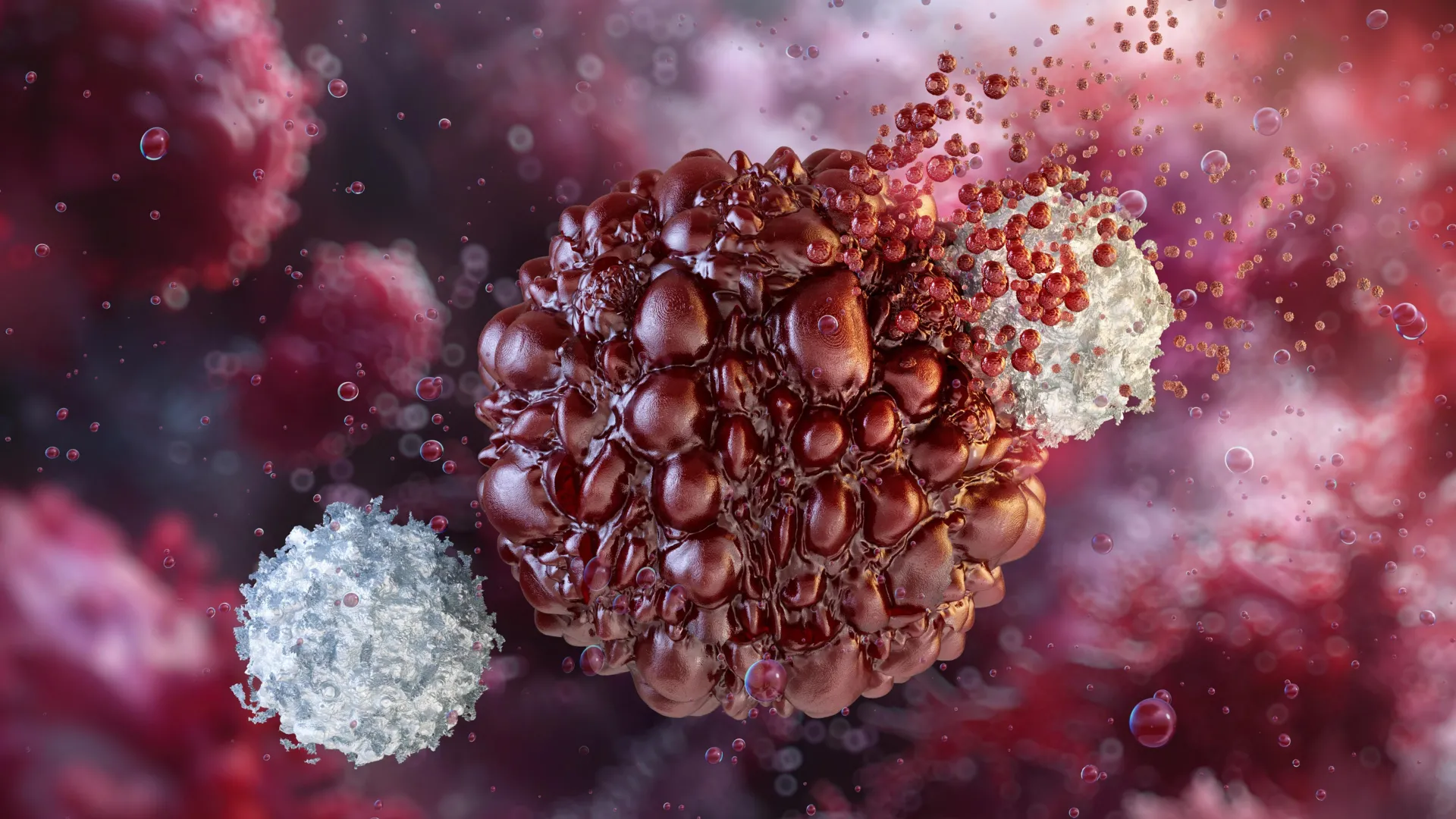
Scientists at Nagoya University have discovered that the immune protein complement C3, which evolved before blood circulation existed, can dramatically improve the effectiveness of cancer immunotherapy when produced directly inside tumor tissue. The study, published in Nature Communications, shows that C3 generated by cancer-associated fibroblasts prevents immunosuppressive myeloid cells from infiltrating the tumor microenvironment, giving the immune system a better chance to attack cancer cells.
Experiments in mice demonstrated that circulating C3 from the liver had no effect on treatment outcomes. Reducing liver-derived C3 by 90 percent did not diminish the efficacy of an anti-PD-1 antibody, whereas stopping fibroblasts inside the tumor from making C3 reduced effectiveness even though total circulating C3 fell by only 9 percent. The critical factor was local C3 breaking down into a fragment called iC3b, which blocks the entry of harmful myeloid cells.
The researchers then tested a drug designed to mimic this mechanism in tumors that normally resist immunotherapy. The approach restored the treatment's ability to work and significantly extended survival in mice. This suggests a potential strategy for patients whose tumors do not naturally produce enough C3.
Analysis of lung cancer patient samples supported the mouse findings. Patients with higher levels of C3 in the tissue surrounding cancer cells had better treatment responses and longer survival; about half of those with high local C3 responded to therapy, while none with low levels did. Bloodstream C3 levels showed no correlation with outcomes.
The team plans to investigate ways to increase C3 production inside tumors and to determine optimal timing for such interventions. They also note that understanding local C3 activity could shed light on other processes such as wound healing and inflammation regulation.
A protein older than blood circulation could transform cancer immunotherapy
This is an independent summary. The complete reporting, supporting context and any primary documents remain with ScienceDaily.