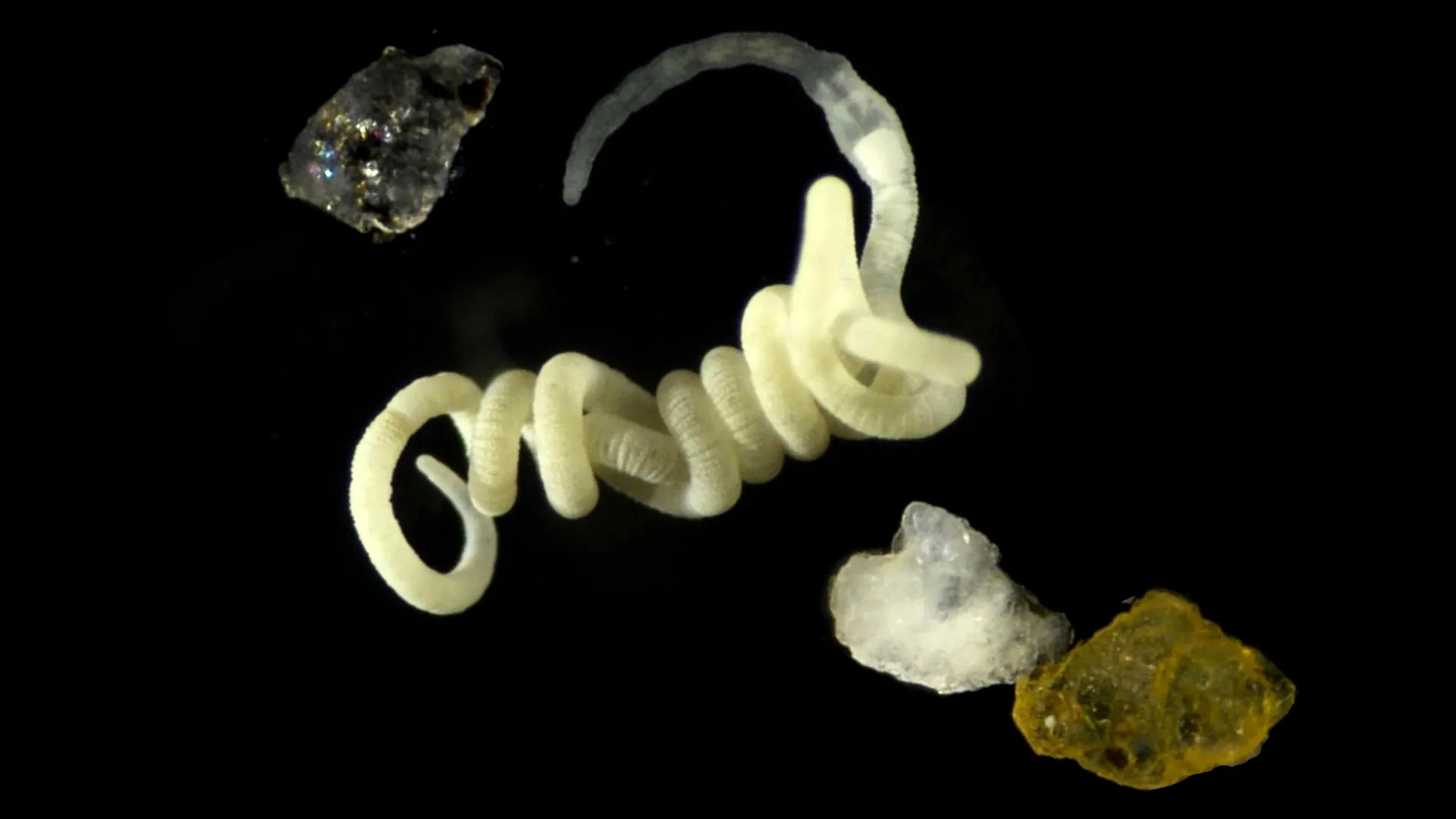
Scientists at the Max Planck Institute for Marine Microbiology have discovered that a wide range of animals possess enzymes capable of degrading polyhydroxyalkanoates (PHAs), biodegradable polymers that microorganisms produce and store as carbon and energy reserves. The finding, published in Nature Ecology & Evolution, challenges the long-held assumption that only microorganisms can break down these natural bioplastics.
The investigation began with the gutless marine worm Olavius algarvensis, which lacks a digestive tract and relies on symbiotic bacteria living beneath its skin for nutrition. One of these bacterial symbionts accumulates large amounts of PHA. Researchers identified an enzyme in the worm that breaks down microbial PHAs into usable molecules, and imaging showed the enzyme is produced where the worm digests its bacterial partners.
Expanding their search across animal genomes, the team found related enzymes in more than 66 species spanning nine phyla, including sponges, earthworms, springtails, and starfish. Laboratory tests confirmed that enzymes from these distantly related animals could also degrade microbial PHAs.
PHAs are produced by many bacteria and archaea when carbon is abundant, and they occur naturally in soils, sediments, and aquatic environments worldwide. They are also manufactured industrially as biodegradable plastics for packaging, agricultural coatings, and medical devices such as resorbable sutures.
The discovery reveals a previously unrecognized pathway for microbial carbon to enter animal food webs. Researchers caution that the ecological significance of this process — how common it is in natural ecosystems and how much it contributes to global carbon cycling — remains unknown.
The study illustrates how research on unusual organisms can uncover biological processes that may have operated for hundreds of millions of years without detection.
Lead author Caroline Zeidler said the widespread distribution of these enzymes across the animal tree of life was the most surprising result. Co-corresponding author Maggie Sogin noted that animals have likely been accessing this microbial carbon reserve for hundreds of millions of years.
Animals have been eating nature’s original bioplastic for millions of years
This is an independent summary. The complete reporting, supporting context and any primary documents remain with ScienceDaily.