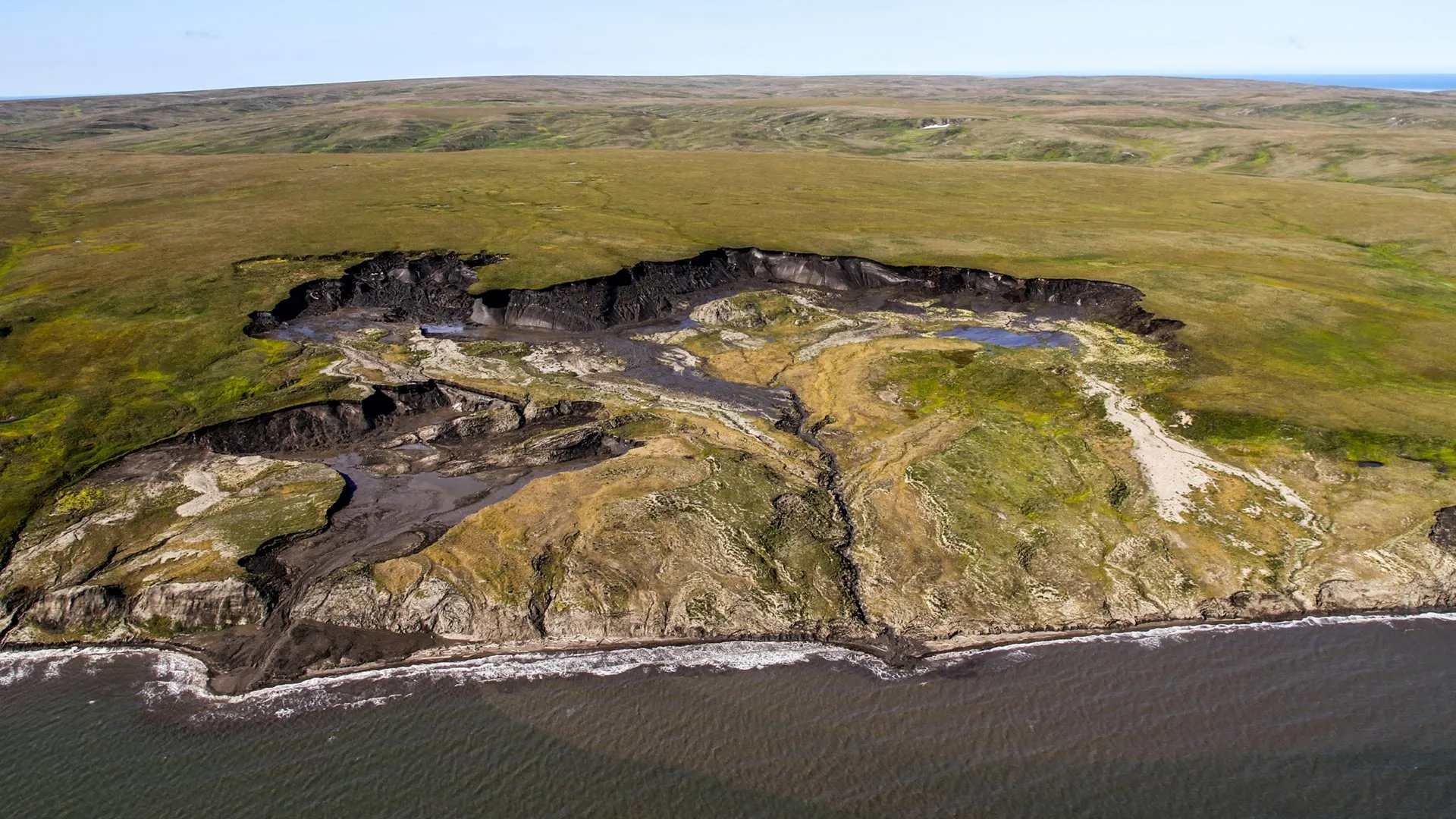
Thawing Arctic permafrost and coastal erosion are delivering increasing amounts of ancient organic carbon into the Arctic Ocean, raising concerns that microbes could convert it into greenhouse gases. Researchers from the Alfred Wegener Institute and MARUM at the University of Bremen investigated this process along the permafrost coast of Qikiqtaruk, also known as Herschel Island, in Canada.
The team analyzed sediment cores spanning roughly 50 years of deposition to track the fate of carbon entering the nearshore marine environment. They found that microorganisms convert only around ten percent of the organic carbon from sediments into gases such as carbon dioxide that can reach the atmosphere.
The vast majority of the land-derived carbon remains buried in the seabed, effectively removed from the active carbon cycle. Permafrost ecosystems on Arctic land hold an estimated 1,300 gigatonnes of organic carbon, with an additional 400 gigatonnes in ocean sediments and river deltas.
Current estimates indicate up to 0.02 gigatonnes of carbon enter the sea each year from thawing permafrost and coastal erosion, a flux projected to increase by 70 to 150 percent by 2100. Understanding how much of this carbon is respired versus buried is critical for climate projections.
Isotopic analysis of pore water in the sediment cores revealed that sediment-dwelling microbes preferentially consume fresh marine carbon from sources such as algal remains rather than older carbon released from permafrost. The researchers describe these microorganisms as "gourmet" bacteria that favor newer, more labile organic material.
Because microbes favor fresh carbon, the older permafrost-derived carbon may contribute less to atmospheric greenhouse gas levels than previously feared. However, the authors caution that some permafrost carbon could already be degraded before it reaches the seabed, a process not fully captured by the sediment record.
The influx of terrestrial carbon also affects coastal ecosystems by increasing water turbidity and reducing light penetration, which can suppress primary production by algae and alter food webs supporting fish, crustaceans, and seals. Further research is planned during the international Arctic Pulse campaign in 2027.
The findings, published in Nature Geoscience, provide a more precise quantification of carbon burial versus remineralization in nearshore Arctic sediments. This data offers an important foundation for improving climate models that predict the global consequences of permafrost thaw.
Ancient Arctic carbon is pouring into the sea, but the seabed captures most of it
This is an independent summary. The complete reporting, supporting context and any primary documents remain with ScienceDaily.