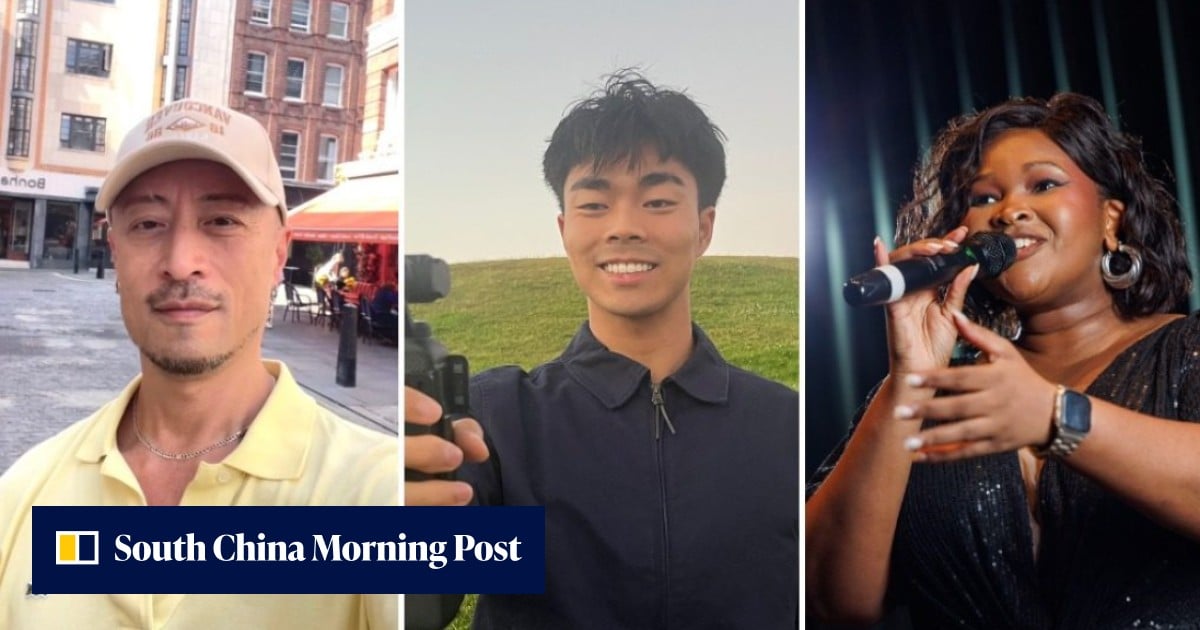
A growing number of social media influencers are documenting their experiences learning and using Cantonese, creating a grassroots revival of the language online. Unlike traditional language teachers, these creators share personal motivations — from reconnecting with family to exploring cultural heritage — that resonate with both diaspora members and new learners. Their content ranges from musical performances and lyric analyses to cooking family recipes and discussing cultural concepts like yeet hei, a traditional Chinese medicine term for "heating energy."
South African jazz singer Mihi Matshingana, 35, began learning Cantonese after relocating to Hong Kong in 2022 for a residency at the Rosewood Hong Kong hotel. She now performs at Frites Macau and documents her progress on Instagram under @mihituwi, where one video of her singing a Cantonese version of George Michael's "Careless Whisper" garnered over 15,000 likes. Matshingana says her faith motivated her to learn the language to connect culturally with local audiences, and she found deep emotional resonance in songs like Beyond's "Boundless Oceans, Vast Skies." Her followers include diaspora members inspired to reclaim their heritage language and expats encouraged to learn without fear of imperfection.
Donnie Wong, 54, known as Uncle Donnie on Instagram (@uncledonnie88), started his account in May 2025 after his mother's death. Born in Hong Kong and raised in the UK from 1979, Wong lost fluency when his parents banned Cantonese at home to prioritize English. Decades later, as his mother's health declined, she reverted to speaking only Cantonese. Wong relearned the language to communicate with her before she passed away. His account now serves to preserve her memory and the language, attracting a strong following in Vancouver, which he notes has the largest Cantonese population outside Hong Kong.
Andrew Bui, 22, launched @andrew.buoy in November 2025 to improve his Cantonese for deeper conversations with his grandmother, a first-generation immigrant. Despite attending a Cantonese-immersion school in California, Bui was not fluent at home due to his mixed Chinese-Vietnamese parentage. A cultural exchange at the University of Hong Kong and a visit to Guangzhou — where he was surprised to hear little Cantonese spoken — heightened his urgency to preserve the language. His posts, which include making family recipes with his grandmother, have drawn over 106,000 followers. Many commenters share that his content mirrors their own family traditions.
The creators emphasize that Cantonese carries emotional weight tied to elders and cultural memory. Wong describes it as a "language of love" linked to his parents, uncles, and aunties. Bui aims to "immortalise these traditional recipes so anyone can recreate them in the future" as older generations pass away. Matshingana notes the healing power of singing culturally relevant songs to audiences. Together, their platforms illustrate how digital spaces are becoming venues for intergenerational transmission and community building around a language facing demographic pressures.
Researchers have long noted Cantonese's vulnerability as Mandarin dominates formal education and media in Greater China. However, these grassroots efforts show a bottom-up resurgence driven by personal stakes rather than institutional policy. The creators do not position themselves as authorities but as learners, lowering barriers for others to participate. Their content blends language practice with cultural literacy, addressing both linguistic and identity needs.
The phenomenon reflects broader patterns of heritage language reclamation among diaspora communities worldwide. By sharing imperfect, ongoing journeys, these influencers normalize the difficulties of language maintenance and foster supportive networks. Their reach extends beyond ethnic enclaves, engaging diverse audiences in the cultural specificity of Cantonese expression.
Want to learn Cantonese? These influencers are sparking a Canto revival on social media
This is an independent summary. The complete reporting, supporting context and any primary documents remain with South China Morning Post Culture.