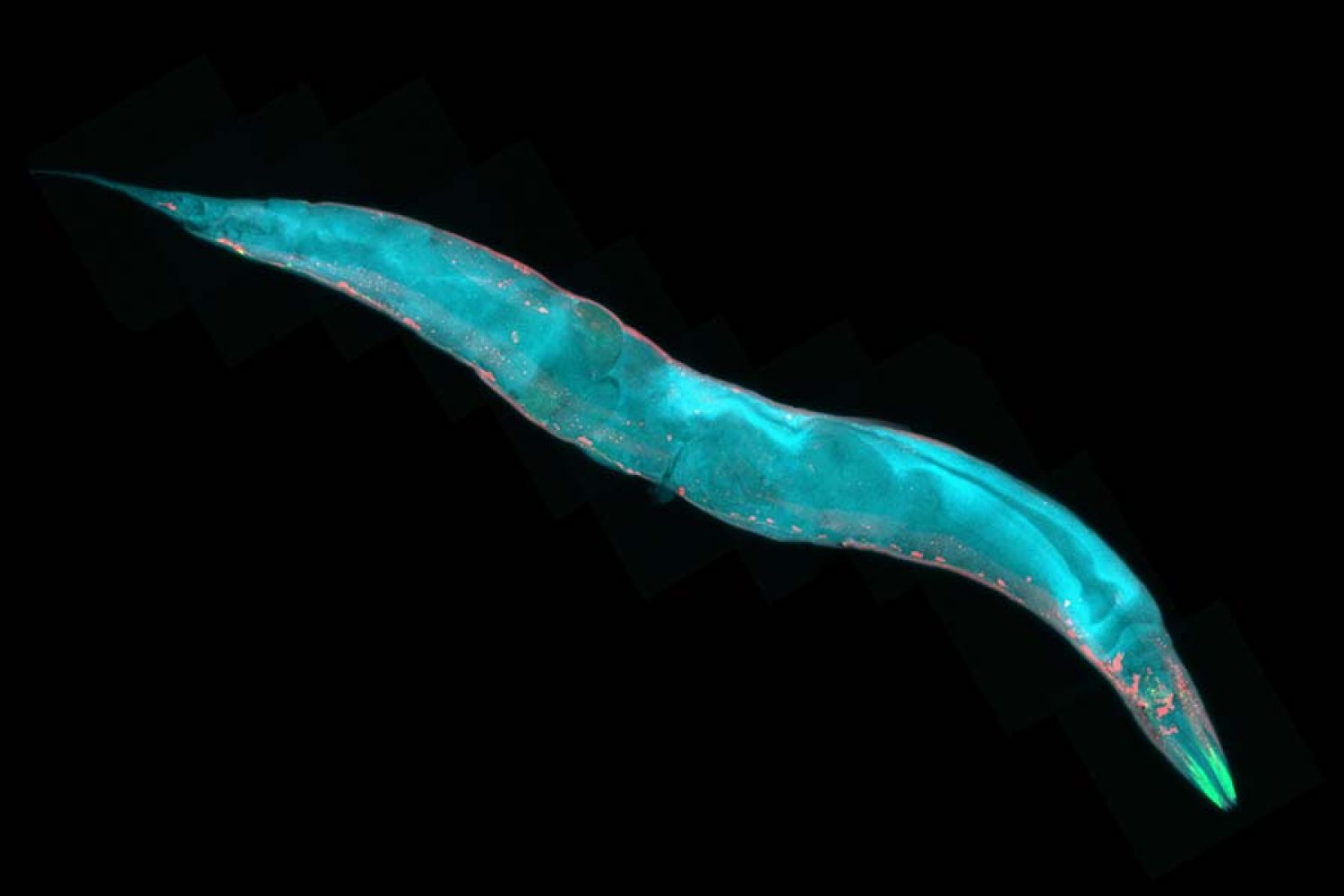
MIT researchers have discovered that the cohesin protein complex, which organizes the three-dimensional structure of the genome, acts as a molecular switch determining the identity of specific neurons during development. The study, conducted in the laboratory of H. Robert Horvitz at the McGovern Institute for Brain Research, was published July 31 in Science Advances.
Using the nematode C. elegans, which has a fully mapped nervous system of 118 neuron classes, postdoc Dongyeop Lee investigated worms with a mutation in the coh-1 gene, a component of the cohesin complex. These worms produced excess adrenergic neurons—specifically RIM and RIC pairs—at the expense of neurons that normally produce the inhibitory neurotransmitter GABA.
Further experiments showed that cohesin cooperates with the gene-regulating protein EOR-1, known as PLZF in humans. By reorganizing genomic architecture, cohesin alters how EOR-1 interacts with DNA, steering precursor cells toward a GABAergic fate. When either cohesin or EOR-1 is impaired, those precursors instead become adrenergic neurons.
The findings demonstrate that the spatial arrangement of DNA in the nucleus is a critical factor in neuronal fate determination. Lee describes cohesin as a switch that chooses between two alternative developmental paths for certain neurons.
Mutations disrupting cohesin also caused broad developmental defects in the worms, including slow growth, movement difficulties, and reproductive problems. These phenotypes mirror aspects of Cornelia de Lange syndrome, a rare human disorder caused by cohesin mutations that affects physical, cognitive, and behavioral development.
The Horvitz lab has already identified genetic suppressor mutations that improve the health of cohesin-deficient worms. The team is now working to pinpoint the genes involved, assessing their potential as therapeutic targets for Cornelia de Lange syndrome. Researchers are also exploring whether cohesin guides the fate of other neuron types and searching for additional molecular partners in this pathway.
DNA shaper steers nervous system development
This is an independent summary. The complete reporting, supporting context and any primary documents remain with MIT News.