NASA launched the Mars Science Laboratory carrying the Curiosity rover on November 26, 2011. The spacecraft arrived at Mars on August 6, 2012, beginning a descent sequence that engineers nicknamed the "seven minutes of terror" for its complexity and lack of real-time control from Earth.
During those seven minutes, a supersonic parachute deployed after atmospheric entry, the heat shield and backshell separated, and a rocket-powered skycrane lowered the rover on cables to the surface. The landing marked the first use of the skycrane technique for a planetary mission.
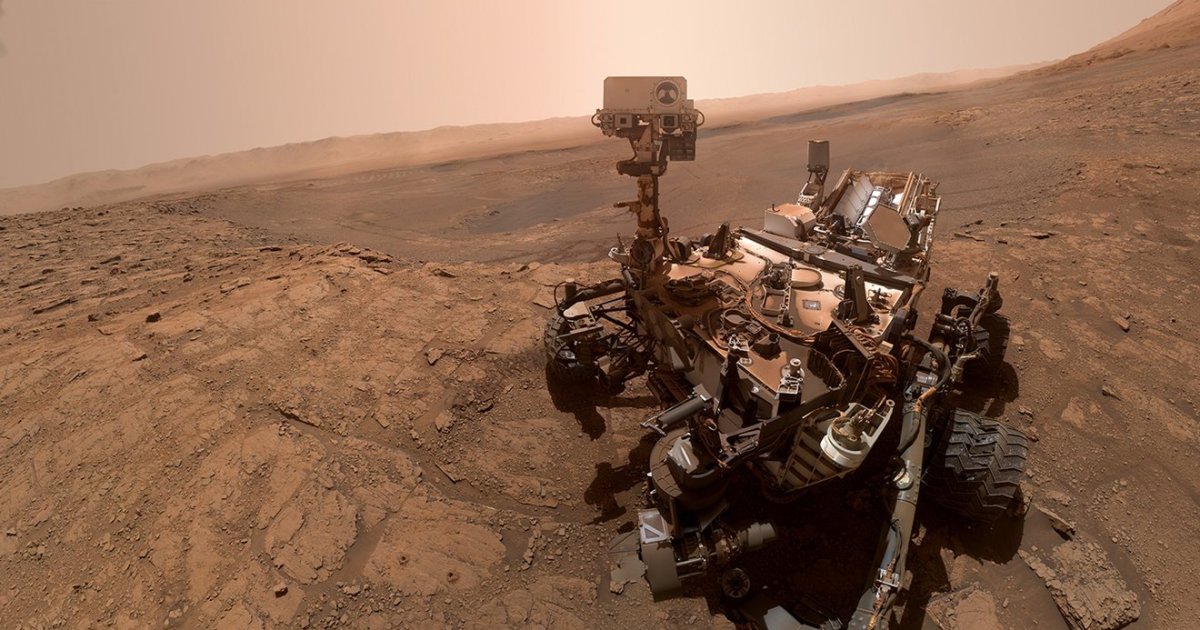
Curiosity carries 10 science instruments and 17 cameras designed to analyze mineral types, search for signs of past microbial life, and capture color panoramas of the Martian landscape. The rover's robotic arm enables it to take self-portraits by stitching together multiple images.
Since landing in Gale Crater, Curiosity has operated continuously, returning data and images that have reshaped scientific understanding of Mars' habitability. The mission has found evidence of ancient freshwater lakes and organic molecules in sedimentary rocks.
As of 2026, the rover remains active on the Martian surface, continuing its climb up Mount Sharp to study the planet's geological history. Its longevity has far exceeded the original two-year primary mission.
The skycrane landing system pioneered by Curiosity was later used for the Perseverance rover mission in 2021, demonstrating the technique's reliability for delivering heavy payloads to Mars.
Curiosity's ongoing operations provide a continuous record of environmental conditions and geological processes, supporting future human and robotic exploration planning.
The mission represents a significant advancement in precision landing capability and mobile laboratory science on another planet.
Aug. 6, 2012: Curiosity lands on Mars
This is an independent summary. The complete reporting, supporting context and any primary documents remain with Astronomy Magazine.