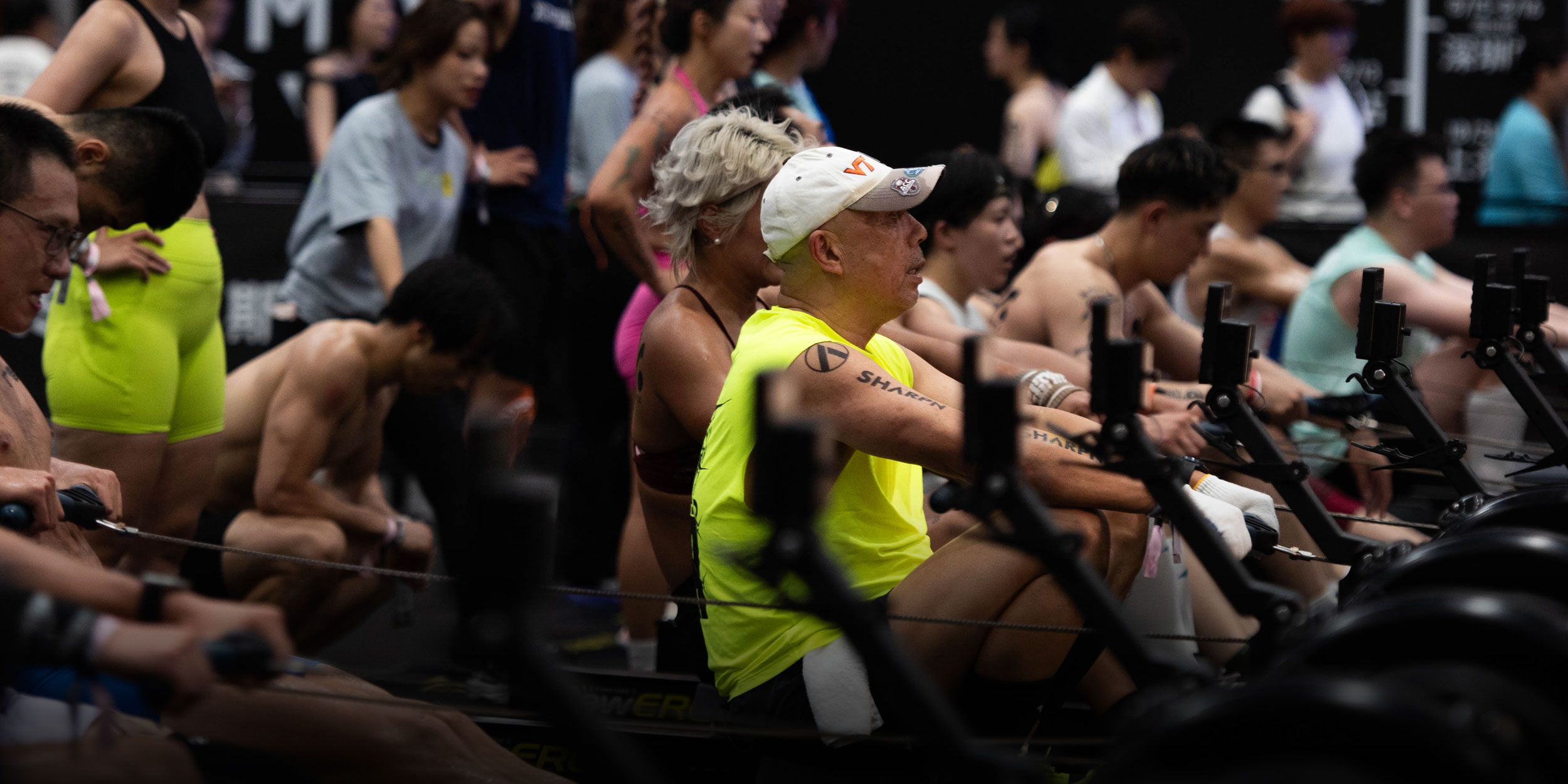
Hyrox, a fitness race format originating in Germany that combines eight 1-kilometer runs with strength exercises such as sled pushes and lunges, has expanded rapidly in China since its first official event in 2024. Races now regularly attract over 10,000 participants and sell out within minutes, with entry fees up to 800 yuan ($125). While the sport initially drew young, middle-class professionals in competitive industries, a growing number of retirees are now taking part, often in team categories that allow workload sharing and have no cut-off time.
Wang Hui, a 68-year-old retiree from Beijing, entered her first Hyrox race in Hangzhou in July 2026 after her daughter, Xie Shanshan, signed her up. Wang trained for two months, progressing from short jogs to 8-kilometer runs, and completed the event alongside her daughter. She described the experience as a way to break out of a post-retirement routine of scrolling social media and watching television, saying it reenergized her thinking and values through connection with younger generations.
Yu Lian, a 45-year-old CrossFit enthusiast, invited her 74-year-old father to compete as a team. He trained seriously for nearly two months, losing 5 kilograms through regular brisk walks. During the race, he exceeded expectations by participating in strength stations and completing a wall-ball throw on his second attempt. Yu said the event fostered a rare depth of interaction with her father, whose generation typically expressed affection through deeds rather than words.
Wang Zheng, a 32-year-old fitness professional with 22 Hyrox races to his name, competed in the mixed-doubles category with his 65-year-old mother, Ma Jing. Ma moved to Shenzhen to train with him for months, eventually running 5 to 10 kilometers daily and strength training 20 days a month. The pair finished the Shanghai race in 100 minutes, and Ma has since scheduled additional races, saying the experience shattered her self-doubt and proved that participation itself is a reward.
Medical professionals have raised concerns about injury risks for older beginners. Li Cong, a sports rehabilitation instructor in Shanghai, warned that fatigue from running compromises stabilizing muscles, increasing the likelihood of lower-back and knee injuries during subsequent weighted exercises. Sun Yang, a senior rehabilitation therapist at Huashan Hospital and a Hyrox participant herself, emphasized the importance of resting at any sign of discomfort rather than training through pain or exhaustion.
Despite the risks, participants and their families describe the races as a meaningful avenue for intergenerational bonding. Adult children view the shared challenge as a way to give aging parents a "healthy jolt" and create connections that daily life rarely permits. For the elderly competitors, the events offer a structured goal, social engagement, and a measurable sense of physical capability that counters narratives of inevitable decline.
The trend reflects a broader shift in how some urban Chinese families approach aging, blending high-intensity fitness culture with traditional filial expectations. While Hyrox remains demanding, its team formats and inclusive pacing have lowered barriers for older adults, turning a hardcore sport into an unexpected platform for family connection and late-life reinvention.
China’s Elderly Embrace an Unlikely New Sport: Hyrox Races
This is an independent summary. The complete reporting, supporting context and any primary documents remain with Sixth Tone.