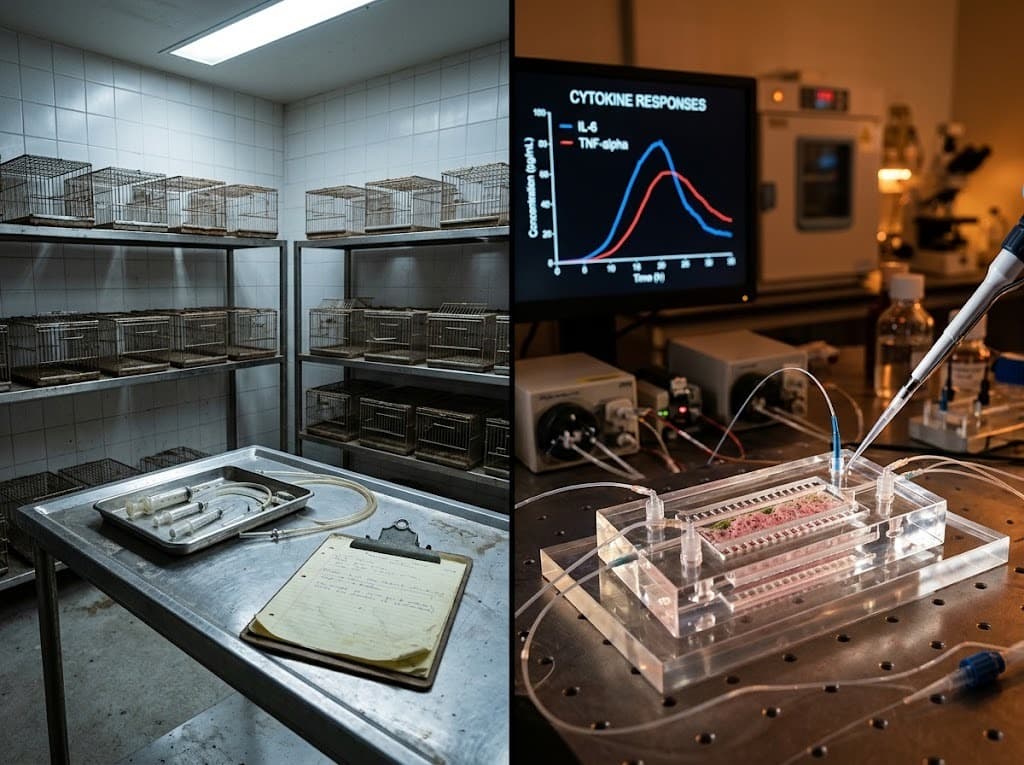
The U.S. Food and Drug Administration has accepted the TraCe-bMPS platform, developed at the University of Rochester, into its Innovative Science and Technology Approaches for New Drugs (ISTAND) pilot program. The decision marks the first step toward qualifying the technology as a method whose data drug sponsors could submit with applications for new medicines.
The platform consists of modular µSiM chips lined with ultra-thin silicon membranes on which human cells are cultured. Integrated sensors continuously measure inflammatory signals, allowing researchers to observe immune responses in real time rather than reconstructing them from post-mortem animal data.
The system targets two specific complications of cancer immunotherapy: cytokine release syndrome, a runaway release of immune signaling molecules that can cause multi-organ failure, and immune effector cell-associated neurotoxicity syndrome (ICANS), which can lead to brain swelling, confusion and seizures. Both are leading reasons that promising immuno-oncology trials are halted.
James McGrath, professor of biomedical engineering and director of the TraCe-bMPS center, states that animal models repeatedly fail to predict cytokine storms in humans because the immune systems of macaques and rodents respond differently to the same antibodies; key receptors and signaling cascades do not match. The chips, seeded with human cells, replicate tissue barrier functions such as the blood-brain barrier that determines whether toxic immune signals reach the brain.
The FDA's move follows the 2022 FDA Modernization Act 2.0, which removed the statutory requirement that new drugs be tested in animals before human trials and explicitly permitted alternatives including organ-chips and computer modeling. Inclusion of TraCe-bMPS in ISTAND is one of the first practical implementations of that law.
Developers must now agree with the agency on a clinical validation plan covering timelines, data-exchange protocols and statistical criteria for reliability. If qualification is granted, pharmaceutical companies could for the first time replace a portion of animal tests with data generated exclusively from human cells in a microfluidic device for these specific, life-threatening complications.
The technology remains in the pilot phase; no qualification decision has been made, and the scope of any future replacement of animal testing would be limited to the two toxicities under evaluation.
FDA впервые допустило «органы на чипе» к тестированию лекарств: технология обещает заменить животных предсказанием опасных реакций на человеческих клетках
This is an independent summary. The complete reporting, supporting context and any primary documents remain with iXBT.