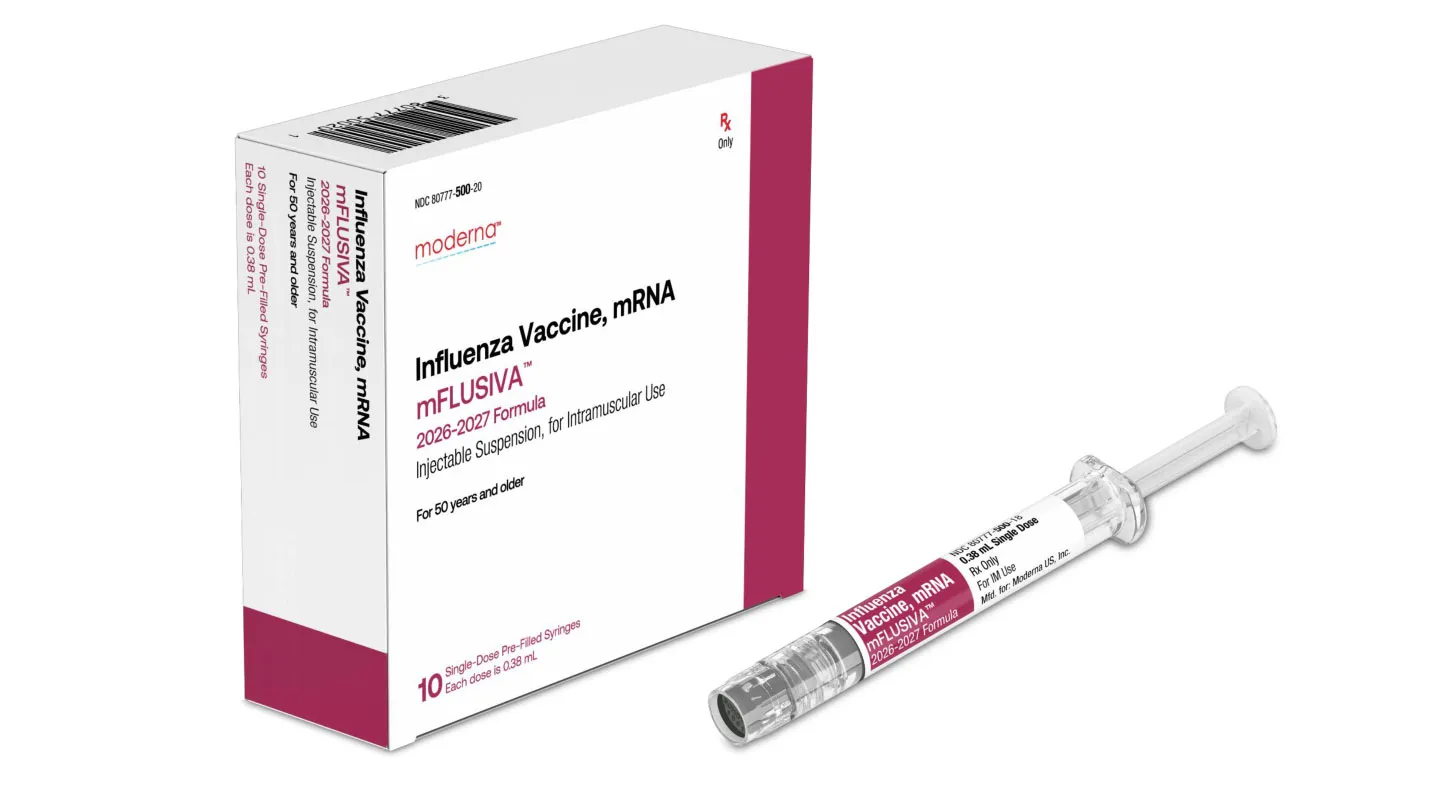
The U.S. Food and Drug Administration approved the first influenza vaccine using mRNA technology on August 5, clearing Moderna's mFlusiva for people ages 50 and older ahead of the upcoming flu season.
The approval is based on a Phase 3 trial of 40,000 participants who received either mFlusiva or a conventional egg-based flu shot. The mRNA vaccine group experienced 27 percent fewer influenza cases.
Conventional flu vaccines, typically grown in chicken eggs, require strain selection months in advance and offer 40 percent to 60 percent effectiveness depending on how well the chosen strains match circulating viruses.
Because mRNA vaccines can be produced in a few months rather than the longer egg-based timeline, manufacturers could potentially update the formulation if a strain mismatch emerges during the season.
A companion study published in Nature Immunology in June found that mFlusiva generated higher antibody levels one month after vaccination and that those levels persisted for six months, suggesting longer-lasting protection.
Moderna received accelerated approval for the 50-and-older age group because trial data showed stronger protection in that population, particularly among people over 65 who face higher risk of severe illness and death.
The company has not announced a timeline for seeking approval in younger age groups. Immunologists note that all flu vaccines reduce transmission risk regardless of age.
Researchers will continue to study whether mRNA flu vaccines can reduce community transmission rates, which could further lower hospitalization numbers in future seasons.
Here’s what the first mRNA flu vaccine could mean for flu season
This is an independent summary. The complete reporting, supporting context and any primary documents remain with Science News.