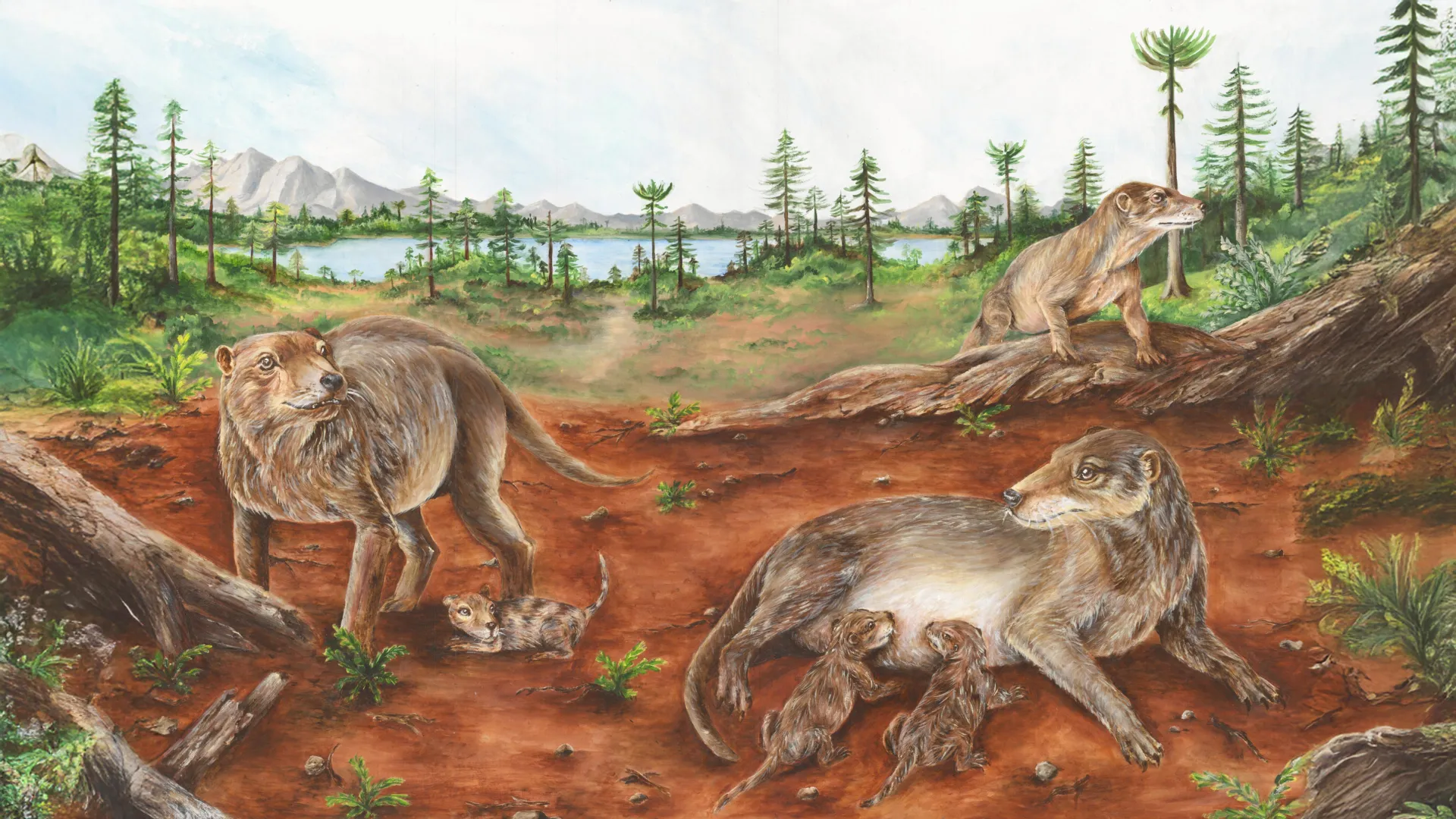
Researchers analyzing a fossil of the cynodont species Chiniquodon theotonicus, discovered in northwestern Argentina and dated to approximately 236 million years ago, have identified a microscopic neonatal growth line in its bone structure. Such lines form in response to the rapid growth spurt that occurs shortly after birth in modern mammals.
The study, published in Frontiers in Mammal Science and led by paleontologist Leandro Gaetano of CONICET in Argentina, used the growth line to estimate the animal's size at birth and compared it with its estimated adult mass of about 12 kilograms. The newborn is calculated to have weighed roughly 1.7 kilograms, or about 14 percent of its eventual adult body mass.
This neonate-to-adult mass ratio is far higher than those typical of egg-laying reptiles and birds of comparable size, which generally produce hatchlings representing less than 1 percent to about 4.5 percent of adult mass. Instead, the ratio falls squarely within the range seen in modern placental mammals of similar size, such as the bay duiker antelope.
The researchers excluded egg-laying monotremes and marsupials, which produce extremely small young, from the comparative dataset to focus on placental mammal patterns. The close match suggests that C. theotonicus gave birth to live, relatively well-developed offspring rather than laying eggs.
Senior author Adriana Mancuso noted that the Triassic environment featured high competition, predation pressure, and increasing aridity and seasonality, conditions that would favor internal gestation over exposed eggs. The finding implies that viviparity originated in the mammalian lineage at least 90 to 95 million years earlier than previously documented.
Co-author María Miceli Baro emphasized that embryonic tissues had never before been observed in cynodont fossils, making the neonatal line a novel proxy for reproductive mode. The authors caution that C. theotonicus may not represent an isolated case and that more fossils are needed to test whether live birth was widespread among early cynodonts.
The study introduces a methodological framework combining bone histology and allometric scaling to infer reproductive strategies in extinct synapsids, offering a new tool for investigating the deep history of mammalian traits.
A 236-million-year-old fossil could rewrite the story of mammalian birth
This is an independent summary. The complete reporting, supporting context and any primary documents remain with ScienceDaily.