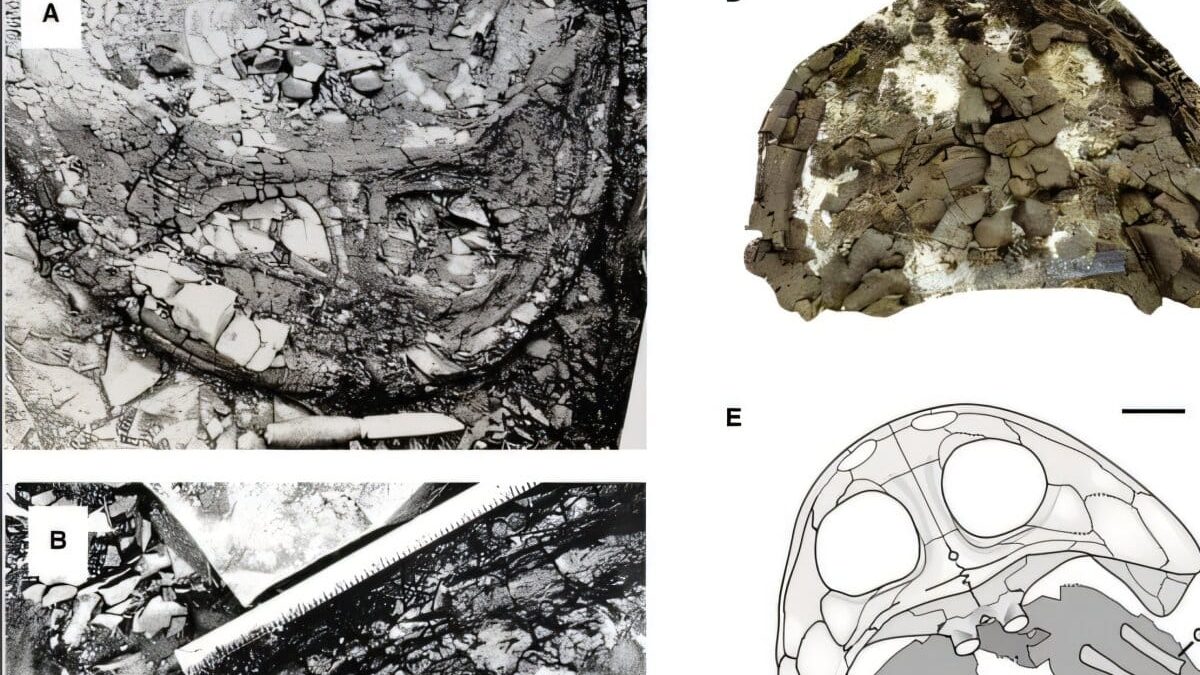
Paleontologists have identified a new species of plagiosaurid, an extinct group of temnospondyl amphibians, from fossil bones collected in 1948 on an island in the Barents Sea.
The specimens remained in museum collections for decades before a recent study recognized them as a distinct taxon.
The animal lived approximately 250 million years ago during the Early Triassic period.
At nearly three meters in length, it is the largest known member of the Plagiosauridae family.
Plagiosaurids were flat-bodied, aquatic predators with broad skulls and reduced limbs, adapted to life in freshwater environments.
The discovery extends the known geographic range of the group into the high Arctic of the Triassic.
Researchers say the find provides new data on the diversity and size evolution of temnospondyls after the end-Permian mass extinction.
The study was published in a peer-reviewed journal, though the specific publication was not named in the source material.
Найденная в Арктике 80 лет назад окаменелость оказалась гигантской хищной амфибией из триасового периода
This is an independent summary. The complete reporting, supporting context and any primary documents remain with Naked Science.