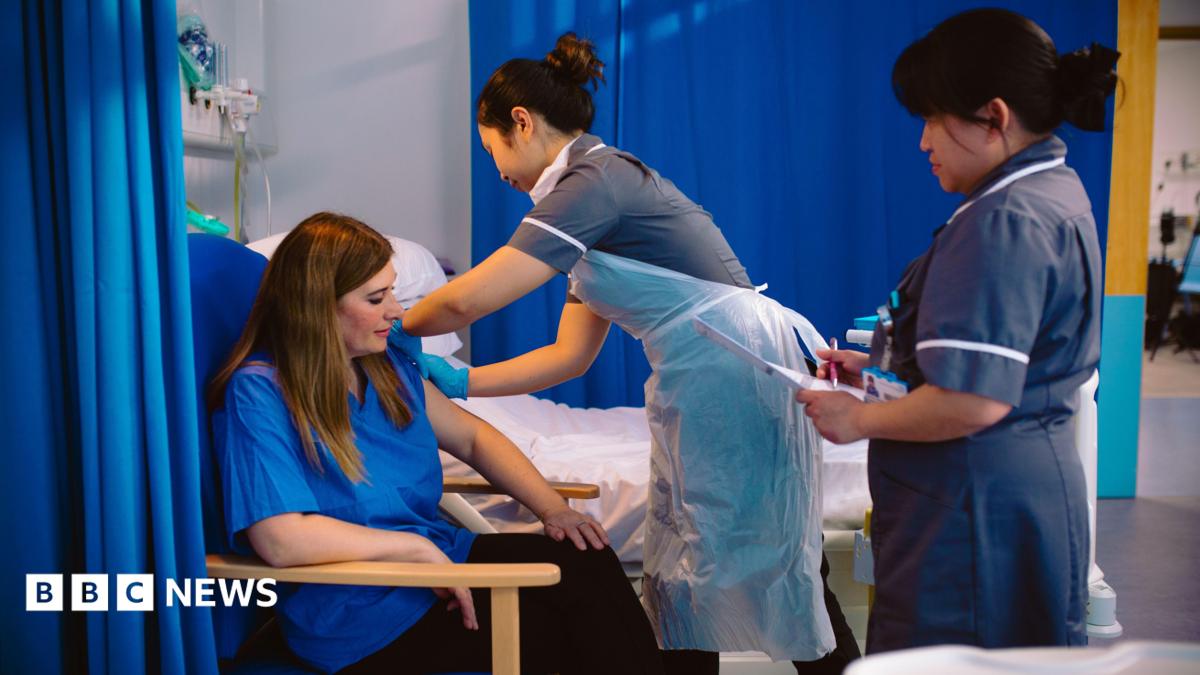
UK scientists have successfully trialled a "fridge-free" vaccine in humans for the first time, converting a liquid tetanus-diphtheria vaccine into a dry powder that remained stable at room temperature for a year before being reconstituted and injected. The early-stage trial involved 60 volunteers and was conducted by the National Institute for Health and Care Research (NIHR) Clinical Research Facility in Southampton with the company Stablepharma.
The technology uses trehalose, a sugar produced by resurrection plants that protects cells during extreme dehydration, to stabilise the vaccine's active components during drying. Prof Saul Faust, director of the NIHR facility, reported that the dried vaccine generated "equivalent" immune responses to the conventional refrigerated version and was "safe and well tolerated" in participants.
Currently, most vaccines require strict temperature control from manufacture to administration, a logistics network known as the cold chain. The World Health Organization estimates that around half of all vaccines globally are wasted each year, with cold-chain failures during storage and transport being a major factor alongside expiration and unused doses from multi-dose vials.
The new approach aims to meet the WHO target of a vaccine that survives at 30°C and 75% relative humidity. Separate data from the research team indicates the components also withstand temperature cycling between -20°C and +40°C, potentially allowing transport in unrefrigerated conditions such as aircraft holds and trucks in hot climates.
A larger trial involving 160 people is scheduled to begin in the coming months. Because the original tetanus-diphtheria vaccine is already licensed, this final stage focuses on confirming the stability and immunogenicity of the dried formulation rather than establishing efficacy for a novel vaccine. Results have been published in eClinicalMedicine, part of the Lancet group.
Experts not involved in the study welcomed the advance but noted remaining questions. Prof Tuck Seng Wong, director of the UK-Southeast Asia Vaccine Manufacturing Research Hub, called it a "significant breakthrough" but highlighted the need to investigate stability under regularly fluctuating temperatures and performance in larger, more ethnically diverse populations.
The method cannot be applied to mRNA vaccines but could stabilise many existing vaccines and some refrigerated medicines such as monoclonal antibodies. Unicef's associate director of immunisation, Ephrem Tekle Lemango, said the innovation could help vaccinate more children by reducing dependence on refrigeration, while Stablepharma founder Dr Bruce Roser described reliable fridge-free vaccines as a potential "game-changer for global health."
Half of vaccines are binned - 'fridge-free' versions could change that
This is an independent summary. The complete reporting, supporting context and any primary documents remain with BBC News.