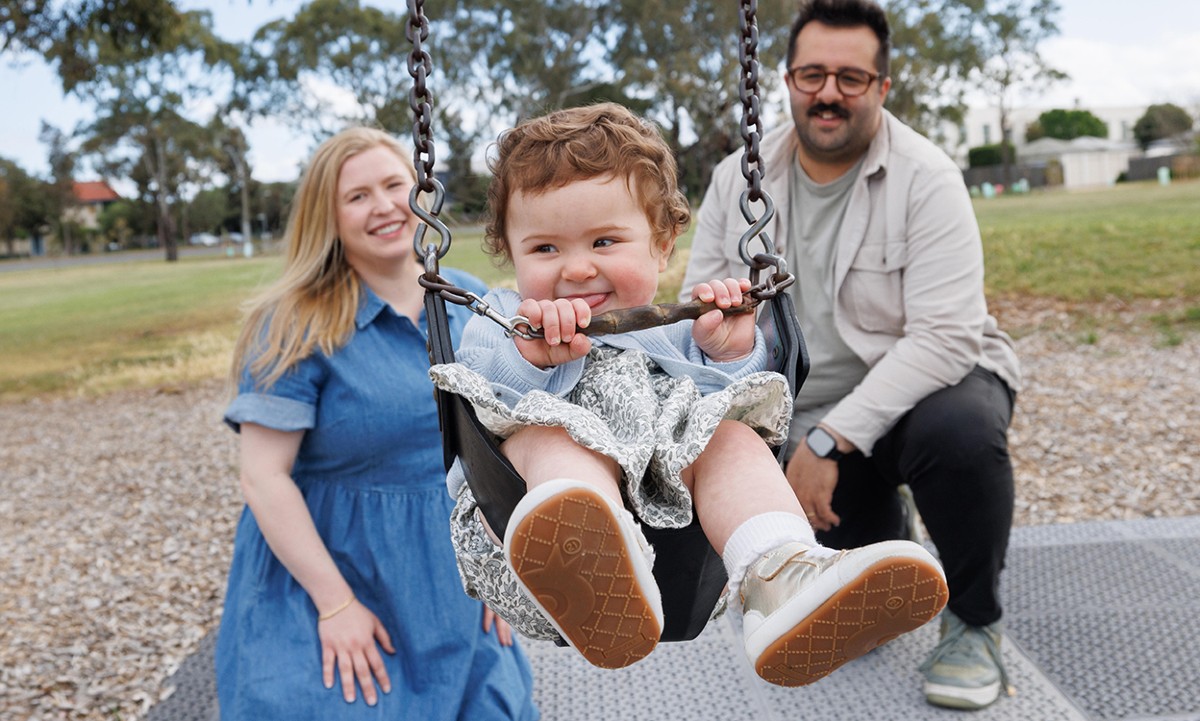
Two-year-old Giselle Ghattas received a bone-marrow transplant at six months old after a research study in Australia sequenced her genome and detected familial haemophagocytic lymphohistiocytosis, a rare immune disorder that can cause fatal organ failure if untreated. Her parents enrolled her in BabyScreen+ after seeing it on social media; without the study, they say they would still be searching for a diagnosis. The condition is not included in conventional newborn screening, which uses biochemical tests on dried blood spots to check for up to a few dozen mostly metabolic disorders.
Pilot programmes worldwide are now using the same dried blood spots to sequence hundreds of genes or the entire genome, screening for hundreds of severe, childhood-onset conditions. The GUARDIAN study in the United States reported confirmed findings in 2.7% of its first 15,000 participants, the vast majority for conditions not covered by standard panels. BabyScreen+ in Australia found confirmed results in 1.6% of 1,000 infants, and Belgium’s BabyDetect study confirmed conditions in 1.8% of nearly 4,000 newborns, including 0.8% that conventional screening would have missed.
Researchers say the consistency across different health systems and gene-panel designs is reassuring. Zornitza Stark, co-leader of BabyScreen+, noted that despite variations in the number of genes screened — ranging from 169 in North Carolina’s Early Check to 605 in BabyScreen+ — the detection rates are similar. Most programmes focus on disorders with some form of intervention, but the definition of "actionable" remains debated. Some studies offer optional expanded panels for conditions such as neurodevelopmental disorders where early seizure management may improve outcomes even without a cure.
The approach generates screening results, not diagnoses; all flagged findings require confirmatory testing. In GUARDIAN, 64 of 475 initially flagged infants showed no signs of disease at follow-up, while Early Check reported 22 such cases among 50 flagged infants. BabyScreen+ reported none. These discrepancies highlight the difficulty of predicting disease from genetic variants alone, especially when genotype–phenotype correlations are incomplete and variant databases disagree on pathogenicity.
Ethical and practical concerns persist. Robert Green, a medical geneticist at Harvard Medical School, cites privacy risks and potential insurance discrimination. Cost and scalability also remain barriers to broad implementation. For families, the experience varies: Dorka Nemes’s daughter Safi began growth-hormone therapy at six months for isolated growth-hormone deficiency, years earlier than Nemes herself was treated. In contrast, Drew Villano described distress after her son was flagged for a variant linked to Smith–Magenis syndrome; the finding was later deemed unlikely to cause disease, but she said the counselling was unclear and left her shaken.
Wendy Chung, principal investigator of GUARDIAN, argues that genomic screening enhances what she calls one of the most successful public-health initiatives because it leaves no one behind. Ned Calonge, former chair of a U.S. newborn-screening advisory group, cautions that screening is justified only when early detection leads to better outcomes. Researchers agree that resolving genotype–phenotype uncertainty will require testing thousands to millions of infants across diverse populations.
Current standard screening in the United States covers 66 recommended conditions and reaches 98% of the nearly 3.6 million infants born annually, identifying roughly 1 in 600 with a condition. Genomic sequencing could expand that reach dramatically, potentially identifying thousands more children worldwide with rare genetic diseases. However, the path from pilot studies to routine public-health practice depends on demonstrating consistent clinical utility, managing false-positive burdens, and addressing equity, consent and data-governance challenges.
Screening babies’ genomes could save lives. Here’s how it would work
This is an independent summary. The complete reporting, supporting context and any primary documents remain with Nature.