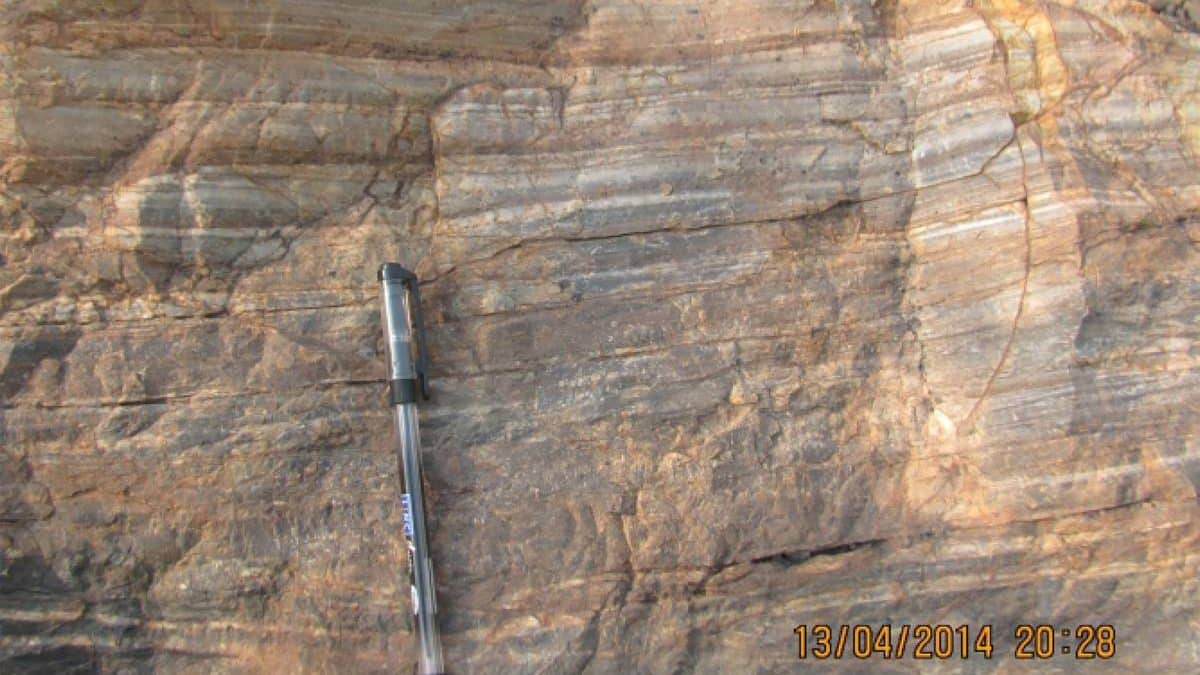
Geologists examining rock formations in eastern India have identified remnants of an ancient microbial mat preserved in sedimentary layers.
The age of the mat was determined by dating volcanic ash that fell onto the bacterial colonies 3.5 billion years ago, providing a direct radiometric constraint.
Previous claims of early life have often relied on indirect geological context or contested chemical signatures, whereas this find combines preserved organic structures with a precise volcanic time marker.
The microbial mat structures show laminated textures consistent with photosynthetic or chemosynthetic communities that thrived in shallow-water environments.
Researchers note that the preservation quality allows analysis of carbon isotopes and molecular fossils, which further support a biological origin.
The discovery pushes back the directly dated record of organic life by several hundred million years compared to previously confirmed sites.
Scientists caution that while the evidence is strong, ongoing work will test for possible non-biological mimics and refine the depositional setting.
The findings are expected to inform models of early Earth habitability and the timing of metabolic innovations such as oxygenic photosynthesis.
В породах возрастом 3,5 миллиарда лет нашли самые древние органические следы жизни
This is an independent summary. The complete reporting, supporting context and any primary documents remain with Naked Science.