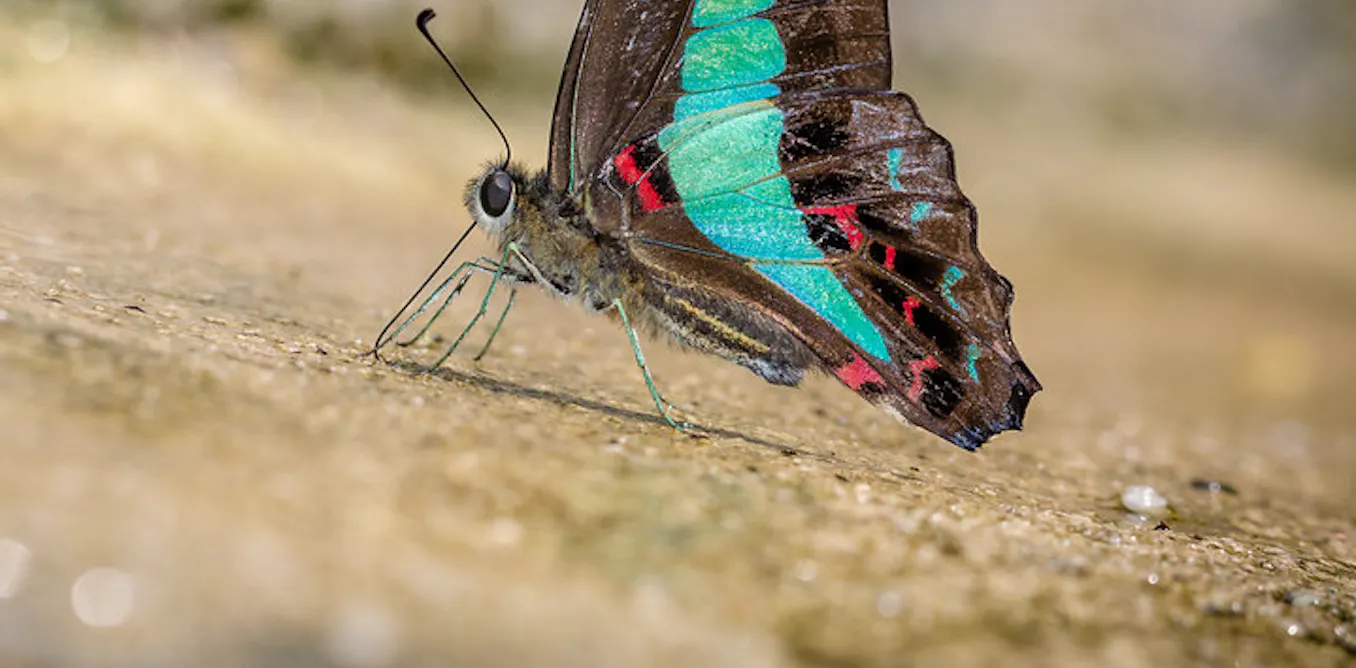
A global analysis published in the journal Global Change Biology has documented range shifts in 1,758 butterfly species across 105 countries, representing roughly one in ten known butterfly species worldwide. The study synthesized more than 6,180 reports from 565 scientific studies and 68 expert assessments.
Researchers found that 80% of the documented species had expanded their ranges latitudinally or longitudinally, while 27% had reduced their ranges and 22% had shifted up or down mountain slopes. Many species exhibited a combination of these changes rather than a simple poleward or upslope movement.
The tawny coster, native to the Indian subcontinent, has expanded through Southeast Asia into Australia. In Brazil, Godartiana byses has moved from Rio de Janeiro and Bahia into São Paulo, a shift linked to climate warming. Conversely, the small blue has lost 40% of its United Kingdom habitat over 150 years, and Germany's cranberry fritillary has declined due to bog drainage.
In Mexico, the painted lady shifted upslope at about 83 metres per year between 1988 and 2011, while the queen butterfly moved downslope at roughly 32 metres per year over the same period. The chocolate albatross expanded and contracted in Sri Lanka and moved down from higher elevations in Taiwan.
Climate change and extreme weather events were the most frequently cited drivers, but agriculture, forestry, urban development and habitat destruction also reshaped where butterflies can live and reproduce. These disturbances eliminate host plants and breeding sites and fragment habitats into patches too small to sustain populations.
Monitoring coverage is highly uneven. Some European countries have documented range shifts for more than half their national butterfly species, but in most countries records exist for fewer than 10% of known species. Knowledge gaps are largest in Central Africa, Southeast Asia, New Guinea and the Amazon Basin, regions that hold high biodiversity and where many species may already live near their upper thermal limits.
The authors argue that conservation planning must account for species on the move. Protected areas based on historical distribution maps quickly become outdated as species relocate. Effective conservation, they say, requires protecting not only where species once lived but also where they will move and the corridors they use to get there.
Butterflies contribute to pollination as adults and serve as prey for birds, spiders and other insects as caterpillars. Their disappearance can signal broader changes in plants, grasslands and woodlands, making them indicators of ecosystem health.
Butterflies are on the move as the planet warms: new research
This is an independent summary. The complete reporting, supporting context and any primary documents remain with The Conversation.