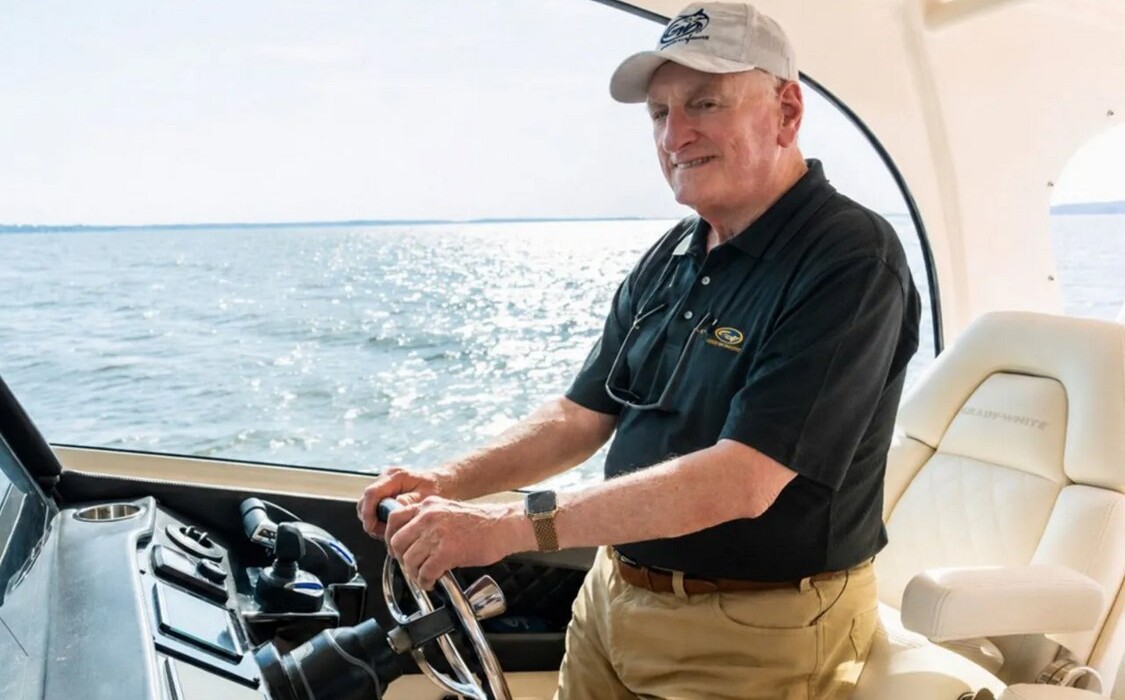
Grady-White Boats founder and longtime CEO Eddie Smith Jr. has transferred controlling ownership of the North Carolina boat builder to a perpetual purpose trust, ensuring the company will never be sold and its profits will fund philanthropic causes. Smith, who led the company for 58 years, turned down multiple acquisition offers valued at approximately half a billion dollars to pursue the arrangement.
The trust structure places voting shares under conditions that prohibit their sale, while non-voting shares will be held by a 501(c)(4) social welfare organization that will donate all profits to charitable purposes including community service and conservation. The company, which Smith took over in a near-bankrupt state and grew to average annual revenues exceeding $100 million, will continue operating under his established values, including profit-sharing and investment in employee education.
Smith cited the example of Patagonia founder Yvon Chouinard, who transferred his company to a similar trust structure for environmental philanthropy. In an interview with Fortune magazine, Smith said he observed that other CEOs who sold their businesses "lost their way" and the cultures they had built, a fate he wanted to avoid.
Born near the poverty line to a father orphaned during the Great Depression, Smith worked from childhood through college at the University of North Carolina, graduating in 1965. He borrowed money to acquire the struggling Grady-White Boats and devoted decades to its turnaround, forgoing personal pursuits such as golf for over 30 years.
Personal losses shaped his later decisions: Smith lost his wife and later his son to ALS. After those experiences, he said the substantial sale offers became easy to decline because he could not bear the thought of the company's culture being dismantled by new owners.
The perpetual purpose trust model is designed to lock in the founder's intent indefinitely, differing from conventional sales or family succession. By converting the business into what he described as a "financial engine" for philanthropy, Smith aimed to create lasting community benefit beyond his own lifetime.
Fortune magazine profiled the transaction in August 2026, noting the rarity of a CEO working 80- to 100-hour weeks for nearly six decades before choosing a structure that prioritizes mission over liquidity. The arrangement ensures Grady-White Boats remains independently operated while its earnings flow to designated charitable causes.
Inspiring CEO Gives Company to Charity After Working 80-hour Weeks for 58 Years, Saving it from Bankruptcy
This is an independent summary. The complete reporting, supporting context and any primary documents remain with Good News Network.