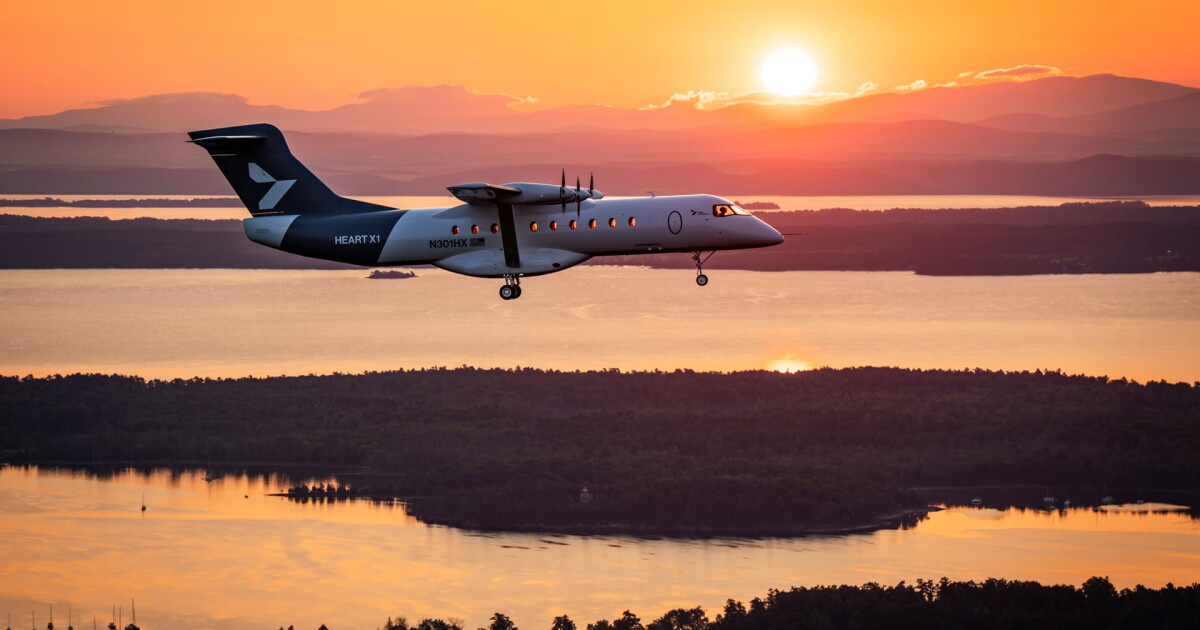
Swedish startup Heart Aerospace flew its X1 demonstrator aircraft for the first time on August 12, 2026, at Plattsburgh International Airport in New York. The 27-minute flight was conducted under an FAA Special Airworthiness Certificate in the Experimental Category.
The X1 has a wingspan of 106 feet (32 meters) and a maximum takeoff weight of 25,000 pounds (11,340 kilograms), making it the largest all-electric airplane to fly to date. During the test it reached an altitude of 1,100 feet (335 meters) and completed a full flight profile including taxi, takeoff, climb, maneuvering, and landing.
All-electric aircraft have been certified since 2020, but they have remained limited to small airframes because batteries store far less energy per kilogram than jet fuel and do not become lighter as the flight progresses. The X1 is designed to prove that electric propulsion can be scaled to the size of a conventional regional turboprop.
Heart Aerospace intends the X1 as a technology precursor to the ES-30, a planned 30-seat hybrid-electric regional airliner. The company states the ES-30 could achieve operating costs roughly 40 percent lower than current regional aircraft.
Founder and CEO Anders Forslund said the flight demonstrates electric flight at the scale of a commercial airliner and supports a vision of more affordable, frequent, and cleaner air service from airports closer to communities.
The demonstrator's takeoff weight is still well below that of existing regional turboprops such as the De Havilland Canada Dash 8-Q300, which weighs about 43,000 pounds (19,500 kilograms). The X1 also has lower speed and range than conventional counterparts, reflecting the current energy-density limits of battery technology.
Heart Aerospace will use data from the flight to advance the ES-30 program toward FAA certification. The company has not announced a timeline for entry into service.
World's largest all-electric plane completes maiden flight
This is an independent summary. The complete reporting, supporting context and any primary documents remain with New Atlas.