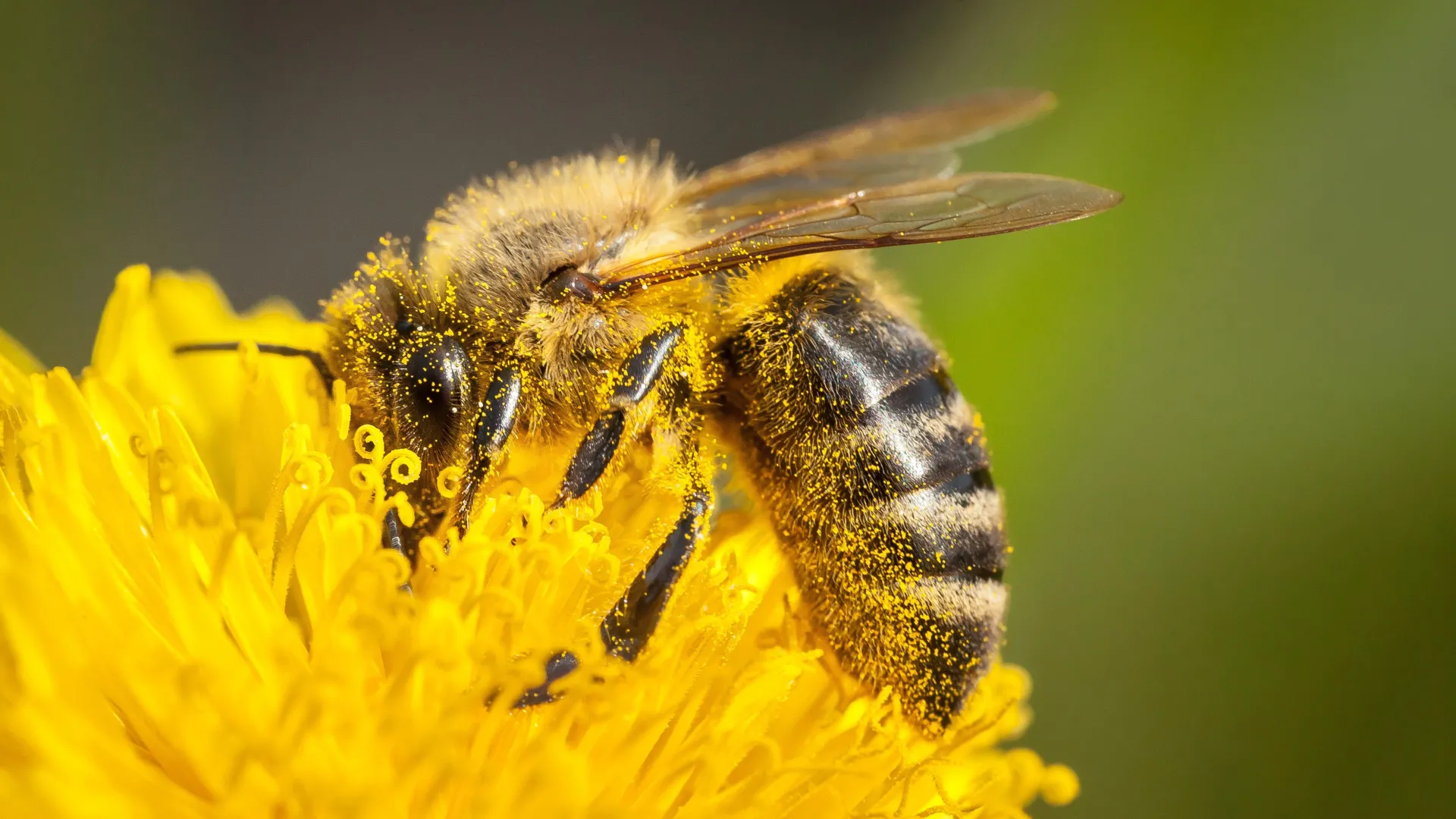
Researchers at the University of Oxford compared the essential amino acid composition of honeybee tissues with pollen from 99 UK flowering plant species across 26 families. Most individual pollen sources provided a poor match to the bees' nutritional requirements.
In controlled laboratory experiments, newly emerged worker bees were fed artificial diets mimicking either pollen profiles or bee tissue composition. Bees given diets matching their own tissue composition ate more, gained more mass, and selected a higher proportion of protein.
When diets contained relatively high levels of histidine compared with branched-chain amino acids such as leucine and isoleucine, the bees reduced their overall food intake, consuming less protein and carbohydrate. The authors suggest a post-digestive feedback mechanism may prevent harmful excesses of specific amino acids.
Inside the hive, worker bees collect pollen from diverse flowers and store it as bee bread. Nurse bees consume this material and convert it into glandular secretions including royal jelly. The study found bee bread had a more balanced essential amino acid profile than most single pollens, and royal jelly matched bee tissue composition even more closely.
This processing allows honeybee colonies to compensate for the nutritional shortcomings of individual pollen sources. Lead author Professor Geraldine Wright said the results suggest honeybees have evolved to create glandular secretions that provide larvae with the essential amino acid ratios that maximize growth.
Many wild bee species, including bumblebees and solitary bees, feed pollen directly to their offspring without similar processing. In habitats with low plant diversity, these bees may struggle to obtain a balanced amino acid profile for themselves and their young.
The findings indicate that pollinator-friendly planting schemes should consider not only flower abundance and seasonal continuity but also the nutritional quality and diversity of pollen sources. A varied diet may be essential for bees to achieve the right nutrient balance.
The study involved collaborators from the University of Southampton, Lancaster University, Newcastle University, and The Hebrew University of Jerusalem and was published in Current Biology.
Pollen has a surprising problem — and honeybees have found a way around it
This is an independent summary. The complete reporting, supporting context and any primary documents remain with ScienceDaily.