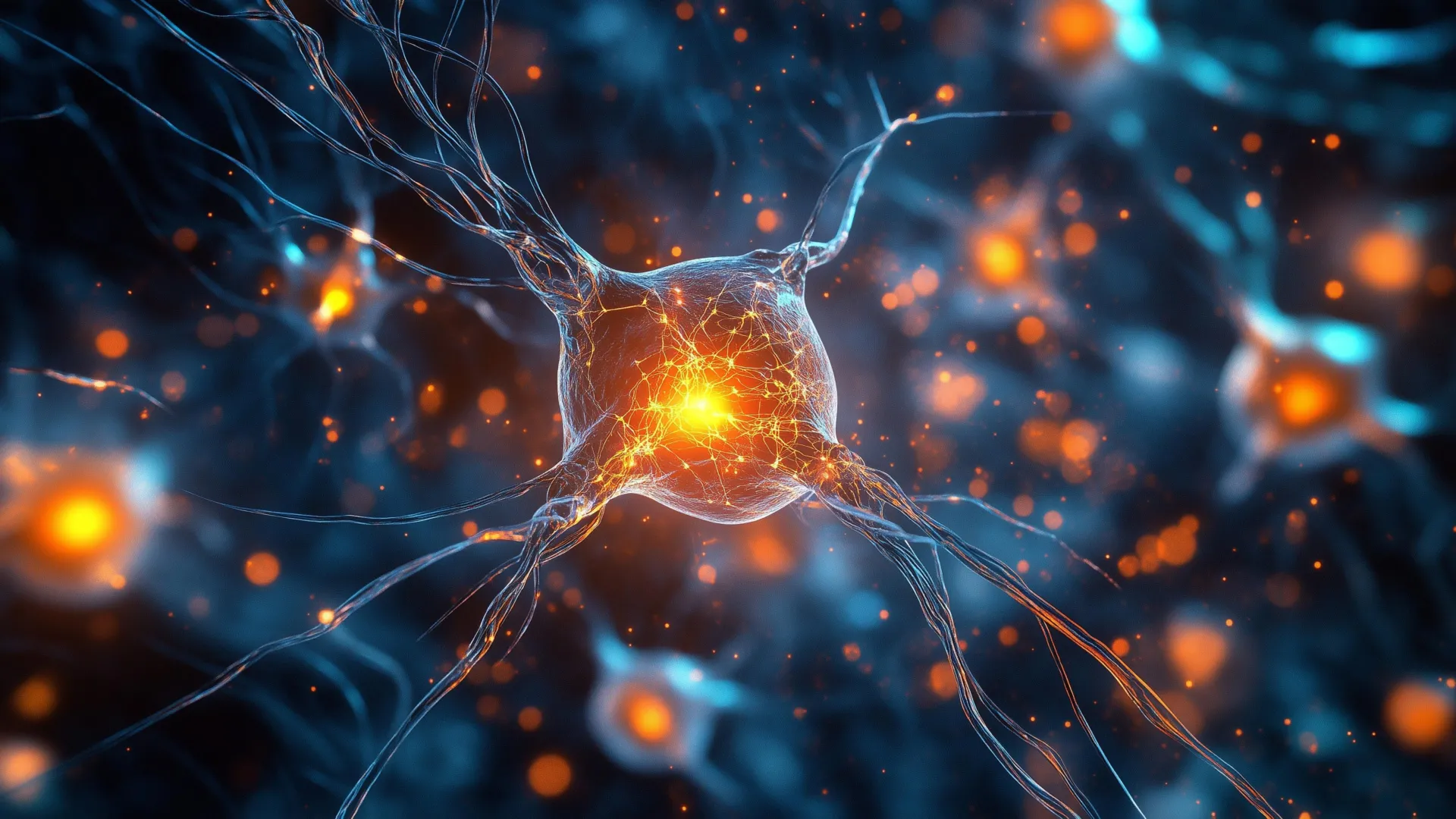
A study published in the Proceedings of the National Academy of Sciences reports that individual neurons in the human cortex carry out substantially more complex computations than comparable cells in other mammals. The research was led by Professors Idan Segev and Mickey London with PhD students Ido Aizenbud and Daniela Yoeli at the Hebrew University of Jerusalem's Edmond and Lily Safra Center for Brain Sciences, in collaboration with Professor Chris de Kock of the Free University of Amsterdam.
To quantify the computational capacity of single neurons, the team developed a method combining biophysical modeling with artificial intelligence. They trained artificial neural networks to replicate the input-output behavior of biological neurons, reasoning that a more complex artificial network required to mimic a neuron indicates greater computational power in the biological cell.
The results showed that human cortical neurons, with their richly branching dendritic trees and distinctive electrical properties, perform sophisticated computations on incoming signals. In tests involving visual discrimination tasks such as distinguishing images of cats from dogs, the computational abilities of a single human neuron were comparable to those of a deep neural network.
These findings challenge the long-standing view that human intelligence arises primarily from the brain's vast number of neurons and their interconnections. The researchers propose that the intrinsic complexity of individual neurons has also played an important role in the evolution of human cognition.
The study also produced a systematic framework linking the physical structure of neurons to their computational capabilities. This approach may help scientists better understand how the brain generates thought, learning, and other cognitive functions.
The authors suggest the discovery could influence artificial intelligence design. Current machine learning systems rely on highly simplified artificial units; the research points toward brain-inspired AI built from artificial units that are themselves computationally deep and powerful, more closely resembling biological neurons.
Human brain cells are far more powerful than scientists thought
This is an independent summary. The complete reporting, supporting context and any primary documents remain with ScienceDaily.