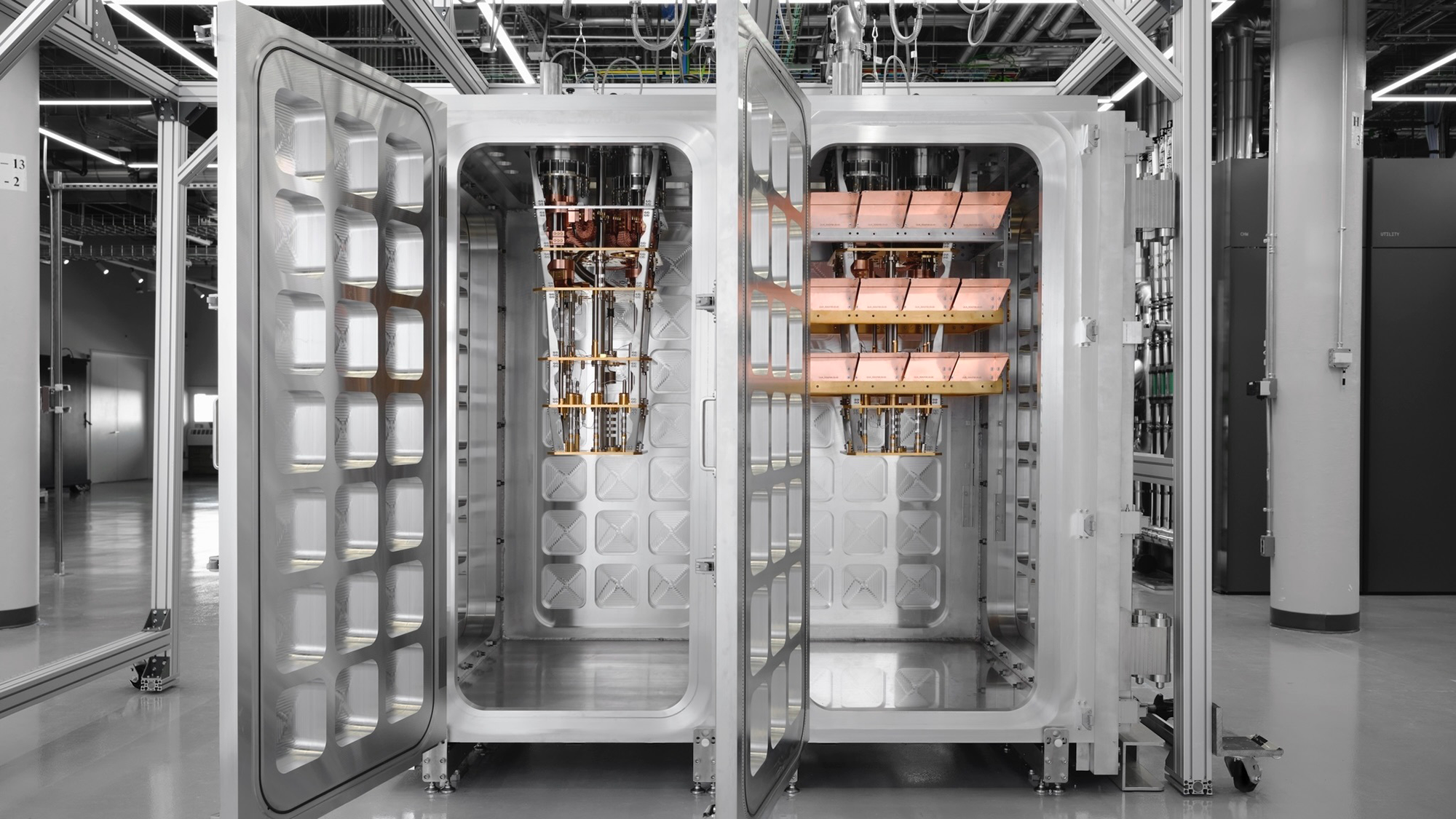
IBM has demonstrated a modular cryogenic system that links separate dilution refrigerator modules, each housing superconducting quantum processing units. The modules measure 8 feet tall by 8 feet wide with an internal capacity of about 9 cubic feet and can reach temperatures of 10 millikelvins, roughly 180 times colder than deep space.
The system uses superconducting aluminum cables called L-couplers, approximately 1 meter long, to perform two-qubit gates between chips in different modules. IBM vice president of quantum operations Oliver Dial said the couplers allow the same entanglement operations normally done on a single chip to occur across modules.
Each module relies on helium cryo compressors and commercial dilution refrigeration engines, with vacuum-sealed enclosures, electromagnetic interference gaskets, and multilayer Mylar super-insulation heat shields. Cooling to about 4 kelvins takes more than four days, with the final push to sub-15-millikelvin temperatures occurring shortly after.
The modular design addresses a scaling bottleneck: a single large cryostat would require breaking the temperature seal for any hardware upgrade or repair, interrupting operations. Separate modules can be serviced independently while others remain cold.
So far, IBM has interconnected two modules and tested simple gate operations using its Flamingo processor. The company plans to install its newer Nighthawk processors in the modules in the coming days.
IBM intends to deploy the modular architecture in 2027 with two to three cells supporting around 1,000 qubits total. The goal is to reach 100 million quantum operations in a single session by 2029 with a system code-named Starling, which would use 10,000 physical qubits organized into 200 logical qubits.
IBM chief technology officer of quantum-centric supercomputing Jerry Chow described the effort as thousands of engineering feats across processors, software, controls, infrastructure, and error correction rather than a single breakthrough. Other companies are pursuing fault-tolerant quantum computing with different architectures, including photonic and diamond-based systems that operate at higher temperatures.
IBM's new 'quantum fridges' are nearly 200 times colder than deep space and could pave the way for fault-tolerant quantum computing
This is an independent summary. The complete reporting, supporting context and any primary documents remain with Live Science.