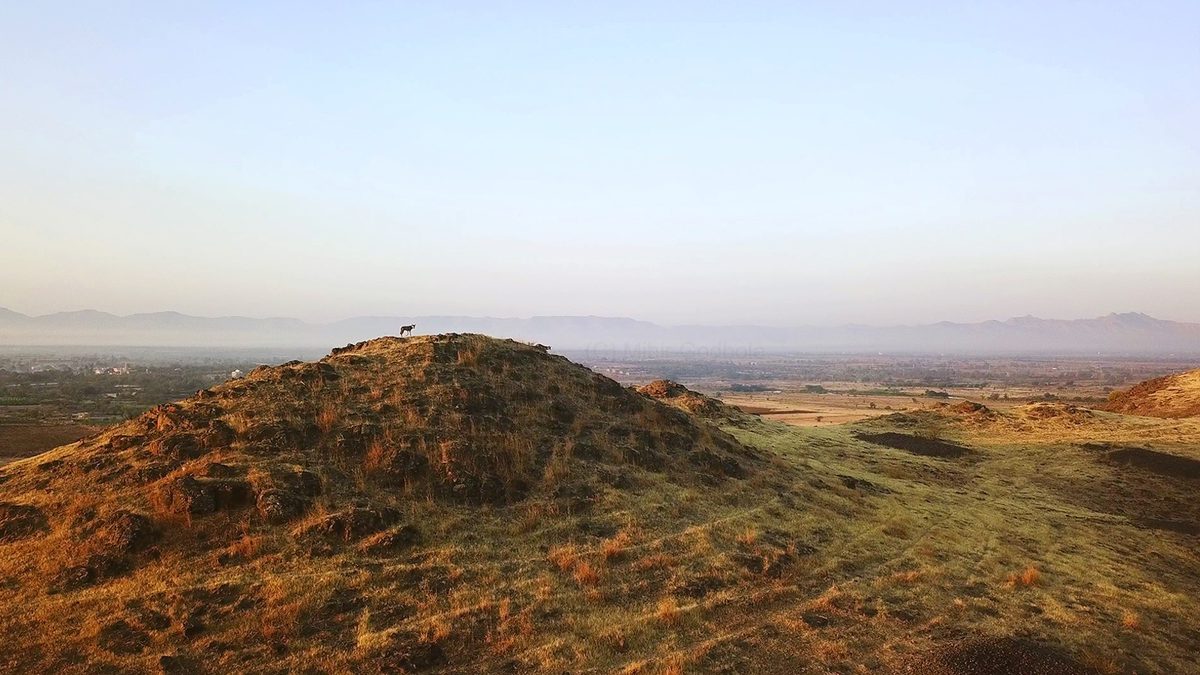
India's National Board for Wildlife directed agencies in April to map the extent and biodiversity of the country's grasslands for the first time, with findings to be published in an "Atlas of Grasslands" that could inform a national protection policy. The move follows decades in which grasslands were classified as "wastelands" or degraded forests, leading to conversion for agriculture, plantations, and more recently, renewable energy projects. Researchers estimate India's grasslands shrank from roughly 110 million acres in 1880 to 60 million acres by 2010, with less than 5 percent of remaining semi-arid open ecosystems currently protected.
Conservationists say the mapping effort signals a shift in government thinking after a historical focus on forests rooted in colonial-era policies that privileged timber and game animals over savanna ecosystems. Paleoclimate research, including a 2021 lake sediment study, has since confirmed that natural savannas expanded in peninsular India thousands of years ago, countering the long-held view that grassy areas were merely deforested land.
Early restoration projects demonstrate potential for recovery. In Gujarat's Banni grasslands, pastoralists have helped restore around 7,000 acres by removing invasive species. At Tal Chhapar Wildlife Sanctuary in Rajasthan, grassland restoration has led to a resurgence of wildlife and birds. The nonprofit Grasslands Trust is testing native grass species at a 50-acre site in Maharashtra's Gulunche village, where some species have survived two summers without irrigation or fertilizer.
The Gulunche project operates on common grazing land, or "gairans," with village consent to temporarily halt grazing. The trust produces fermented fodder from native grasses and biochar from removed invasive mesquite trees, providing local employment. Village council head Samradnee Nigade said the community supported the project for its potential benefits. However, the site faces pressure from expanding sugarcane farming, rising land prices, and fencing that blocks wildlife and livestock movement.
Grassland loss has hit species that do not use tree cover. The Indian courser has declined by more than 70 percent due to habitat loss, while Indian gazelle numbers have dropped and gray wolves survive partly by scavenging poultry waste. Pastoralists, estimated at 13 million in India, have also lost grazing access; shepherd Sadashiv Mote said he reduced his flock because farms and fences have taken over commons.
International attention on rangelands has grown, driven by the UN's 2024 Global Land Outlook report and the 2026 International Year of Rangelands and Pastoralists. The UN Environment Programme notes these lands cover more than half of Earth's surface, support 2 billion people, provide 16 percent of global food, and store up to 30 percent of terrestrial carbon. Large-scale restoration is underway elsewhere, including 20,000 acres in the U.S. Great Plains, 12 million acres protected in Kazakhstan's steppe, and an average of 7.7 million acres restored annually in China between 2021 and 2025.
Scientists acknowledge that grassland restoration is less studied than forest conservation; one review found 89 of 206 endemic Indian savanna species were described only in the last two decades. Funding remains limited compared to forest projects, partly because donors prefer highly visible outcomes. Researchers argue grassland restoration is cheaper and more ecologically suited to drylands than tree planting, but stress that traditional knowledge and rapid research are both needed as development and climate change accelerate.
Maharashtra issued guidelines in May recognizing grasslands as distinct ecosystems requiring tailored restoration rather than blanket tree plantations. Grasslands Trust cofounder Mihir Godbole said government attitudes are changing slowly, but action needs to accelerate on the ground. The Wildlife Institute of India has drafted a comprehensive mapping plan with partner agencies, though the official Atlas project remains in early stages.
‘Wastelands’ No More: India Charts a Future for Its Grasslands
This is an independent summary. The complete reporting, supporting context and any primary documents remain with Yale Environment 360.