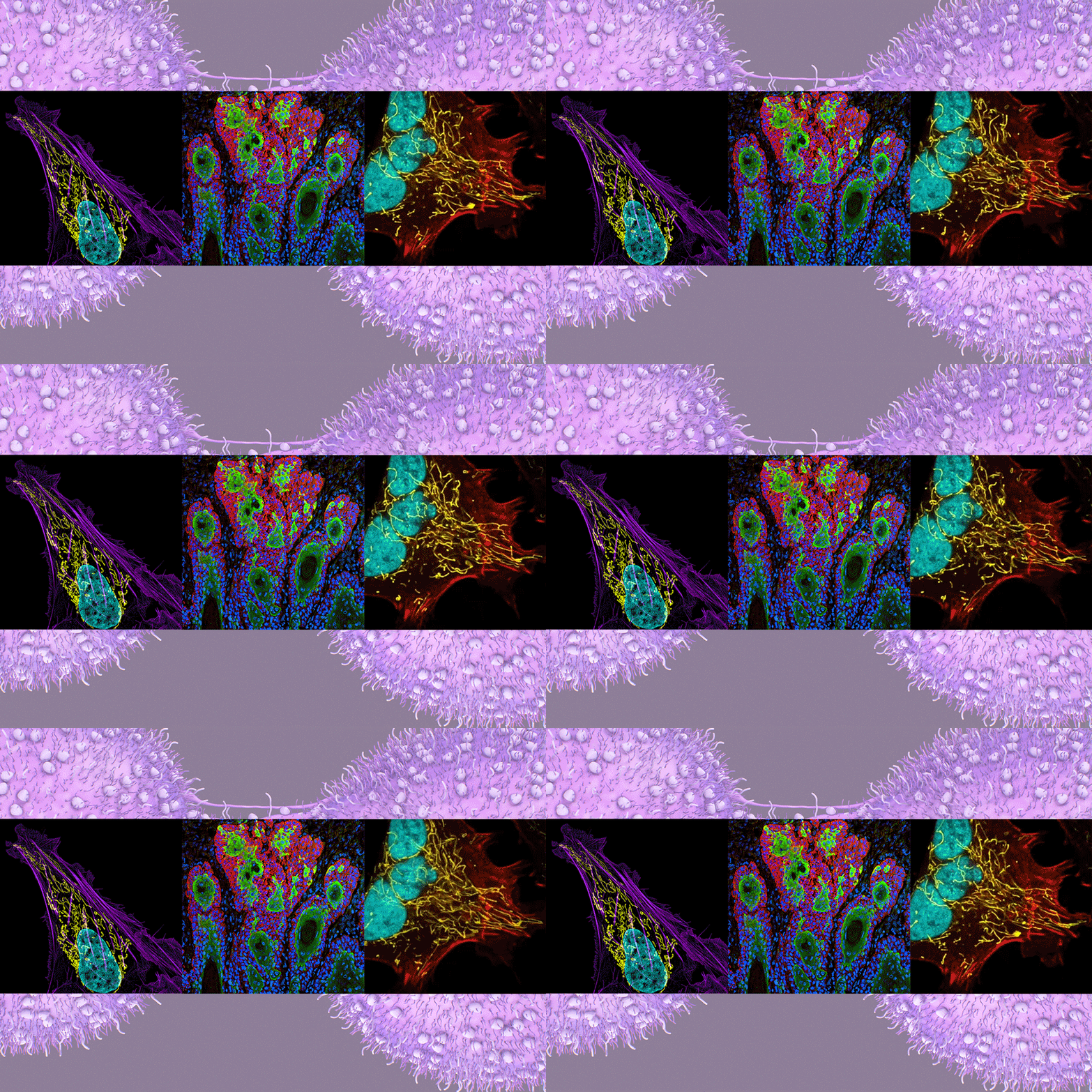
An international collaboration led by researchers at MIT's Koch Institute, the Broad Institute, Dana-Farber Cancer Institute, and the National Cancer Institute has developed nearly 700 new cancer models derived directly from patient tumors. The models represent 25 different cancer types and are now accessible to researchers globally through the American Type Culture Collection.
The work, published in Nature, caps a 10-year effort funded primarily by the National Cancer Institute and the Wellcome Trust to expand the number of patient-derived models available for laboratory studies. More than two dozen institutions contributed to the project, known as the Human Cancer Models Initiative (HCMI).
Researchers obtained over 2,700 tumor samples from hospitals in the United States, United Kingdom, and the Netherlands, with patient consent. They successfully converted about one-third of these samples into stable laboratory models, most of which are organoids — three-dimensional cell cultures that better mimic the structure and molecular features of original tumors than traditional two-dimensional cell lines.
Each model is accompanied by extensive patient data, including inherited genetic mutations and treatment histories. In companion studies also published in Nature, researchers at the Broad Institute profiled more than 300 models using genomic sequencing and CRISPR screens to identify potential drug vulnerabilities, adding findings to the Cancer Dependency Map.
Scientists at the Wellcome Sanger Institute characterized an additional 256 organoids from the initiative. The combined resource now includes information on more than 2,000 cancer models.
Jesse Boehm, a research scientist at the Koch Institute and senior author of the main study, said the models provide experimental systems needed to validate cancer targets identified through genome sequencing and to launch drug discovery projects. He noted that existing models have largely come from European and Southeast Asian patients, leaving many rare cancers unrepresented.
Mushriq Al-Jazrawe, scientific director of the High Throughput Sciences platform at the Koch Institute and a lead author, emphasized the systematic effort required to turn patient donations into well-characterized research tools. The initiative included about 150 samples from rare cancers such as gallbladder and small intestine tumors.
Although the formal HCMI project is winding down, researchers plan to continue developing models from additional patient samples, including more pediatric and rare cancers. Boehm said the current collection of roughly 2,000 models is a start, but representing all human cancers in preclinical research will require further tissue donations and sustained collaboration.
Scientists unveil more than 600 new tissue models of human cancer
This is an independent summary. The complete reporting, supporting context and any primary documents remain with MIT News.