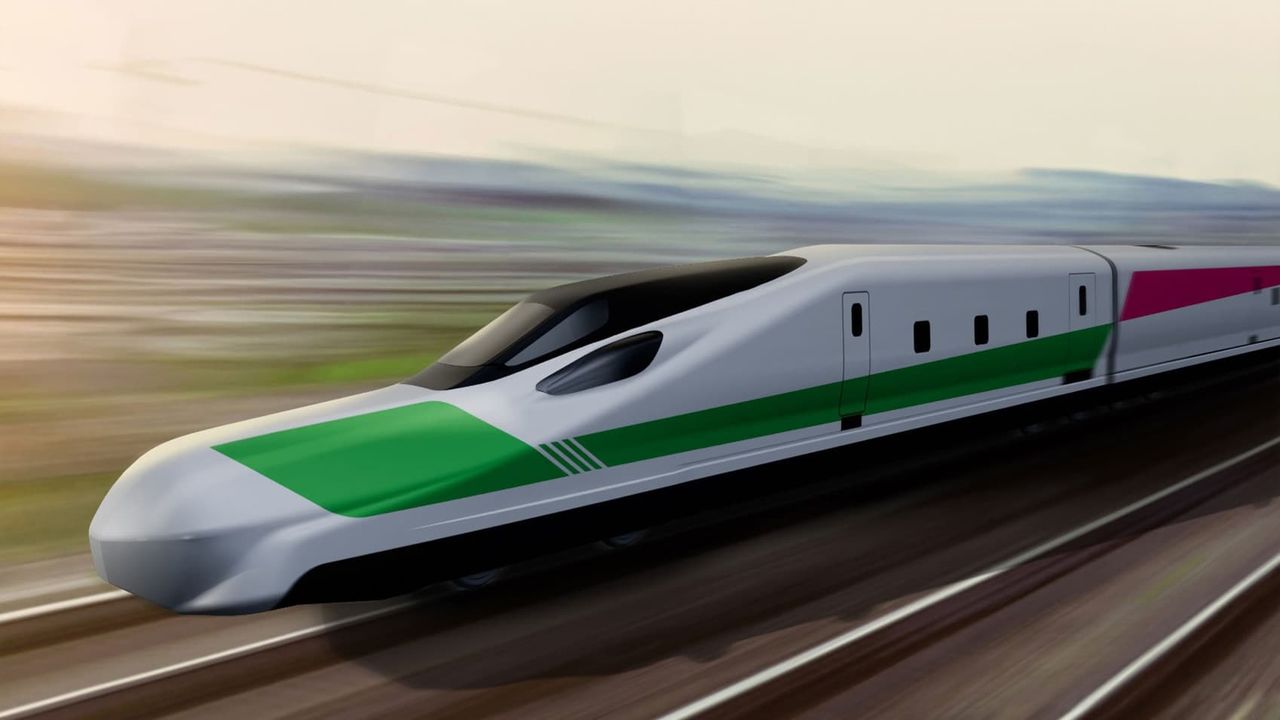
East Japan Railway Company (JR East) plans to introduce a new Shinkansen inspection train, nicknamed Soar, during fiscal year 2029. The E927 series will operate on the Tōhoku, Jōetsu, Hokuriku, Yamagata, and Akita Shinkansen lines.
Soar is designed to conduct inspections while traveling at the Shinkansen network's maximum operating speed of 320 kilometers per hour. The current East-i inspection train (E926 series), introduced in 2002, is limited to 275 km/h.
The train will use body-mounted sensors to detect track distortion and measure rail loads. It will also carry 48 cameras positioned at the front, rear, sides, and roof to monitor overhead power lines, tunnels, power-line poles, and other infrastructure for abnormalities.
JR East intends for Soar to succeed the East-i train, which has operated on an irregular basis across the same lines since 2002. The new train is based on newer Shinkansen technology than the E3-series-derived East-i.
Separately, the well-known Doctor Yellow inspection trains (923 series) operated by JR Central and JR West on the Tōkaidō and San'yō Shinkansen lines are scheduled for retirement in January 2027. Those trains, based on the 700 series Shinkansen, also operate on irregular schedules.
An earlier Doctor Yellow model (922 series), based on the original 0 series Shinkansen, was retired in 2005 and is now displayed at Train Park Hakusan in Ishikawa Prefecture.
The 925 series inspection train previously served the Tōhoku, Jōetsu, and Hokuriku lines before being replaced by East-i in 2002.
JR East's development of Soar represents a generational upgrade in high-speed railway maintenance capability for its network.
Japan’s New Shinkansen Inspection Train Soar to Enter Service on JR East Lines
This is an independent summary. The complete reporting, supporting context and any primary documents remain with Nippon.com.