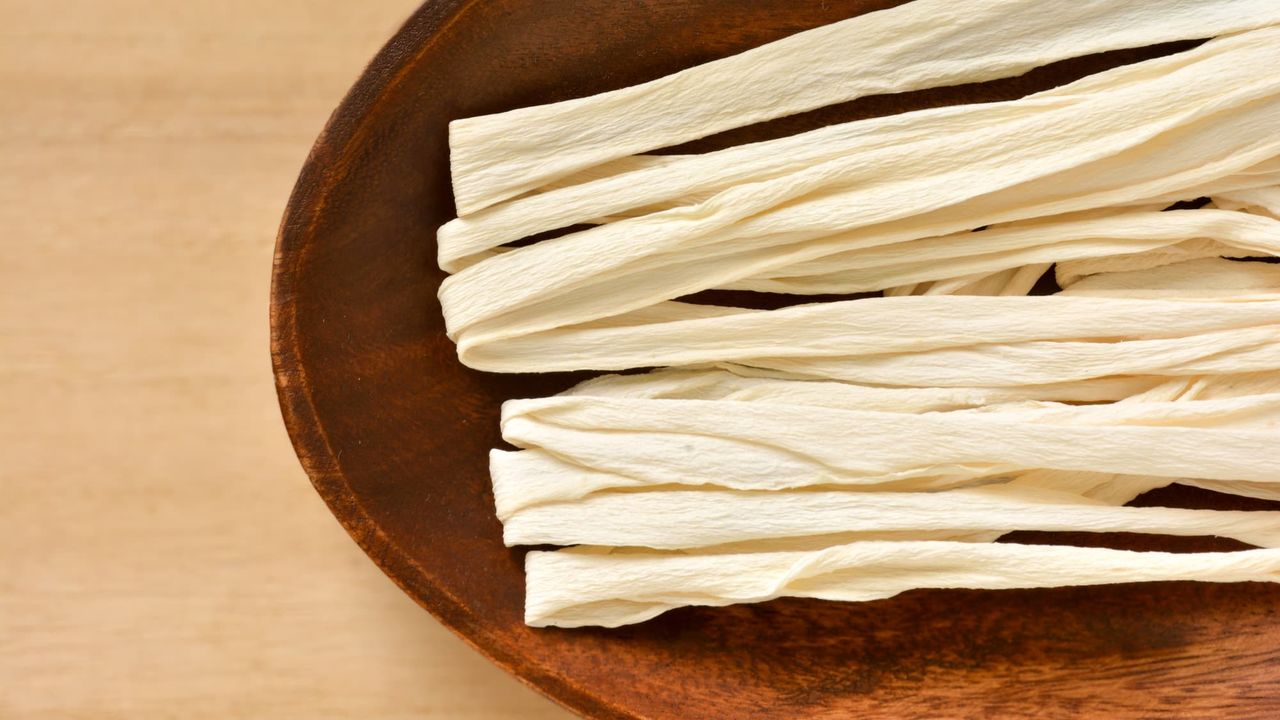
Kanpyō, literally "dried gourd" in Japanese, is made by shaving the fruit of the yūgao, or bottle gourd (Lagenaria siceraria), into long, thin strips and drying them. The plant, native to Africa and tropical Asia, produces white evening-blooming flowers known as moonflowers, which appear in Heian-period literature such as The Pillow Book and The Tale of Genji. The fruit can weigh six to seven kilograms, providing ample material for the strips.
Historical records suggest kanpyō production began around the 15th century in Osaka and was long centered in the Kansai region. Utagawa Hiroshige's ukiyo-e print "Minakuchi" from The Fifty-Three Stations of the Tōkaidō depicts women working together to make kanpyō in what is now Kōka, Shiga Prefecture. In the Meiji era, the daimyō of Minakuchi was transferred to Mibu in present-day Tochigi Prefecture, bringing yūgao seeds with him.
Today, 98% of Japan's kanpyō comes from Tochigi Prefecture. Harvest occurs between June and August, and the sight of strips drying is a seasonal hallmark. Modern production mounts the gourd on a motor-driven rod and shaves it with a planer-style blade. While sun-drying was traditional, greenhouses with fans are now commonly used to avoid weather dependence.
Kanpyō has a mild flavor and, when rehydrated, becomes tender and absorbent. In the Kantō region, sweet-savory simmered kanpyō is a classic sole filling for thin hosomaki sushi rolls. In Kansai, it appears among varied fillings in thick futomaki rolls.
Beyond sushi, the strips function as edible string. They tie konbumaki kelp rolls, mochi kinchaku fried tofu pouches, and stuffed cabbage rolls simmered in consommé or tomato sauce. Its neutral taste allows it to complement both Japanese and Western-style dishes.
The Tochigi Prefecture Kanpyo Commercial Cooperative Association provides baseline data on the ingredient. Production methods have shifted from outdoor drying to controlled greenhouse environments, reflecting adaptation to modern conditions while maintaining a centuries-old craft.
Literary references confirm the gourd's cultural presence long before its culinary use was standardized. Sei Shōnagon's 10th-century description of the moonflower's "long gourd pods" and the naming of a Genji character after the plant indicate deep historical roots.
From a regional specialty in western Japan to a concentrated industry in the east, kanpyō illustrates how a single ingredient can persist across centuries, adapting in production and application while remaining integral to the cuisine.
Kanpyō: The Versatile and Delicious Ingredient that Ties Japanese Cuisine Together
This is an independent summary. The complete reporting, supporting context and any primary documents remain with Nippon.com.