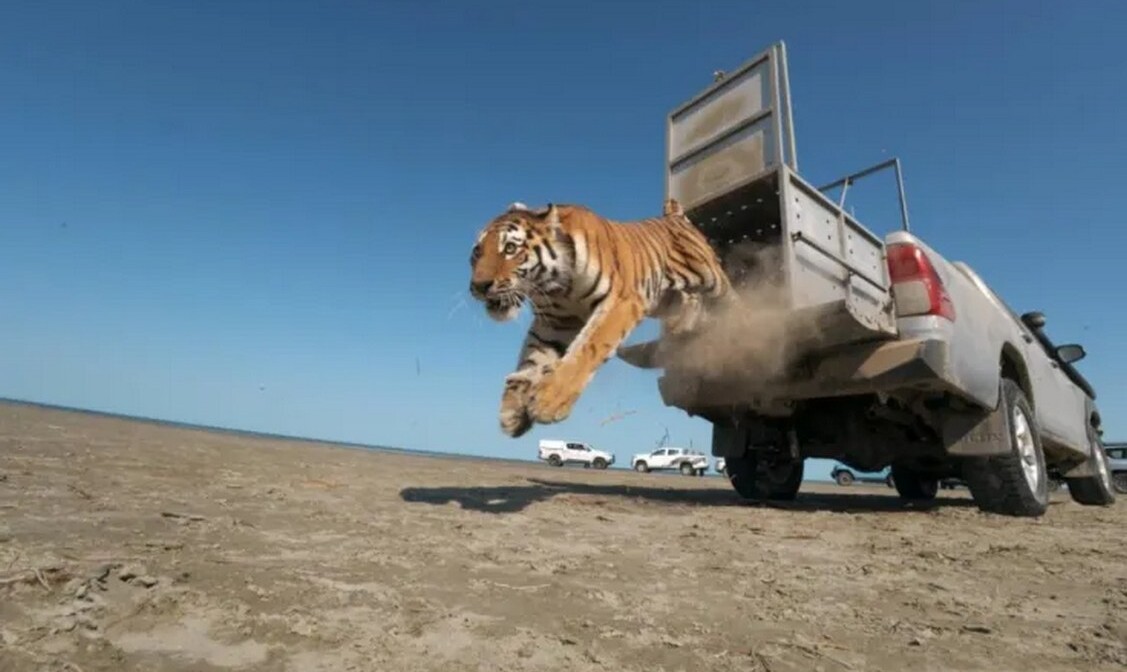
Kazakhstan has released a female Amur tiger into the Ile-Balkhash Nature Reserve, marking the first time a tiger has roamed the country in over 70 years. The release is the culmination of a decade-long rewilding project aimed at re-establishing the species in its historical Central Asian range. The extinct Caspian tiger, which once inhabited the region, was most closely related to the Amur tiger, making the Russian subspecies the appropriate choice for reintroduction.
The Ile-Balkhash Nature Reserve was established in 2018 specifically for this purpose. Since then, authorities have undertaken extensive habitat restoration, including reforestation and the reintroduction of prey species such as Bukhara deer, saiga antelope, and Asiatic wild ass (kulan). These efforts were designed to recreate the ecological conditions necessary to support a top predator.
The tiger, named "Hope" in the Kazakh language, was transported from Russia's Khabarovsk Reserve along with a male named Amur and two cubs. Before release, Hope underwent veterinary examination and was fitted with a GPS tracking collar. She was then driven to the reserve and allowed to exit the transport container on her own.
The male tiger, Amur, remains in a large enclosure within the reserve while experts assess his hunting capabilities and behavioral readiness for full release. The two cubs will be raised in a semi-wild environment with the intention of releasing them upon reaching maturity at around 18 months, provided they pass behavioral assessments for survival instincts.
Officials emphasized that the reserve is not fenced, meaning tigers may eventually disperse into the wider ancestral landscape as the population grows. The Ministry of Ecology stated that human safety is a top priority and that a dedicated response team has been established to manage potential human-wildlife conflict in surrounding communities.
Kazakhstan's Minister of Ecology and Natural Resources, Yerlan Nyssanbayev, described the event as historic, crediting years of collaboration between the state, Russian scientists, and international partners. If successful, Kazakhstan would become the first country to re-establish a tiger population in an ecosystem from which it had completely disappeared.
The project represents a rare attempt at large predator reintroduction across a vast, unfenced landscape. Conservationists note that the gradual, phased approach reflects the complexity of restoring ecological relationships that have been absent for generations.
Researchers will monitor the released animals via GPS telemetry and camera traps to evaluate adaptation, hunting success, and territory establishment. Long-term success depends on sustained prey populations, habitat connectivity, and effective coexistence strategies with local communities.
The Tiger Returns to Kazakhstan in First-in-the-World Rewilding Project a Decade in the Making
This is an independent summary. The complete reporting, supporting context and any primary documents remain with Good News Network.