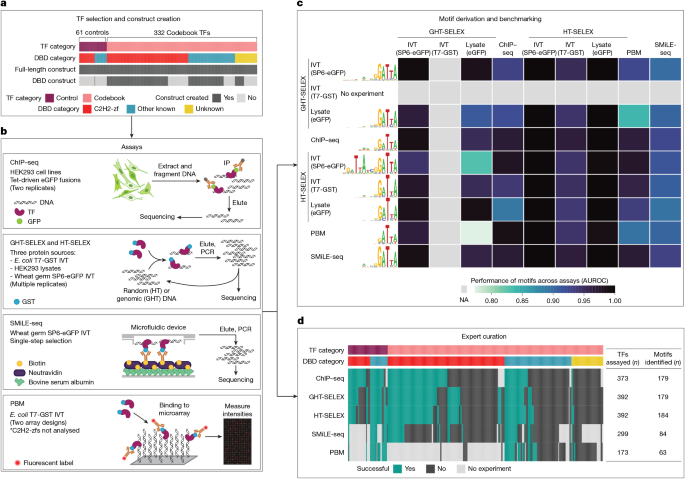
A consortium of researchers has completed a systematic effort to define the DNA-binding specificities of 332 human transcription factors that were previously uncharacterized or poorly understood. The project, referred to as the Codebook, combined more than 4,000 independent experiments using multiple in vitro and in vivo assays.
The work produced reliable binding motifs for 177 of the 332 factors tested, a success rate of 53 percent. Most of these motifs are associated with a single protein, expanding the catalog of known human transcription factor recognition sequences by approximately 130 distinct motifs.
The study reports that motifs identified in vitro show strong enrichment in actual cellular binding sites, indicating that the laboratory measurements reliably reflect biological function. Using these new motifs, the researchers identified tens of thousands of previously unknown, evolutionarily conserved transcription factor binding sites across the human genome.
These newly mapped sites are concentrated in promoter regions and demonstrate predictive value for gene expression patterns. The findings suggest that a substantial portion of the regulatory landscape governed by these factors was previously invisible to sequence-based analysis.
The authors describe the expanded codebook as an important step toward decoding the human genome's regulatory logic. The dataset provides a resource for interpreting non-coding genetic variation and understanding gene regulatory networks in health and disease.
An expanded codebook of human transcription factor DNA-binding specificity
This is an independent summary. The complete reporting, supporting context and any primary documents remain with Nature.