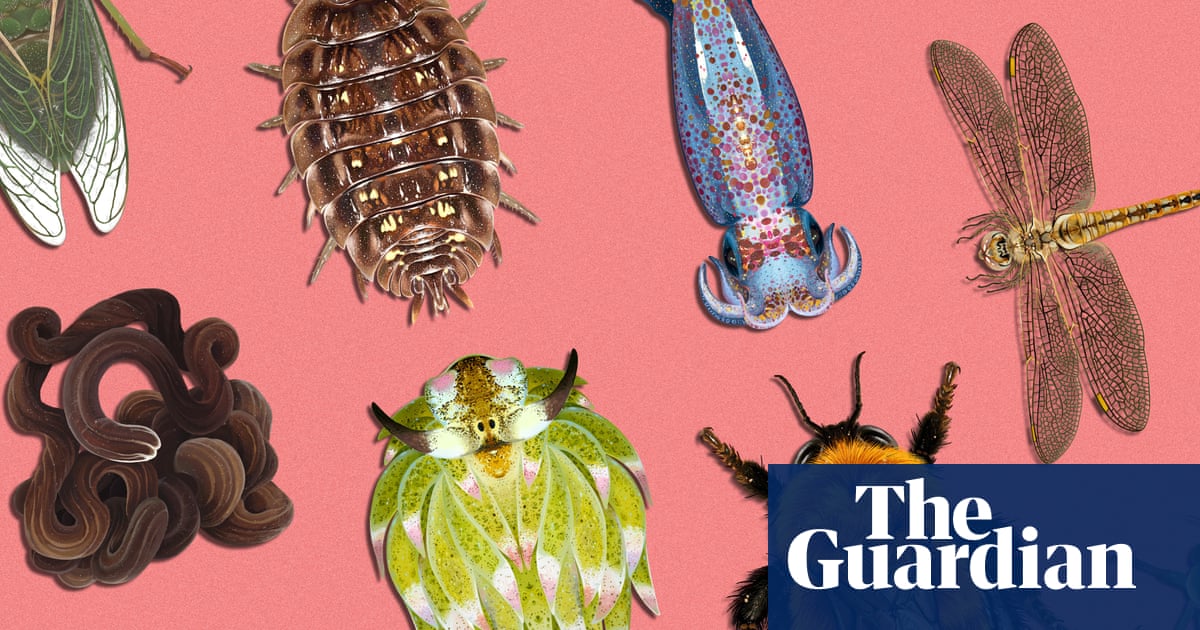
The leaf sheep, a neon green sea slug measuring roughly the size of a grain of rice, has been crowned the winner of the Guardian's Invertebrate of the Year 2026 competition. The global ballot attracted hundreds of thousands of readers who voted after a two-week series profiling ten shortlisted candidates nominated by the public.
Costasiella kuroshimae, first described by science in 1993, lives in tropical waters around Japan, Indonesia, and the Philippines. It feeds on algae and retains the algae's chloroplasts within its own tissues, allowing it to photosynthesize and generate energy from sunlight, a trait broadcaster Chris Packham described as building its own solar panels.
The slug's distinctive beady-eyed appearance, popularized through advances in underwater macro photography, has inspired at least one Pokémon character. It narrowly defeated the moscardón (Bombus dahlbomii), the world's largest bumblebee, which faces increasing threats in Patagonia from invasive bumblebee species introduced by humans.
The horseshoe crab, an ancient arthropod with blue blood that pre-dates dinosaurs, placed third, followed by the common woodlouse. The bootlace worm, one of the world's longest animals, finished tenth on the shortlist, a lower position than worms have historically achieved in previous years.
The competition, now in its third year, was launched to celebrate invertebrates, which number at least 1.7 million described species and represent approximately 97% of all animal life. Millions more species are estimated to remain undiscovered.
Experts emphasized during the campaign that wild invertebrates provide essential unpaid ecological services, including pollinating crops, filtering water, recycling waste, cleaning pollution, and maintaining soil fertility, without which human life would quickly perish.
Contributors to this year's series included entomologist Erica McAlister on flies, wildlife photographer Dara Ojo on macro photography, and Connor Butler on the interconnectedness of living systems. The shortlist was selected from several thousand reader nominations spanning scientists to children.
Previous winners of the competition include the tardigrade and the common earthworm, both of which won by larger margins than this year's closely contested result.
Winner of Invertebrate of the Year 2026 crowned – and it is the size of a grain of rice
This is an independent summary. The complete reporting, supporting context and any primary documents remain with The Guardian.