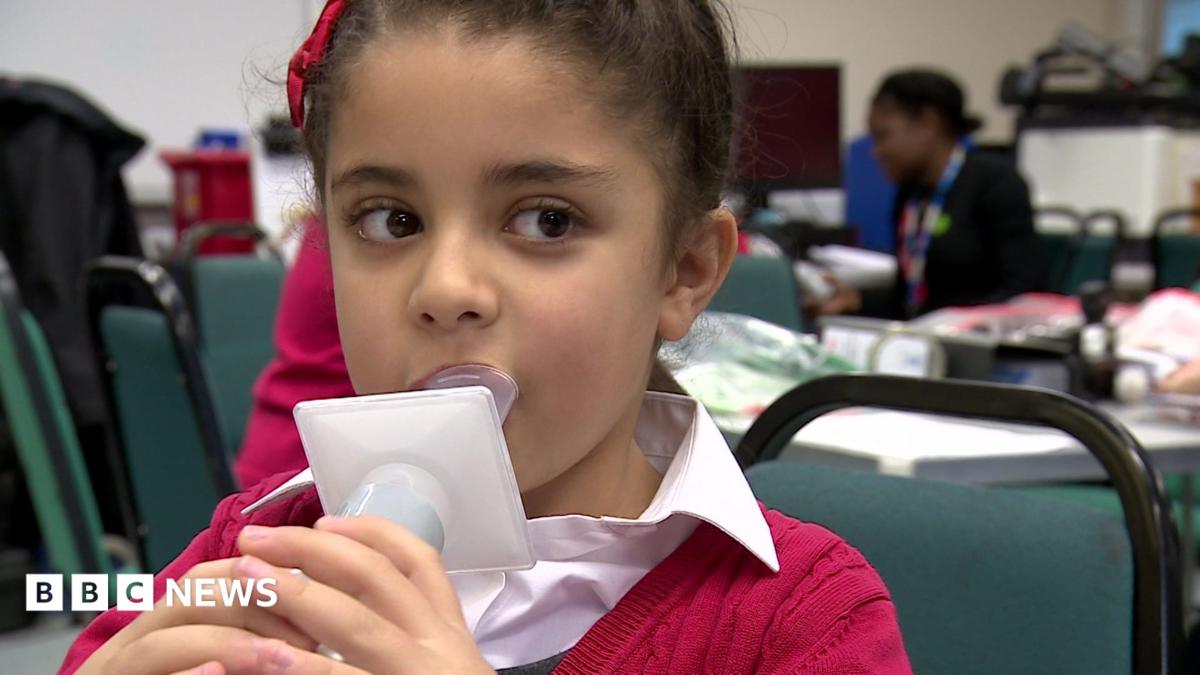
Researchers from Queen Mary University of London and partner institutions tracked more than 3,400 children aged six to nine in London and Luton for five years, measuring lung function annually before and after London's Ultra Low Emission Zone (Ulez) began in 2019.
At the start, children in London had smaller lung capacity than peers in Luton, a town with a similar pollutant mix but lower overall pollution.
After four years of Ulez operation, the London children's lung growth had accelerated to reach near-identical capacity levels, a 'catch-up' effect that senior author Prof Chris Griffiths described as stunning in its speed.
The proportion of London children with clinically impaired lung capacity fell from 14% to 9%, while Luton saw a smaller decline from 9% to 7%.
Nitrogen dioxide exposure dropped faster in London than in Luton over the same period, which researchers say likely explains the improved lung growth.
Independent experts noted the study's careful design, including the Luton comparison group, helped rule out pandemic-related changes as the main driver of the results.
Prof Anna Hansell of the University of Leicester said the gains are likely to confer lifelong health benefits, though she and others cautioned that factors such as increased walking or cycling after Ulez could also play a role.
Lead author Dr Helen Wood emphasized that air pollution in both cities remains above World Health Organization guidelines, so further reductions are still needed.
Scientists stunned by children's lung recovery in ultra low emission zone
This is an independent summary. The complete reporting, supporting context and any primary documents remain with BBC News.