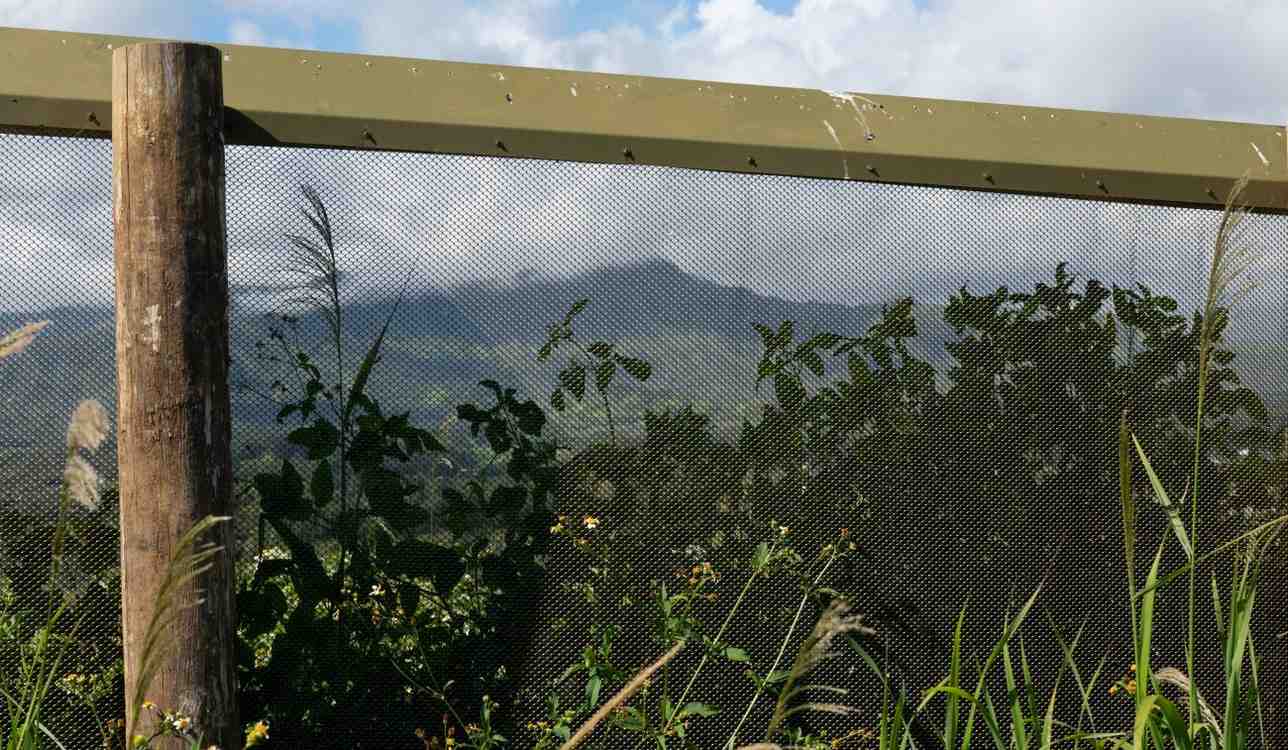
The longest predator exclusion fence in the Pacific was completed in 2022 at Kīlauea Point National Wildlife Refuge on Kauai, enclosing 168 acres of seabird nesting habitat. The U.S. Fish and Wildlife Service built the barrier with local partners to protect ground-nesting birds from feral cats, pigs, and rats that had previously devastated colonies.
The fence stretches 11,200 feet and cost $1.7 million. Its design, originally developed in New Zealand, blocks the four most damaging invasive mammalian predators across the Pacific. It stands too high for cats or foxes to jump, features a slick hood that prevents climbing, extends a rubber mat and skirt below ground to stop burrowing, and uses a fine metal mesh that resists chewing and excludes rats.
The protected area includes the hills and pinnacles of Nihokū and Mokolea Point on Kauai's northern shore. This habitat supports Newell's shearwater, red-footed boobies, red-tailed and white-tailed tropicbirds, great frigatebirds, the endangered Hawaiian petrel, and the Laysan albatross. The site has minimal artificial light pollution and no power lines, reducing disorientation and collision risks for birds that navigate by stars and moonlight.
The fence also shelters the critically endangered Hawaiian hoary bat and the critically endangered nēnē, or Hawaiian goose, which is the state bird. Before the fence was built, camera traps documented heavy predation on nesting birds and their chicks.
A similar predator exclusion fence on Oahu previously led to a quadrupling of Newell's shearwater chicks in its first several years. Refuge managers expected comparable results at Kīlauea Point as the barrier creates a long-term sanctuary while broader invasive species control efforts continue across the island.
Four years after completion, seabirds are nesting and raising chicks at sites that previously suffered near-total predation loss. The project demonstrates how targeted physical barriers can provide immediate protection for endangered species while longer-term ecological restoration proceeds.
Longest Predator Exclusion Fence in the Pacific Protects Thousands of Ground-Nesting Seabirds
This is an independent summary. The complete reporting, supporting context and any primary documents remain with Good News Network.