MIT researchers have engineered the bacterium Pantoea agglomerans to function as biological transistors that can be switched on or off by a specific input molecule. Two transistor designs were created: one activated by the molecule OC-6 and another deactivated by it, with both detecting a target molecule called OC-12 to produce an output signal, OHC-14.
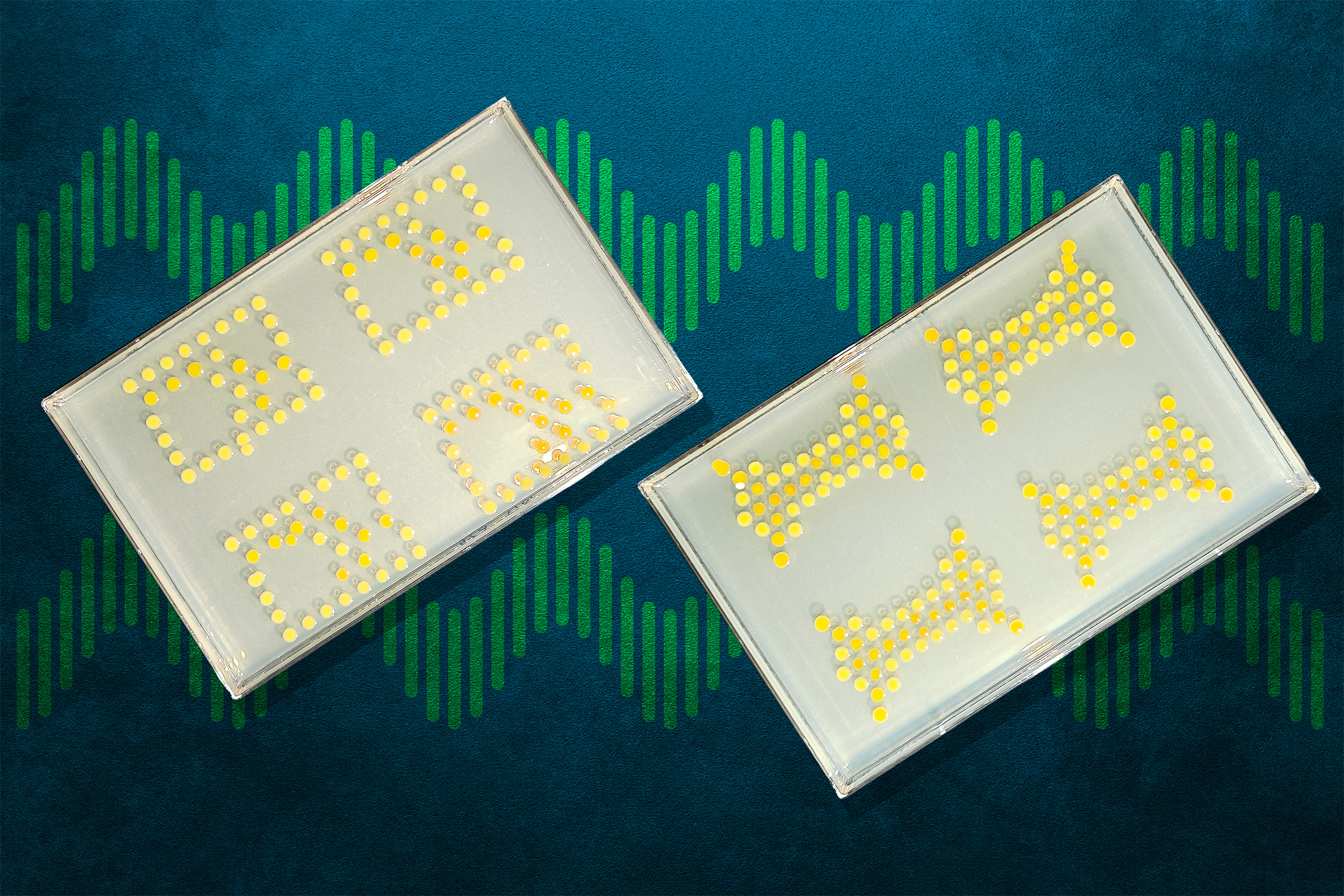
Three additional bacterial strains serve as relays, translating the OHC-14 output into signals that can feed into downstream transistors. By printing colonies of these five strains onto agar plates spaced about five millimeters apart, the team wired the cells into circuits where molecular signals travel in one direction from colony to colony.
The researchers demonstrated circuits capable of logic operations including multi-input, OR, and imply gates, as well as a circuit that adds two input signals and a demultiplexer that routes a single input to different destinations. The largest circuit, an adder, contains 24 bacterial colonies connected in sequence.
Each calculation takes roughly eight hours to complete, far slower than electronic computers but considered practical for biological timescales such as a growing season. The work was led by postdoc Hamid Doosthosseini and senior author Christopher Voigt, head of MIT's Department of Biological Engineering, and published in Nature Chemical Biology.
The approach avoids the limitations of packing many genetic circuits into a single cell, which can overload protein production machinery and exhaust the supply of usable transcription factors. Distributing computation across multiple specialized cells allows more complex functions to be built from simpler parts.
Potential applications include coating plant roots or leaves with bacterial circuits that sense environmental stresses such as drought or pest attack and respond by producing protective compounds. The research was funded by the U.S. Defense Advanced Research Projects Agency and the Intelligence Advanced Research Projects Activity.
MIT engineers connect bacteria to create living transistors
This is an independent summary. The complete reporting, supporting context and any primary documents remain with MIT News.