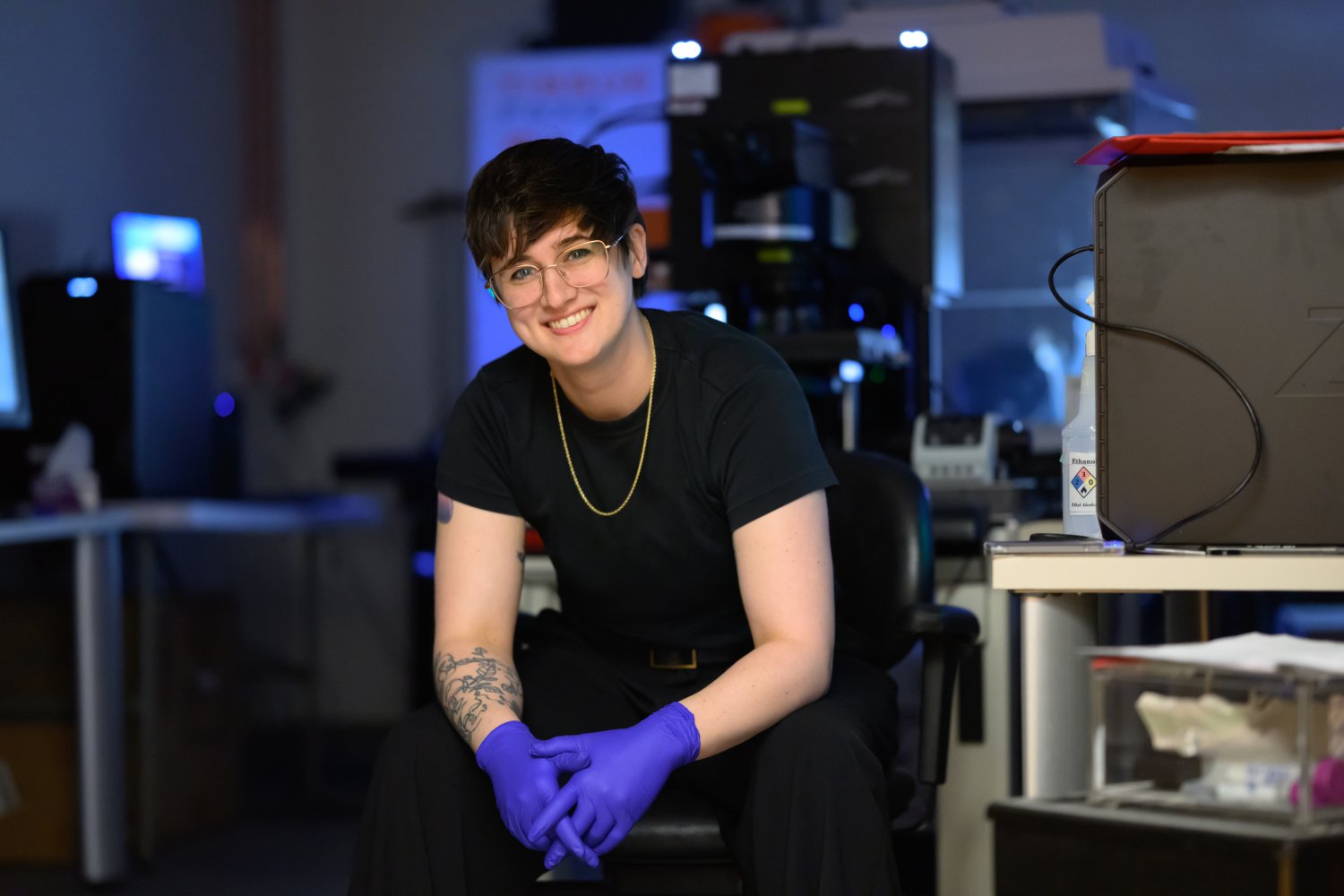
MIT PhD candidate Shannon Knight is developing a CRISPR-based gene therapy for SYNGAP1 haploinsufficiency, a rare genetic disorder that causes childhood-onset epilepsy, intellectual disabilities, and movement difficulties. The condition affects an estimated one to four children per 10,000 and stems from a mutation that renders one copy of the SYNGAP1 gene nonfunctional. This gene is critical for brain development and neuronal communication.
Current treatments rely on anti-seizure medications and dietary restrictions, but seizures often become drug-resistant as children age. Knight's approach aims to address the root genetic cause rather than manage symptoms. Working in Professor Guoping Feng's lab at the McGovern Institute for Brain Research, she is building on earlier gene therapy research for Phelan-McDermid syndrome, which has advanced to clinical trials.
In preclinical testing, the experimental therapy was administered to mice engineered with a version of SYNGAP1 disorder. The treatment alleviated seizures and all measured behavioral phenotypes associated with the condition. The research is being accelerated by MIT's Rare Brain Disorders Nexus, an initiative launched in fall 2025.
Knight emphasizes that the rarity of a disorder should not determine whether it receives therapeutic attention. "Regardless of how rare a genetic disorder might be, it still deserves care," she said. The goal is to follow a similar regulatory path as the Phelan-McDermid program, seeking FDA approval to begin clinical trials for SYNGAP1 disorder.
Beyond research, Knight has received the 2025 Goodwin Medal for her teaching as a teaching assistant in experimental molecular neurobiology. She focuses on guiding students through the full arc of neuroscience experiments, from cell culture to whole-brain analysis.
Knight's interest in neuroscience began in high school after holding a human brain during a university visit. She later pursued molecular neuroscience and genetics at Bowdoin College and Harvard University before joining MIT's doctoral program.
The work remains in early phases, with further testing required before human trials can begin. Knight notes that while she does not have a personal connection to anyone with SYNGAP1 disorder, she is motivated by a desire to help populations that often feel unseen by medical research.
Professor Feng described Knight as an example of graduate students passionate about societal impact through cutting-edge research, noting her gene therapy technologies have potential to help children with devastating neurodevelopmental disorders.
Tackling rare genetic disorders with patient-focused science
This is an independent summary. The complete reporting, supporting context and any primary documents remain with MIT News.