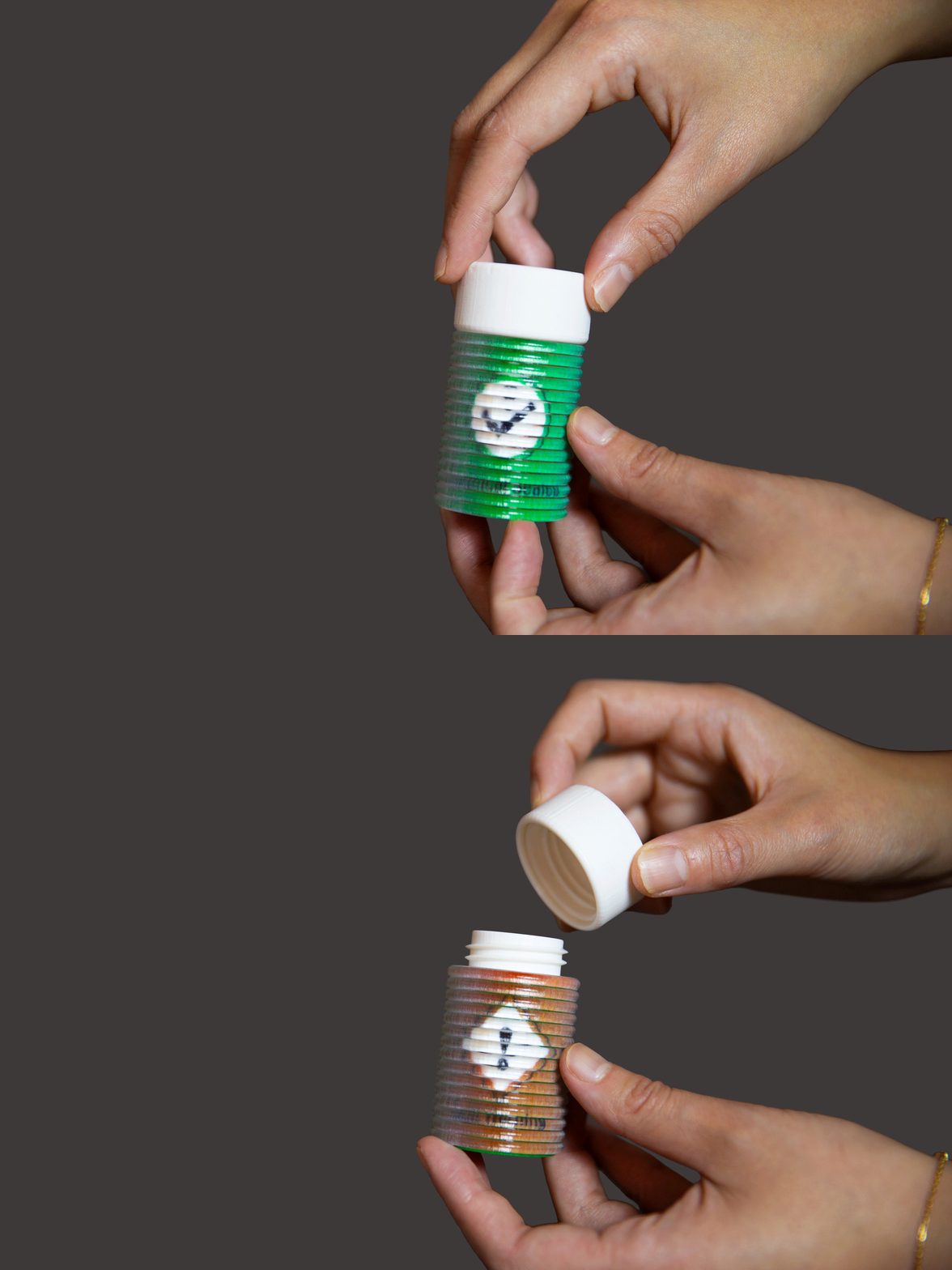
MIT researchers have developed a design and fabrication system named ShiftLens that produces 3D-printed objects whose surface appearance changes in response to physical interaction. The objects contain no electronic components, relying instead on a mechanical optical mechanism.
ShiftLens combines a layer of tiny lenticular lenses with a patterned backplane beneath them. When a user moves one layer relative to the other — by twisting a cap, sliding a switch, or turning a knob — different portions of the backplane are magnified, altering the visible image or color.
The system automatically generates a print-ready model from a few user inputs: the desired visual states, the object's shape, and the type of mechanical motion. It handles the alignment of optical effects, mechanical linkages, and computational graphics behind the scenes.
In demonstrations, the team printed a chemical bottle that shows a green check mark when its cap is securely tightened and a red exclamation mark when loose. They also fabricated a tic-tac-toe board whose squares display an X, an O, or remain blank depending on knob rotation.
Because the interactive display is entirely mechanical, the objects can withstand water, harsh chemicals, and physical force that would damage conventional electronic sensors or screens. The researchers suggest potential uses in laboratory safety, shipping packaging, plumbing, and rapid prototyping for design and engineering.
The work was led by graduate student Yunyi Zhu with co-authors Dingning Cao, Jeremy Mrzyglocki, Stefanie Mueller, and Narjes Pourjafarian. It will be presented at the ACM Symposium on User Interface Software and Technology.
Future plans include an algorithm that requires fewer user inputs to generate a ShiftLens structure and expanded support for a wider variety of actuation mechanisms.
The researchers emphasize that ShiftLens is not compatible with every object geometry; it requires a built-in shifting motion such as rotation, sliding, or pressing to switch between visual states.
These 3D-printed objects can tell you if they’re being used properly
This is an independent summary. The complete reporting, supporting context and any primary documents remain with MIT News.