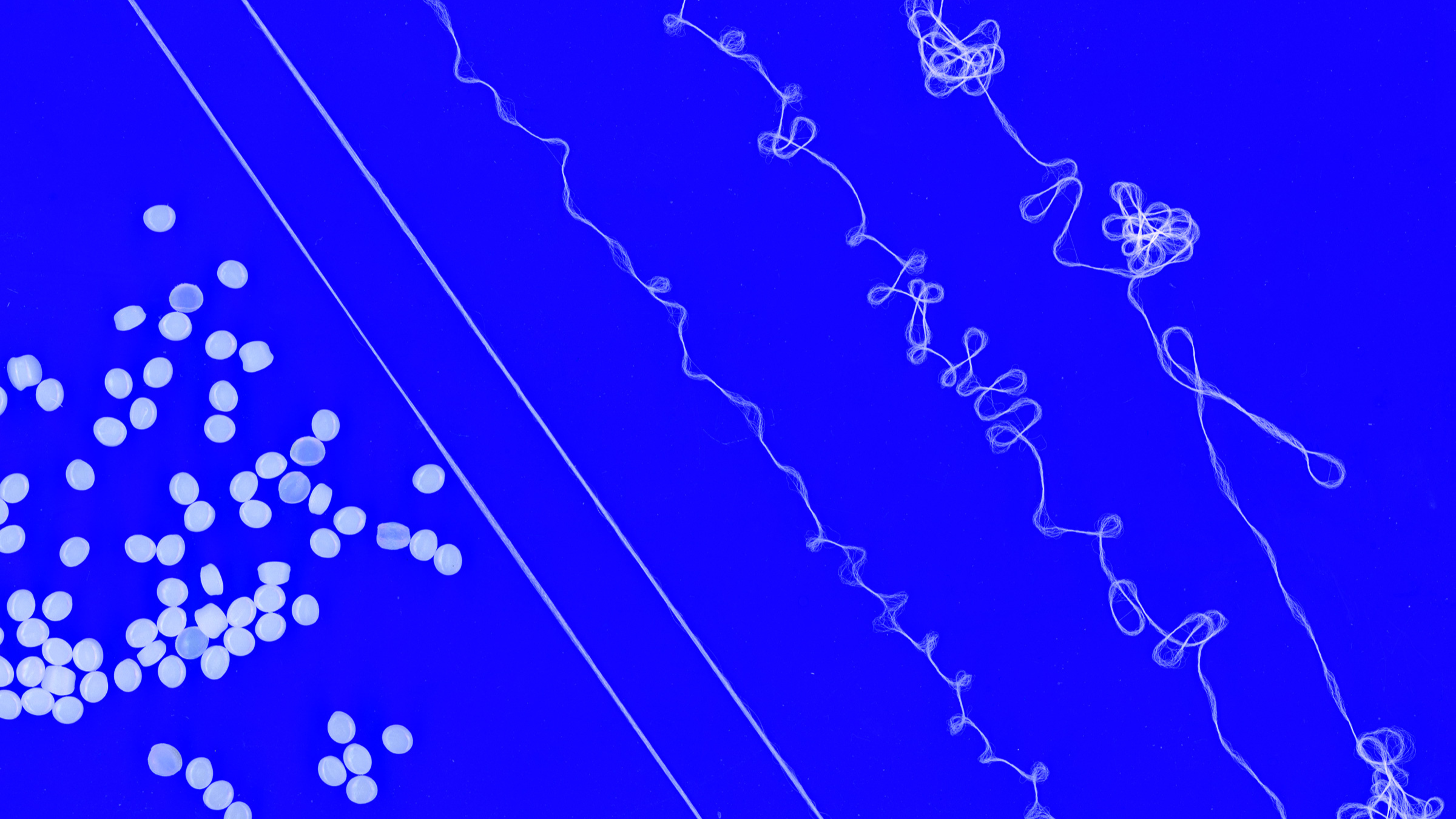
Researchers at MIT have created an elastic yarn made entirely from polyethylene, the plastic commonly used in milk jugs and grocery bags, that performs as well as conventional spandex blends. The study, published July 25 in ACS Materials Letters, describes a yarn structure with a soft, springy polyethylene core wrapped by a stiffer coiled polyethylene fiber.
Current stretchy fabrics typically combine spandex, a polyurethane fiber, with polyester or nylon for durability. Because these fibers are chemically different, separating them for recycling is difficult and costly, and the chemicals involved are toxic. An estimated 80% of textiles sold in the U.S. contain spandex, and most end up incinerated or in landfills, according to study co-author Svetlana Boriskina, a research scientist in MIT's Department of Mechanical Engineering.
The new yarn solves this problem by using only polyethylene, one of the world's most widely recycled plastics. Since both the core and the wrap come from the same plastic family, they do not need to be separated before recycling. In laboratory tests, the researchers melted and respun a spool of the yarn 10 times, and each iteration performed just as well as the original in strength tests.
In head-to-head comparisons, the polyethylene yarn outperformed commercial spandex-polyester yarn in maximum load, meaning it could bear more force before breaking. The team has also demonstrated that these lightweight fibers can be engineered for additional properties such as cooling, moisture wicking, and stain resistance, building on earlier work spinning polyethylene into wearable fabric.
The researchers envision that even garment components like buttons, zippers, and buckles could eventually be made from compatible plastics, allowing an entire garment to be melted down and remade without disassembly. The yarn is produced by melting plastic resin pellets and extruding them into fibers, a process the team likens to making spaghetti.
New recyclable yarn is as stretchy as spandex and could help tackle fashion's plastic waste problem
This is an independent summary. The complete reporting, supporting context and any primary documents remain with Live Science.