MIT Associate Professor Admir Masic co-founded DMAT in 2021 to commercialize findings from his research on ancient Roman concrete. His lab's 2023 study showed that calcium-rich lime clasts in Roman concrete dissolve and recrystallize to fill cracks, a self-healing mechanism the company has adapted for modern use.
DMAT has developed a concrete additive that increases structural lifespan by 50 percent and reduces carbon dioxide emissions to 40 percent of traditional concrete, according to the company. The additive is designed to integrate with existing concrete production methods without requiring operational changes.
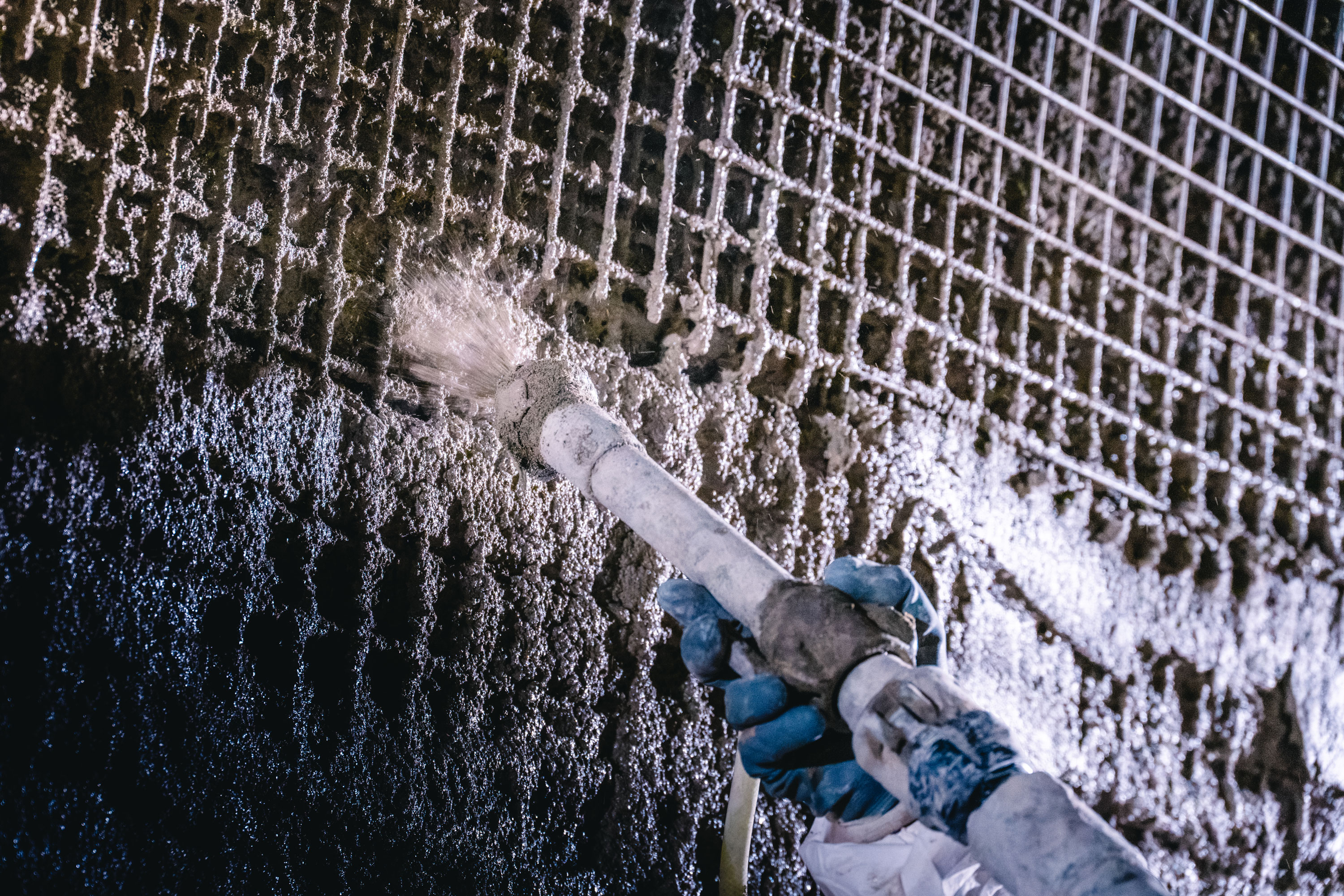
The technology has been deployed in European infrastructure projects including underground water tanks, road barriers, and pavement in Italy and Switzerland. DMAT's repair mortar was used on the N13 motorway in Grisons, Switzerland, where it demonstrated self-healing of small cracks.
CEO Paolo Sabatini emphasizes that the company worked within the existing concrete industry ecosystem, securing EU safety and performance certifications and customizing mixes for specific projects. The company supplies additives to manufacturers and developers and offers ready-mix bagged mortars for restoration.
Unlike competing self-healing approaches that use bacteria or polymers, DMAT's method relies on materials familiar to the industry, which the founders say reduces cost and adoption barriers. Concrete production accounts for an estimated 5-8 percent of global CO2 emissions.
Masic's research involved advanced characterization techniques and fieldwork at Pompeii to deconstruct historical practices. The work was funded in part by the MIT Concrete Sustainability Hub.
DMAT plans to expand to the U.S. market after establishing its technology and industry relationships in Europe. The company licenses core technology from MIT and has developed additional proprietary formulations.
The founders say the approach applies ancient engineering lessons to modern sustainability challenges without introducing uncertainty, since the underlying mechanism has been observed in structures standing for thousands of years.
Startup brings ancient Roman concrete technology to modern construction
This is an independent summary. The complete reporting, supporting context and any primary documents remain with MIT News.