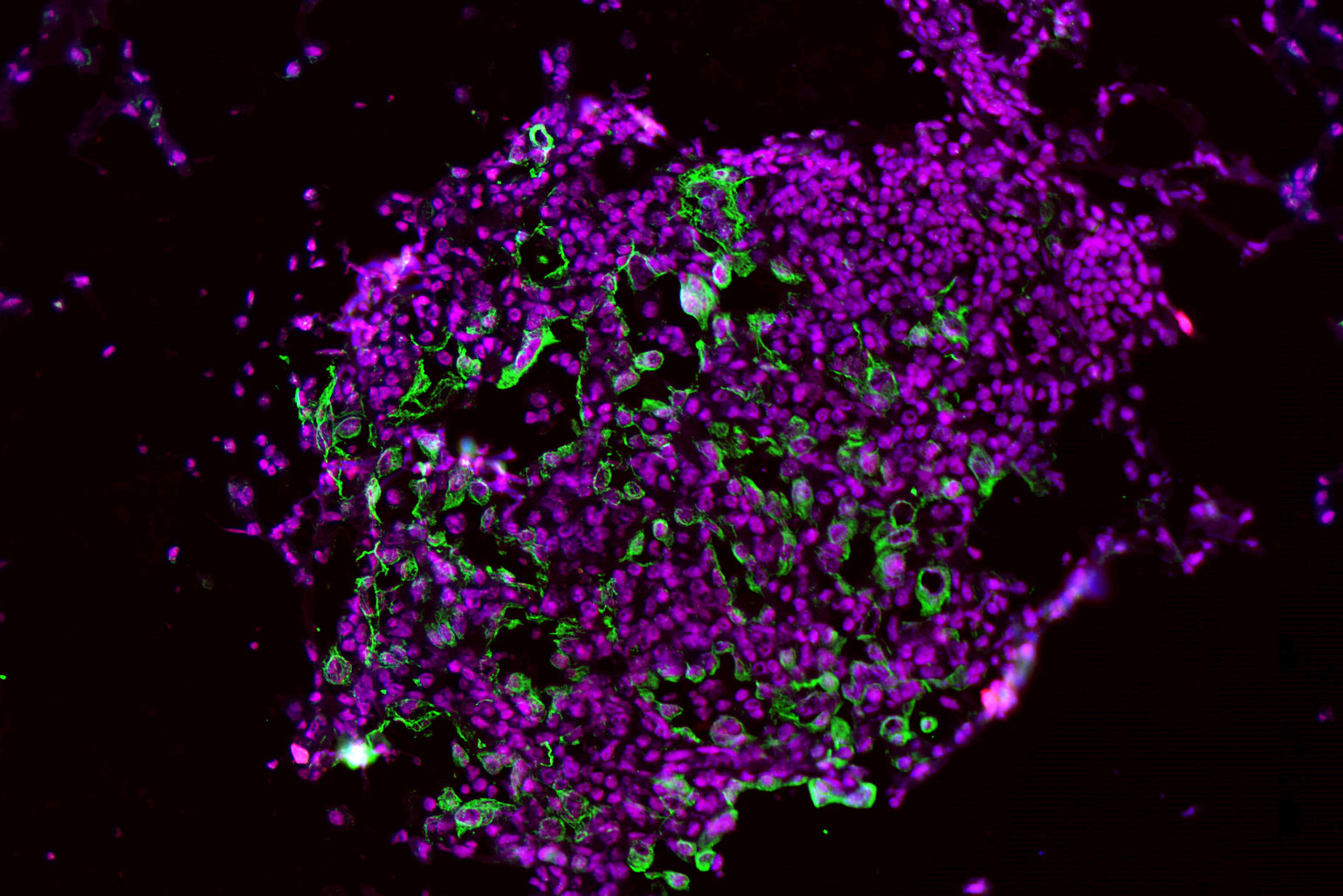
MIT researchers have shown that inhibiting the enzyme caspase-1 can significantly reduce the formation of lung tumors in mice engineered to carry cancer-driving mutations. The study, published in Science Advances, used a mouse model that activates mutations in the p53 and Kras genes and expresses a peptide that stimulates lung inflammation, mimicking elevated cancer risk before tumors are detectable.
Using nanosensors designed to detect active proteases, the team found that caspase-1 activity was high in early lung tumors of untreated mice but was sharply reduced in mice treated with an antibody that blocks the inflammatory cytokine IL-1 beta. The researchers then tested a small-molecule caspase-1 inhibitor, which can be taken orally, against the IL-1 beta antibody and a combination of both.
Mice receiving the caspase-1 inhibitor alone developed fewer and smaller tumors than untreated controls. In the combination group, nearly 20 percent of mice never developed tumors at all. The inhibitor used in the study has already completed human safety trials for rheumatoid arthritis and other inflammatory diseases, raising the possibility of repurposing it for cancer prevention.
The researchers also analyzed a small number of human lung fluid samples in collaboration with a physician at Mass General Brigham. They found higher caspase-1 activity in samples from lung cancer patients compared to healthy donors with similar smoking histories, suggesting the enzyme's role may extend to humans.
The work builds on the 2017 CANTOS trial, which unexpectedly found that an IL-1 beta antibody reduced lung cancer incidence in a cardiovascular study. Later trials showed limited benefit for established tumors, but researchers have continued exploring anti-inflammatory strategies for interception — preventing cancer in high-risk individuals before it progresses.
Senior author Sangeeta Bhatia, a professor at MIT and member of the Koch Institute for Integrative Cancer Research, said the goal is to eventually test the caspase-1 inhibitor in a clinical trial for lung cancer prevention, potentially using biomarkers identified by other groups to select patients most likely to respond. The study was funded by multiple sources including Johnson & Johnson, the National Cancer Institute, and the National Institute of Environmental Health Sciences.
Drug that targets an inflammatory enzyme could help prevent lung cancer
This is an independent summary. The complete reporting, supporting context and any primary documents remain with MIT News.