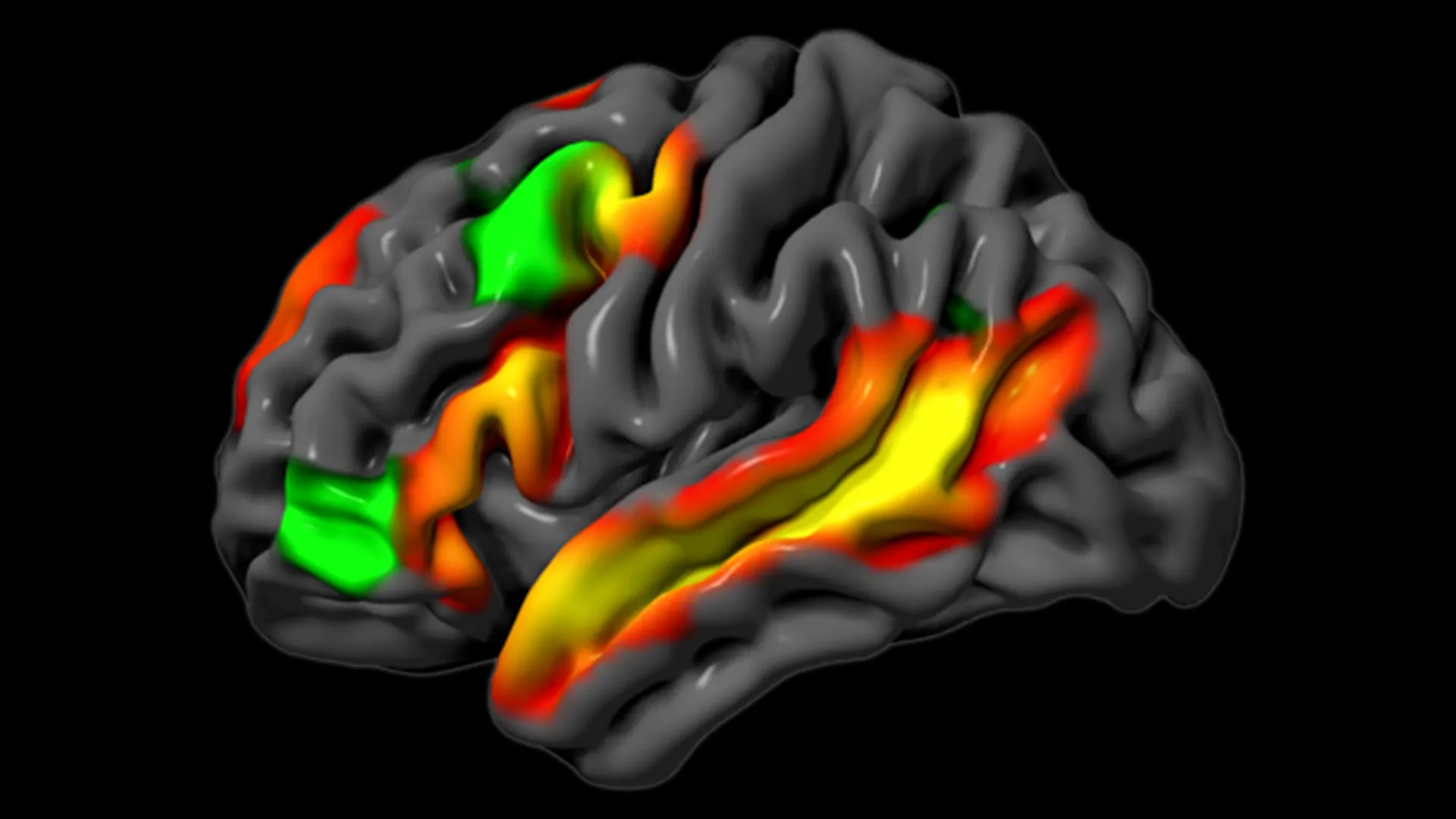
MIT neuroscientists have found evidence that logical reasoning and language rely on separate brain systems. The study, published in PNAS, was led by associate professor Evelina Fedorenko and postdoctoral researcher Hope Kean at the McGovern Institute for Brain Research.
The researchers worked with two individuals who had suffered strokes damaging language-processing areas, leaving them with severe difficulty understanding and producing speech. To test reasoning without language, the team designed tasks using number sequences and visual patterns that required identifying hidden rules and applying them to new examples.
Both participants with aphasia performed on par with a neurotypical control group on these inductive reasoning tasks. They could also communicate the rules they discovered through gestures or sketches, despite their language impairments.
In a separate experiment, neurotypical adults completed similar logic puzzles and syllogistic reasoning tasks while undergoing functional MRI scans. The scans showed that language-processing regions remained largely inactive during both inductive and deductive reasoning.
The brain's multiple-demand network, associated with complex problem-solving, activated during inductive reasoning but not during deductive reasoning, a result the researchers are continuing to investigate.
The findings build on earlier work from Fedorenko's lab showing that other cognitive functions, such as object categorization and social reasoning, also operate independently of language.
Fedorenko said the research reinforces that linguistic difficulties in aphasia, developmental language conditions, or non-native speakers do not reflect reduced intelligence or reasoning capacity.
The authors suggest the distinction between human reasoning and language may also inform the development of artificial intelligence systems, which currently rely on language models to simulate reasoning.
MIT neuroscientists discover the brain can reason without words
This is an independent summary. The complete reporting, supporting context and any primary documents remain with ScienceDaily.