A constellation of neutrino detectors buried deep underground is providing the first direct measurements of the radioactive elements that power Earth's internal heat engine. These ghostly particles, called geoneutrinos, are produced by the decay of uranium, thorium, and potassium in the planet's mantle and crust. That radiogenic heat, combined with primordial heat left over from Earth's formation, drives mantle convection, plate tectonics, and the geodynamo that generates the magnetic field.
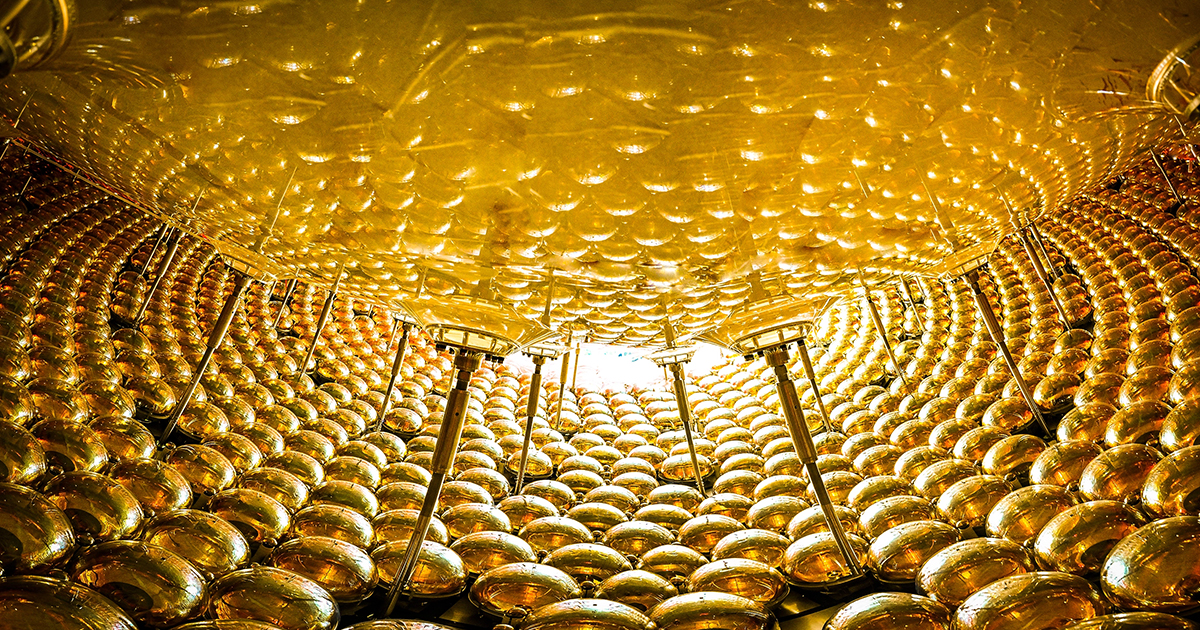
The SNO+ experiment, located two kilometers underground in the Creighton mine at SNOLAB in Sudbury, Canada, reported its first geoneutrino detections in November 2025. The detector consists of an acrylic sphere filled with 780 tons of liquid scintillator, lined with nearly 10,000 light sensors, all submerged in a cavern of ultrapure water to shield against cosmic radiation. SNO+ is the first detector in the Western Hemisphere to measure geoneutrinos, adding a new geographical perspective to previous results from the KamLAND experiment in Japan and the Borexino experiment in Italy.
Researchers must painstakingly filter the raw data to isolate geoneutrino signals. They subtract events with excessive energy, incorrect helicity, and those originating from nearby nuclear reactors. They also model and subtract the significant contribution from the continental crust surrounding each detector, which varies by location. What remains should represent the flux from the mantle, but large uncertainties persist in both the geological models and the detector measurements.
Despite the uncertainties, the three experiments appear to measure different mantle geoneutrino fluxes. Borexino in Italy sees a high flux, KamLAND in Japan sees a low flux, and SNO+ in Canada sees an intermediate value. If taken at face value, these differences could suggest that radioactive elements are not distributed uniformly throughout the mantle, challenging the long-held geochemical assumption that mantle convection thoroughly mixes the interior.
The regions producing the highest geoneutrino signals roughly overlie large low-shear-velocity provinces (LLSVPs), continent-sized blobs of hot, dense material sitting atop the core beneath Africa and the Pacific. These deep structures remain mysterious, and geoneutrinos may eventually help reveal whether they concentrate heat-producing elements. "It really would be a way to make a chemical map of the Earth's interior," said geochemist William McDonough of the Chinese Academy of Sciences.
A fourth, much larger detector, the Jiangmen Underground Neutrino Observatory (JUNO) in China, began operating in August 2025 with over 20,000 tons of scintillator. It is expected to detect more geoneutrinos in its first year than the combined total of the three existing experiments over decades. JUNO's data, combined with improved geological models, could significantly reduce the current uncertainties.
McDonough has long advocated for placing a detector on the ocean floor, where the crust is thinner, more uniform, and far less radioactive than continental crust. Such a location would dramatically reduce crustal uncertainties, effectively placing the experiment in "mantle-only territory." While the concept, estimated to cost hundreds of millions of dollars, has not yet attracted government funding, McDonough is exploring possibilities in China, which has approved other large geoscience projects.
Neutrinos From Deep Inside Earth Provide a New Picture of the Mantle
This is an independent summary. The complete reporting, supporting context and any primary documents remain with Quanta Magazine.