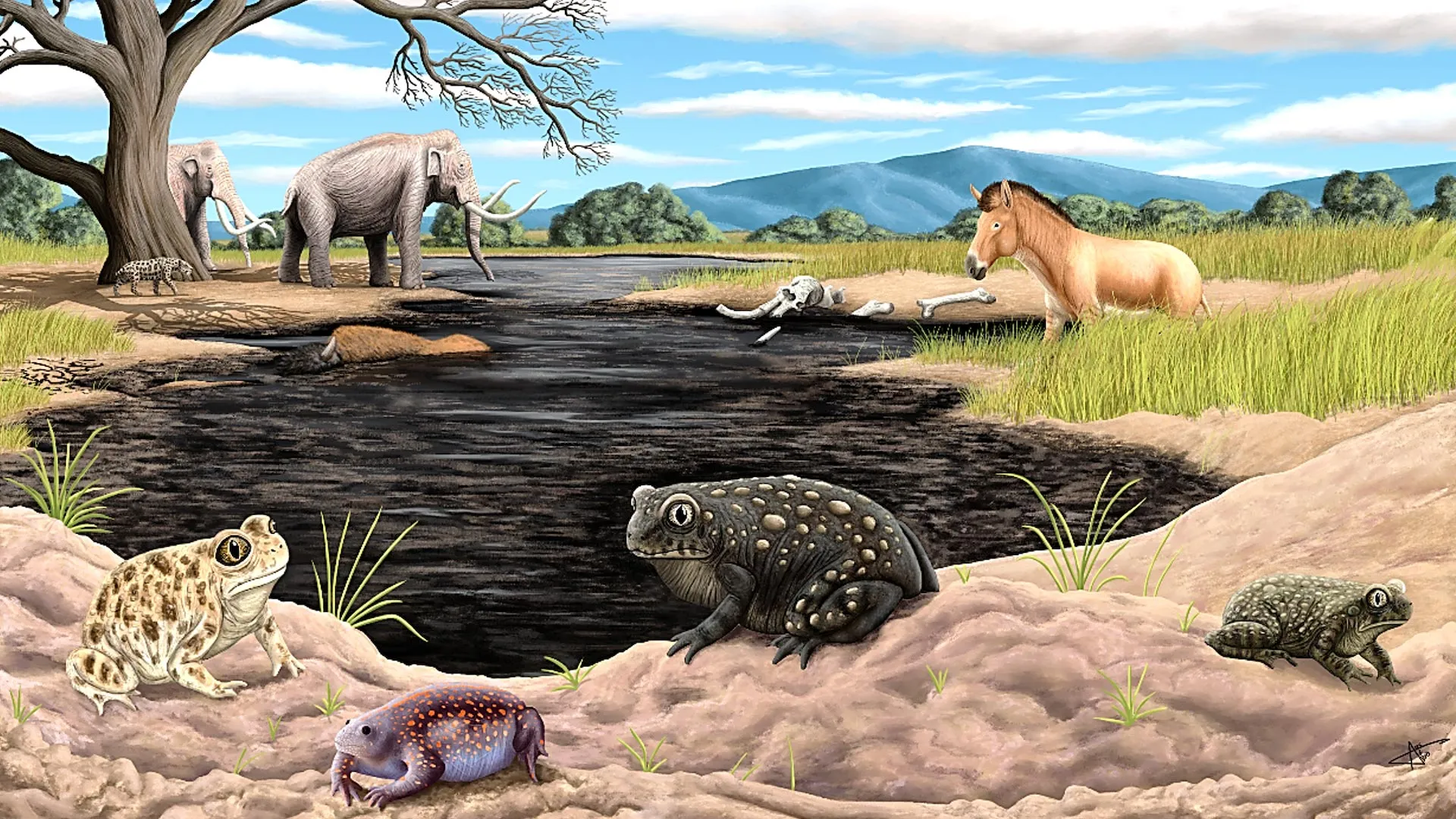
Scientists at the La Brea Tar Pits have identified a previously unknown extinct amphibian species from fossils that had been in museum collections since the 1950s. The spadefoot toad, named Spea labreae, is the first new extinct amphibian species described from the famous Los Angeles fossil site and only the second extinct Pleistocene amphibian identified in North America, alongside a tree frog from Florida.
Lead author Dr. Alberto Cruz, then a postdoctoral fellow at La Brea Tar Pits, noticed unusual features in the amphibian bones while studying the site's understudied reptile and amphibian collections. After comparing the fossils with 80 modern spadefoot toad specimens from the Natural History Museum of Los Angeles County and the Museum of Vertebrate Zoology at UC Berkeley, he concluded the differences represented a distinct species rather than individual variation or pathology.
The discovery highlights how much scientific information remains hidden in existing museum collections. Dr. Emily Lindsey, Curator and Excavation Site Director at the Samuel Oschin Global Center for Ice Age Research, noted that new findings continue to emerge even after a century of excavation and research at the site.
Although tiny compared to the mammoths and saber-toothed cats typically associated with La Brea, amphibians like S. labreae can provide detailed clues about past climate and environmental conditions. Because amphibians generally do not travel far and are highly sensitive to environmental changes, they serve as useful local climate proxies.
The research also produced a second surprising finding: the first known record of the Mexican burrowing toad, Rhinophrynus, in the southwestern United States. The closest living populations of this toad are now nearly 2,500 kilometers away in southern Mexico, indicating a dramatically different geographic range during the Ice Age.
The combined evidence of S. labreae's extinction and the Mexican burrowing toad's range shift adds to the understanding of environmental changes as the last Ice Age ended. Researchers suggest that studying how amphibians responded to those ancient changes may offer insight into how similar animals could respond to human-caused climate change today.
The fragility of amphibian skeletons makes their fossils uncommon outside asphaltic preservation sites like La Brea Tar Pits. Cruz and other researchers suspect additional extinct reptile and amphibian species may have existed but left remains too delicate to survive in the fossil record.
A new Ice Age species was hiding in la brea tar pits fossils for decades
This is an independent summary. The complete reporting, supporting context and any primary documents remain with ScienceDaily.