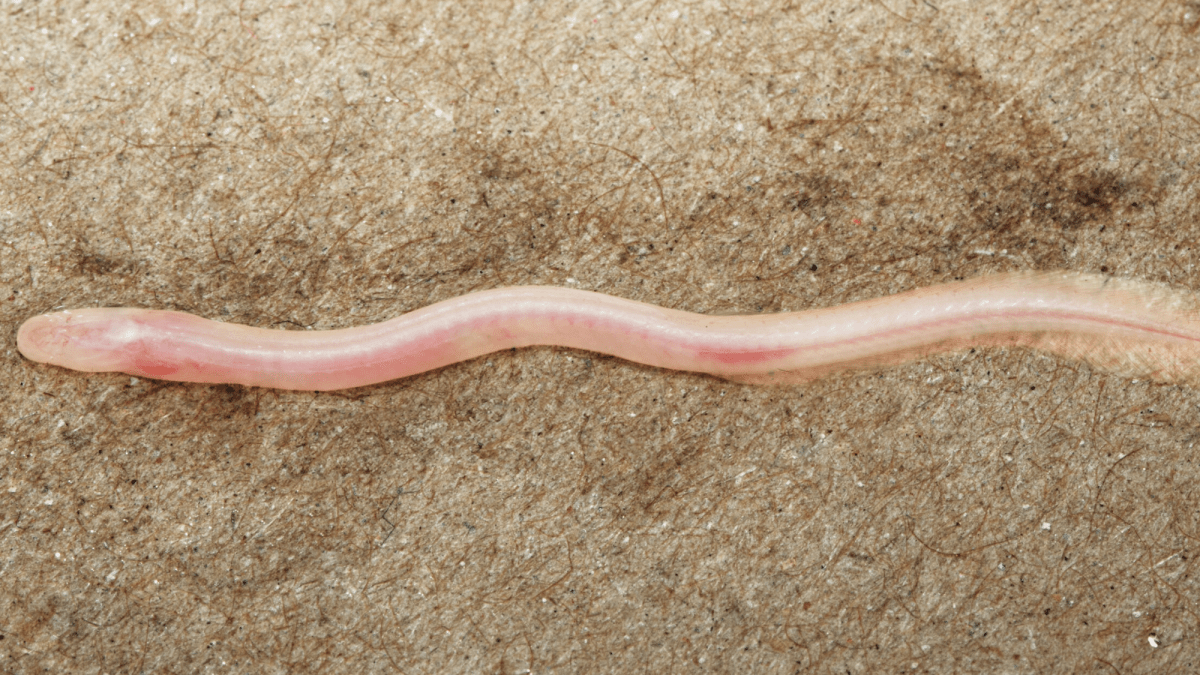
In 2024, researchers from India and China spotted a short TikTok video showing an unusual, colorless fish emerging from a narrow borehole near the India-Nepal border. The fish’s appearance and the absence of any known cave-dwelling fish in the region prompted the team to investigate.
Locating specimens proved difficult. The team identified potential handpumps and wells, secured permission from owners, and manually pumped thousands of gallons of groundwater. The first specimen was recovered after roughly 530 gallons but died during extraction; a second was found after an additional 132 gallons.
The new species, named Gangaichthys indonepalicus, measures about 1.5 inches long and shows adaptations to total darkness: its eyes are small and covered by skin, its body is colorless and translucent, and it lacks ribs.
Micro-CT scanning and genetic analysis confirmed that the eel represents not only a new species but a new genus within the earthworm eel family Chaudhuriidae. The genus name Gangaichthys means "fish of the Ganga," referencing the Ganges River, while the species name indonepalicus reflects its discovery on the India-Nepal border.
Study co-author Akshay Khandekar of the Thackeray Wildlife Foundation noted that obtaining samples was challenging due to the need for landowner permissions and the labor-intensive pumping process.
The discovery marks the first stygobitic fish recorded from the Indo-Gangetic plains and the Gangetic Basin. Researchers suggest that India’s size and diverse climates likely harbor many more undiscovered subterranean species.
The findings were published in the journal ZooKeys.
TikTok helps scientists discover new underground, translucent eel in India
This is an independent summary. The complete reporting, supporting context and any primary documents remain with Popular Science.