The summer festival of Obon ranks alongside New Year in importance on the Japanese calendar, observed nationally around August 13 to 16, though some regions follow the older lunar calendar in July.
Rooted in the belief that ancestral spirits return home during this period, families light welcoming fires (mukaebi) on August 13 to guide spirits and farewell fires (okuribi) on August 16 to send them back, with the Gozan Okuribi bonfires on five Kyoto mountains among the most famous observances.
Households place fruit and seasonal dishes on Buddhist altars and visit family graves, while decorative spirit animals (shōryōuma) made from cucumbers and eggplants symbolize wishes for a swift return and a slow, burdened departure.
The term Obon derives from Urabon'e, linked to the Sanskrit ullambana and a Buddhist story in which the disciple Mokuren saved his mother from the realm of hungry ghosts through offerings to monks, a narrative that merged with Japan's pre-existing ancestor-veneration customs.
Temples across Japan hold memorial services and chant sutras during the season, with practices varying among Buddhist sects and regions.
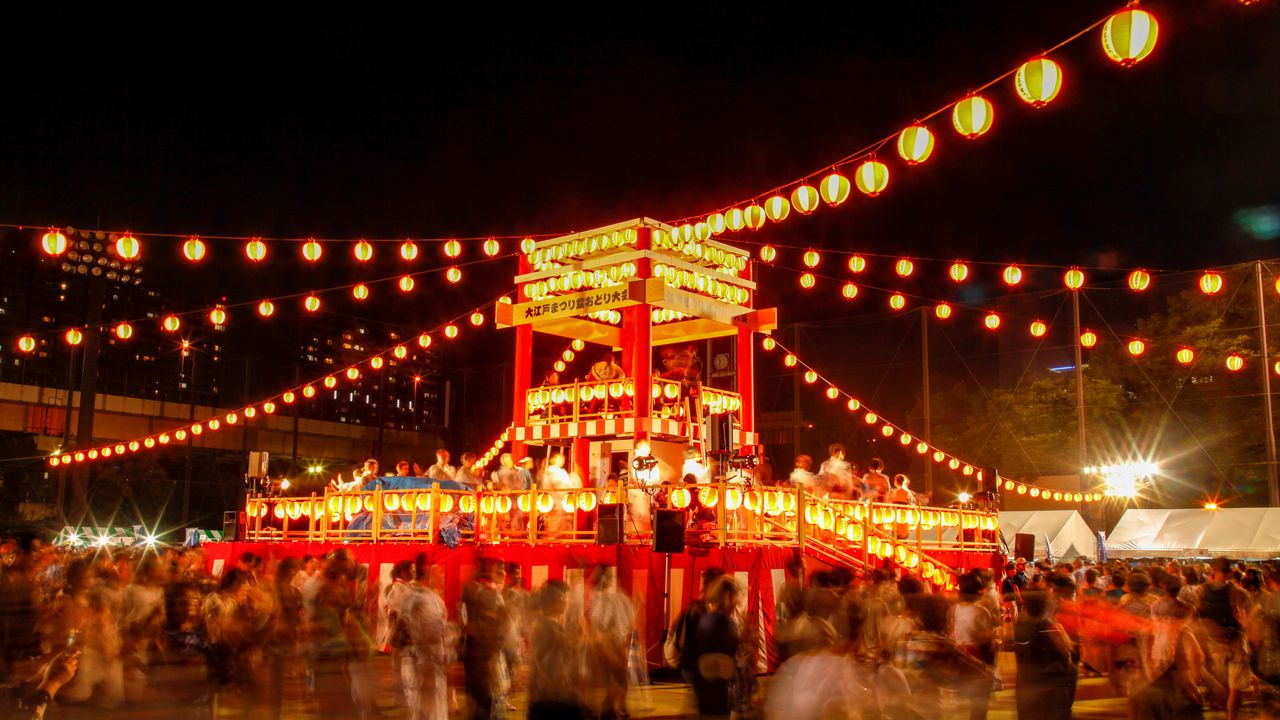
Bon odori dances, believed to originate from ritual nenbutsu odori to comfort spirits, have become lively community festivals featuring regional music and choreography, with the Gujō Odori, Awa Odori, and Nishimonai Bon Odori among the most renowned.
In recent years, international visitors have increasingly joined the dances, reflecting the tradition's role as a shared cultural event beyond its religious origins.
Obon: Japan’s Summer Festival for Honoring Ancestors
This is an independent summary. The complete reporting, supporting context and any primary documents remain with Nippon.com.