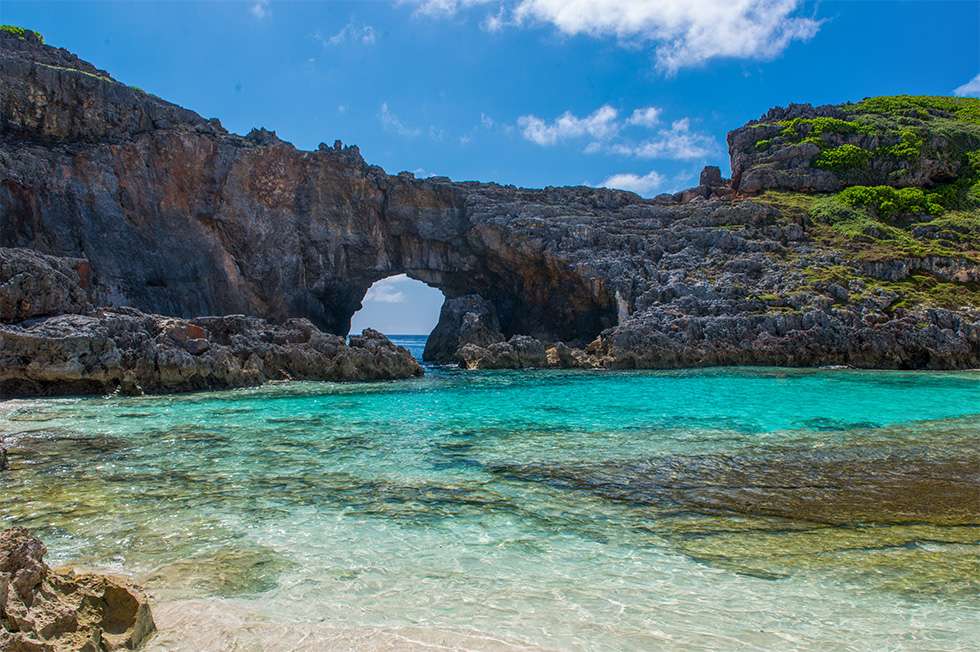
About 1,000 kilometers south of central Tokyo, the Ogasawara Islands host a linguistic rarity: Ogasawara-go, a creoloid blending New England English, Hawaiian and other Pacific influences, and the Hachijo dialect of Japanese. The language emerged after 1830, when a mixed group of American, European, Polynesian, and Micronesian settlers led by Nathaniel Savory established the first colony on Chichijima, later joined by Japanese migrants from Hachijojima.
British and American whalers had frequented the islands since the early 19th century, and the settlement maintained continuous contact with the anglophone world, which linguists say distinguishes Ogasawara-go as a creoloid rather than a full creole. Japan formally claimed the islands in 1876, making all residents Japanese nationals, yet the community retained its distinct speech patterns.
World War II brought a rupture. Japanese authorities evacuated all islanders, and after Japan's surrender the United States occupied the archipelago for 22 years. U.S. policy allowed only "Caucasian Descendants of Original American and European Settlers" to return, excluding the ethnic-Japanese majority until 1968. During the occupation, schools taught in standard English and treated Ogasawara-go as incorrect speech to be corrected, a process linguists term decreolization.
When Japanese residents were permitted to return in 1968, mainland Japanese influence intensified. The post-return period produced a mixed speech combining English and Japanese within single sentences, representing another generation of the language. Today, standardized Japanese dominates on Chichijima and Hahajima, while American English remains in use among those who lived through the occupation.
Distinctive vocabulary survives in island names for local fish, plants, and weather drawn from Pacific Island languages and the Hachijo dialect. Among older islanders, English and Japanese still mix freely in daily conversation. Phrases such as "mata miru," a calque of "see you again" that would literally mean "to look repeatedly" in standard Japanese, continue to serve as common farewells.
The article, written by Takeshi Dylan Sadachi, appeared in the Summer 2026 "Islands" issue of Metropolis Japan. It traces the language's trajectory from its 19th-century origins through wartime disruption, American occupation policies, and the gradual shift toward standard Japanese, documenting a rare case of creole formation and attrition within Japanese territory.
Meet Ogasawara-go, Tokyo’s Own English-Japanese Creole
This is an independent summary. The complete reporting, supporting context and any primary documents remain with Metropolis Japan.