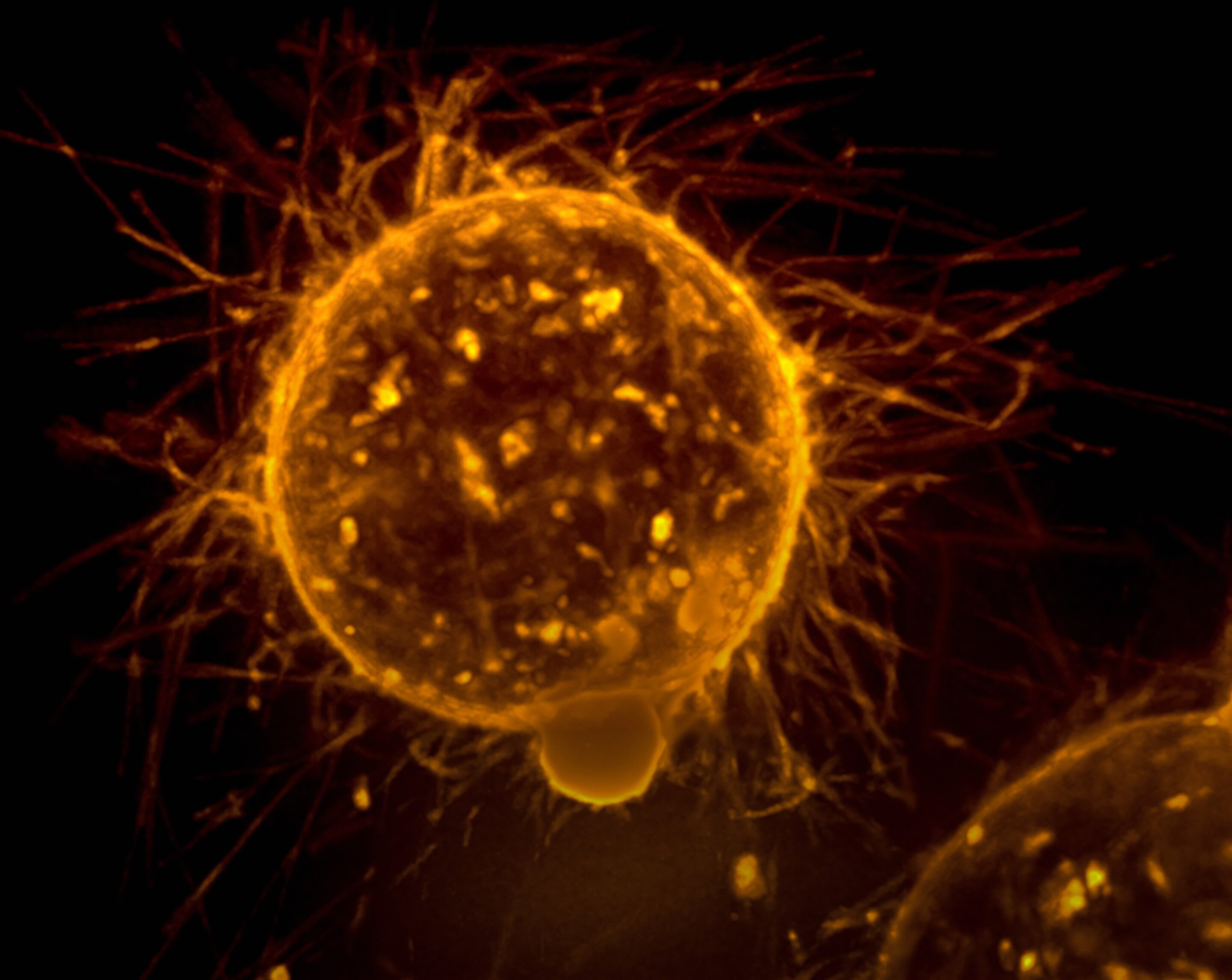
Researchers at the Fralin Biomedical Research Institute at Virginia Tech have developed an oral therapy that protected mice from a lethal dose of whole-body radiation while preserving radiation's tumor-killing effects. The investigational treatment, called XOlacta, packages a therapeutic peptide known as alpha-CT11 inside naturally occurring milk-derived extracellular vesicles. These vesicles shield the peptide during digestion, enabling oral administration instead of injection.
In the study, published in the September issue of Cancer Letters, mice received a lethal radiation dose followed one hour later by a single oral dose of the therapy. Treated mice achieved a 42% survival rate at 30 days, whereas all untreated mice died within the study period. The therapy also remained effective when administered 24 hours after radiation exposure.
The treatment reduced damage to the small intestine and bone marrow, two tissues highly vulnerable to radiation injury. Imaging studies showed the milk-derived vesicles preferentially accumulated in radiation-damaged tissues, including the brain, gut, and bone marrow, potentially concentrating the therapy where it was needed most.
Critically, the therapy did not diminish radiation's effectiveness against tumors. In a mouse model of glioma brain cancer, the treatment protected healthy tissues while preserving radiation's ability to suppress tumor growth. This addresses a longstanding challenge in radiation oncology: shielding healthy tissue without also protecting the cancer.
The oral delivery system offers practical advantages for emergency preparedness. The therapy is stable at room temperature for a year or more, allowing potential storage in homes, hospitals, and emergency stockpiles without specialized medical equipment for administration.
The work remains in the preclinical stage. Independent studies by contract research organization Lovelace Biomedical have reproduced the mouse findings, and the therapy is now advancing through additional safety and large-animal studies under the U.S. Food and Drug Administration's Animal Rule, a regulatory pathway for medical countermeasures that cannot be ethically tested for efficacy in humans.
The multidisciplinary research team included scientists from the Fralin Biomedical Research Institute, the University of Virginia, and the Virginia-Maryland College of Veterinary Medicine at Virginia Tech. Senior author Robert Gourdie noted the approach could ultimately improve cancer patients' tolerance of radiation therapy and strengthen preparedness for radiological emergencies.
Oral therapy protected mice from lethal radiation while sparing cancer treatment
This is an independent summary. The complete reporting, supporting context and any primary documents remain with Medical Xpress.